Visitor of the Week: Eman Ageely

cshl-visitor-eman-ageely

Meet Eman Ageely of the Southern Illinois University. The PhD candidate in Dr. Keith Gagnon’s lab is with us for her first meeting at CSHL: RNA & Oligonucleotide Therapeutics. Her inaugural CSHL meeting participation was made with a bang, presenting a poster entitled: ‘’Probing the Cpf1-crRNA Interaction with Ribochemical Modification’’. Having presented a poster at two other RNA meetings, this wasn’t Eman’s first time presenting a poster. However, at this meeting, she was able to “interact with people from the field of oligonucleotide therapeutics.”

What are your research interests? What are you working on?
I am studying the structure function relationships of CRISPR-Cas12a and investigating the therapeutic applications of CRISPR.

How did you decide to make this the focus of your research?
During my MSc, I observed an article presentation about CRISPR. I was impressed by this new technology and the potential of such technology in the therapeutics field.

How did your scientific journey begin?
Scientifically, my supervisor Dr. Keith Gagnon has influenced me the most. He always set a high standard for science and gives every opportunity to his student go be the best. Also Dr. Ramesh Gupta has been a big impact on me. Personally, my husband Omar has supported me throughout my study.  

Was there something specific about the RNA & Oligonucleotide Therapeutics meeting that drew you to attend?
It is a great opportunity to present my research and get to interact with knowledgeable people.

What did you pick up or learn from the meeting that you plan to apply to your work?
This is not my first RNA meeting but it is the first meeting I’ve attended with a focus on oligonucleotides. Thus, I learned about a wide range of oligonucleotide therapeutic applications and technology.

If someone curious in attending this meeting asked you for feedback or advice on it, what would you tell him/her?
I strongly recommended it. One of the things that I learned and I believe is important for any scientist who work with oligonucleotide is to look closely for both the chemistry and clinical aspect of oligonucleotide therapeutic.

What do you like most about your time at CSHL?
The networking experience that accompanied the amazing meeting. Our lab collaborates with Dr. Masad Damha and I finally had the chance to speak with him here; and I enjoyed talking with him.

Thank you to Eman for being this week's featured visitor. To meet other featured scientists - and discover the wide range of science that takes part in a CSHL meeting or course - go here.

Visitor of the Week: Kaavya Krishna Kumar

VOTW.png

Meet Kaavya Krishna Kumar of Stanford University. A member in Brian Kobilka’s lab, the postdoctoral fellow made her maiden voyage to CSHL to take part in the Cryoelectron Microscopy course (CryoEM). A grid freezing competition was held during the course and Kaavya was part of the winning team, returning to Stanford with bragging rights.

What are your research interests? What are you working on?
I am interested in how integral membrane proteins at the cell surface serve as a major communication interface between the external environment and internal milieu. Specifically, I study the largest family of membrane proteins: G-protein coupled receptors (GPCRs). My research focuses on understanding the molecular details of the changes GPCRs undergo and the proteins they interact with in order to transmit signals across the cell membrane. 

How did you decide to make this the focus of your research?
My interest in protein structures and protein-protein interactions grew out of my graduate work. During my PhD, I worked on bacterial proteins that interacted with iron-containing protein hosts in order to utilize them as a source of iron.

How did your scientific journey begin?
My parents being scientist, my interest in science really began at home listening to dinner table conversations. I started as a chemistry major in college and became fascinated with protein structures when I took a biochemistry class. This was when I realized that the lines between the different branches of science is blurred.

Was there something specific about the Cryoelectron Microscopy course that drew you to apply?
I wanted to learn the basics of cryo-electron microscopy (cryo-EM) to apply to some areas of my research. There were several unique features of the CryoEM course that drew me to apply, including a good mix of lectures and lab training.

Winning team members of the Cryoelectron Microscopy course’s grid freezing competition. L to R: Katerina Meze of CSHL, Kaavya Krishna Kumar, Yuichiro Takagi of Indiana University School of Medicine Image: Yuichiro Takagi

Winning team members of the Cryoelectron Microscopy course’s grid freezing competition.
L to R: Katerina Meze of CSHL, Kaavya Krishna Kumar, Yuichiro Takagi of Indiana University School of Medicine
Image: Yuichiro Takagi

What and/or how will you apply what you’ve learned from the workshop to your work?
This course has given me the necessary tools to better design and approach my experiments. I am also hoping that the knowledge I have gained during the course will be helpful to other projects in the lab.

What is your key takeaway from the course?
Don’t touch the microscope alignment! But seriously, there are lots of things to try and optimize while performing a cryoEM experiment and there are no shortcuts to success.

If someone curious in attending this course asked you for feedback or advice on it, what would you tell him/her?
The CSHL CryoEM course is probably the best course out there to learn the basics and gain practical experience. The lectures were very well chosen and spanned from basic physics to the future of cryo-EM. We got to set up our data collection on the microscope with the samples we prepared. So really, if anyone wants to go to a course on cryo-EM they should definitely apply to this one!

What did you like most about your time at CSHL?
The instructors and TAs were absolutely brilliant! My fellow students were from different stages of their careers (professors, postdoc, graduate students) and spending time with them talking about cryo-EM and generally science was a lot of fun!

Kaavya received a scholarship from the Helmsley Charitable Trust and support from the National Institute of Mental Health (NIMH) to cover a portion of her course tuition. On behalf of Kaavya, thank you to the Helmsley Charitable Trust and NIMH for supporting and enabling our young scientists to attend a CSHL course where they expand their skills, knowledge, and network.

Thank you to Kaavya for being this week's featured visitor. To meet other featured scientists - and discover the wide range of science that takes part in a CSHL meeting or course - go here.

Visitor of the Week: Andreas Zanzoni

VOTW (3).png

Meet Andreas Zanzoni of the Aix-Marseille University (France). The Italian national working in the Marseille-based institution is part of Dr. Christine Brun’s network biology team within the Theory and Approaches of Genomic Complexity (TAGC, Inserm UMR1090) laboratory. He is currently on campus for his first CSHL meeting — Network Biology — where he presented a poster titled “A domain-resolved interaction network between bacterial secreted effectors and human proteins”. According to Andreas, the poster session provided him with “good feedback and suggestions that would certainly help [him] improve [his] work.”

What are your research interests? What are you working on?
My main research interest is to decipher the molecular dialogue between bacteria residing in the human gut and host cells. To achieve this, I am using computational network-based approaches to infer interactions between bacterial effectors and human proteins and to assess their impact on host-cell networks.

How did you decide to make this the focus of your research?
Gut microbiome studies showed that increased abundance of several bacterial strains is associated to human diseases such as metabolic disorders and cancer. However, for many of these bacteria we do not know how they can contribute to disease onset and progression. I believe that computational network biology approaches can be useful in elucidating the molecular mechanisms underlying microbe-disease associations.

How did your scientific journey begin? 
During my undergraduate studies at the Science School of the University of Rome “Tor Vergata” (Italy), I developed a strong interest in understanding how proteins regulate cellular functions by interacting with one another. My professional goal at that time was to become a wet-lab molecular biologist. But then I attended an optional course on protein structure and sequence analysis that ignited my interest in computational biology and protein-protein interaction networks. 

Was there something specific about the Network Biology meeting that drew you to attend?
The strong feature of this meeting is bringing together scientists with different backgrounds (molecular and computational biologists, biochemists, computer scientists, microbiologists, etc.) that apply network-based approaches to understand biological systems. It is the best setting to learn new things and fosters new collaborations. In this regard, I found very interesting the chalk talk session: small groups of people that informally discuss about their work. It made getting to know other participants easier.

What is your key takeaway from the meeting?
The work that has been done by the network biology community in the last twenty years to chart physical and functional interactions in a cell is impressive, and is now enabling us to clarify complex biological problems more effectively. 

What did you pick up or learn from the meeting that you plan to apply to your work?  
I found very interesting the talks and the posters presenting integrative network approaches to combine different types of biological information. It is something I would like to apply to my work in the future.

If someone curious in attending a future iteration of this meeting asked you for feedback or advice on it, what would you tell him/her?
I would highly recommend participating in this meeting, in particular young scientists. It an excellent opportunity to learn the most recent advances in the field.

What did you think of your first meeting at CSHL?
CSHL meetings have a very high reputation in the scientific community and this Network Biology meeting has met my expectations. 

What do you like most about your time at CSHL?
The CSHL campus is a very nice place. I really enjoyed spending a few days here, and I hope to come back soon!

Thank you to Andreas for being this week's featured visitor. To meet other featured scientists - and discover the wide range of science that takes part in a CSHL meeting or course - go here.

Visitor of the Week: Alberto Hidalgo-Bravo

VOTW (1).png

Meet Alberto Hidalgo-Bravo of the National Institute of Rehabilitation in Mexico City, Mexico. Presently a junior principal investigator in the Department of Genetics and Genomic Medicine, Alberto will be leading his own research group next year. To help him prep for his new position, Alberto is on campus training at the High-Throughput Biology: From Sequence to Networks course and he already has plans to return for the 84th CSHL Symposium: RNA Control & Regulation.

What are your research interests? What are you working on?
My main research area is cancer biology, with a focus on RNA. We are interested in finding transcripts that could be used as biomarkers and looking for new and specific therapeutic targets.

How did you decide to make this the focus of your research?
Cancer cells are complicated. They break a few biological rules in order to survive. We have to understand the underlying mechanism to be able to design new strategies for prevention and treatment.

How did your scientific journey begin?
A high school teacher inspired my interest for genetics. She taught us the principles of genetics and molecular biology, and I became curious about how a gene knows what to do. That moment was when I decided that I wanted to understand what was behind the control of genes.

Was there something specific about the High-Throughput Biology: From Sequence to Networks course that drew you to apply?
Nowadays, everybody recognizes the importance of the “omics” technologies. They have changed the way of doing research. I realize that I had to get involved in this new era and this CSHL course represents an ideal scenario for learning the principles of these techniques.

What and/or how will you apply what you've learned from the course to your work?
Given the nature of my research, tools related to RNA analysis and interaction pathways are the most useful for me. This knowledge will help us to have a better understanding of the molecular mechanism underling biology of cancer.

What is your key takeaway from the course?
The course imparted information about resources that I previously did not know. As a researcher trained in a molecular biology environment, this new information complements my knowledge and empowers me to generate new hypothesis to decipher the missing pieces of my research.

If someone curious in attending this course asked you for feedback or advice on it, what would you tell him/her?
I would definitely recommend this course. It covers a lot of subject material and the instructors are very capable.

What do you like most about your time at CSHL?
This is a great experience. In addition to the scientific part, I had the chance to enjoy the beautiful campus. But the best thing of this experience is the opportunity to meet and know other people who share a common interest. I am sure that some of my course mates will become a collaborator or, even better, a friend. These parts of attending to the course was a great benefit for me.

Alberto received a scholarship from the Howard Hughes Medical Institute (HHMI) to cover a portion of his course tuition. On behalf of Alberto, thank you to HHMI for supporting and enabling our young scientists to attend a CSHL course where they expand their skills, knowledge, and network.

Thank you to Alberto for being this course’s featured visitor. To meet other featured scientists - and discover the wide range of science that takes part in a CSHL meeting or course - go here.
Visitor of the Week: Kerry Hilligan

cshl-visitor-kerry-hilligan

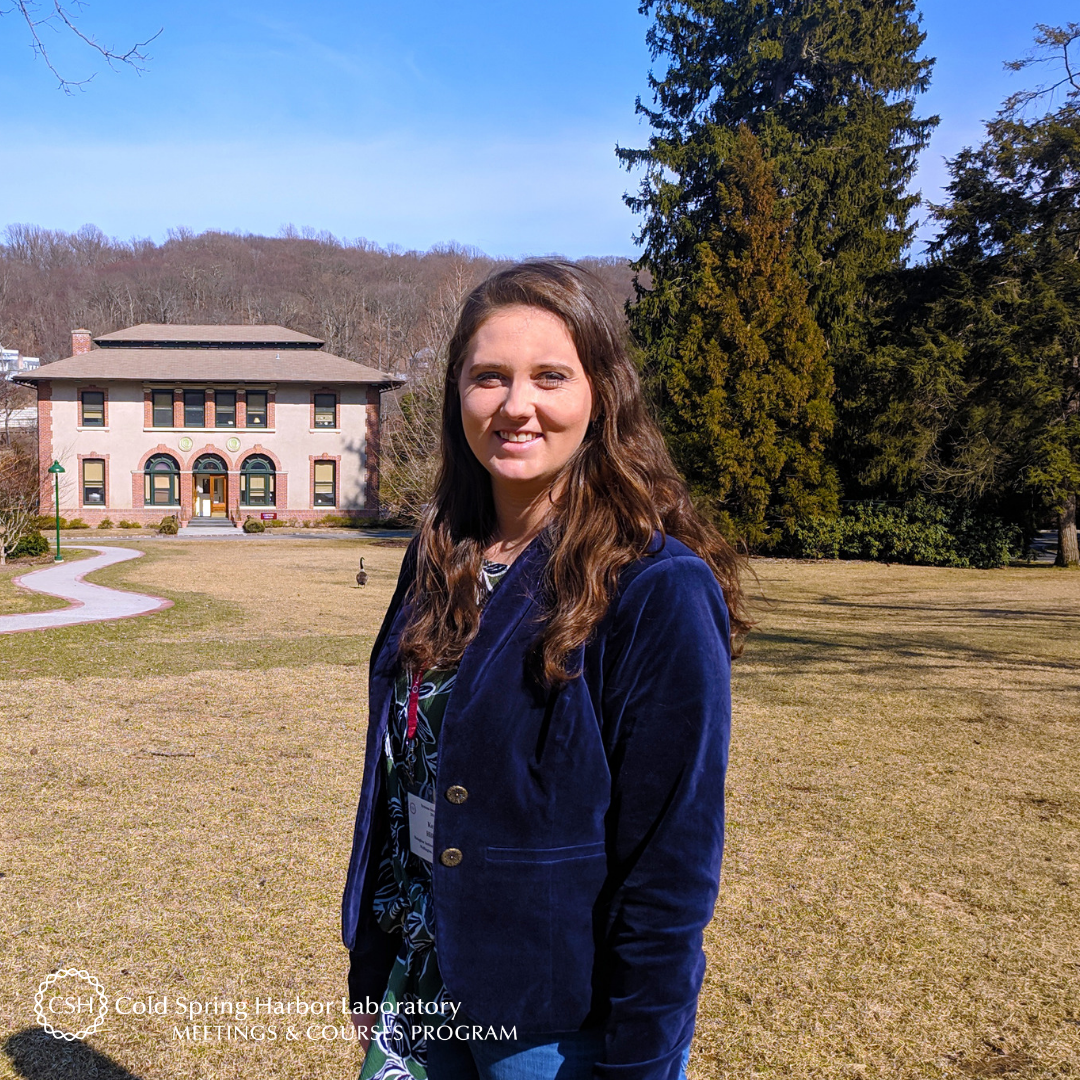
Meet Kerry Hilligan of the Malaghan Institute of Medical Research in Wellington, New Zealand. The postdoctoral fellow in Prof. Franca Ronchese’s Immune Cell Biology Program made her maiden voyage to CSHL this week to attend the inaugural meeting of Systems Immunology. Kerry was among the forty-two speakers of the meeting and she presented her talk, “Dissecting the innate immune networks regulating CD4+ T cell differentiation,” during the Single Cell Analysis of Genomic and Signaling States session.

What are your research interests? What are you working on?
My research is focused on understanding how antigen-presenting cells regulate adaptive immunity in response to a diverse range of pathogenic stimuli and environmental cues. 

How did you decide to make this the focus of your research?
Vaccines have been one of the most important advancements in medical history, but there are still many diseases where no vaccine is available or the available vaccine is ineffective. In order to inform vaccine design, we need to understand the specific signals involved in initiating protective immune responses against a variety of different pathogens.

How did your scientific journey begin? 
I have always been interested in biology and understanding how cells perform specialized functions and interact with one another. During my final year as an undergraduate at Victoria University in Wellington, New Zealand, I took an immunology course and instantly knew that this was the field of study that I wanted to pursue. I was completely captivated by this extraordinary network of cells that could be leveraged in so many ways to improve human health.  

Was there something specific about the Systems Immunology meeting that drew you to attend?
This was the inaugural Systems Immunology meeting at CSHL and offered the perfect platform to meet with other researchers with an interest in systems immunology. There was also an impressive lineup of speakers presenting data on the latest cutting-edge technology. 

What is your key takeaway from the meeting?
Single-cell technologies have helped uncover a remarkable level of heterogeneity and plasticity among immune cells. 

What did you pick up or learn from the meeting that you plan to apply to your work?  
There were many exciting new technologies presented at this meeting. I was particularly interested in a platform that allows you to measure protein and mRNA transcript levels simultaneously in individual cells. 

If someone curious in attending a future iteration of this meeting asked you for feedback or advice on it, what would you tell him/her?
I would highly recommend this meeting to both “wet lab” and computational immunologists. The program included lots of unpublished findings and integrated experimental, computational, and mathematical approaches to immunology. 

What did you think of your first meeting at CSHL?
I had heard great things about CSHL meetings and was not disappointed! I thoroughly enjoyed my experience at CSHL and will definitely check out future meetings.

What do you like most about your time at CSHL?
The campus is absolutely beautiful and provided the perfect backdrop to a fantastic meeting.

Thank you to Kerry for being this meeting’s featured visitor. To meet other featured scientists - and discover the wide range of science that takes part in a CSHL meeting or course - go here.