People

A Word From: Dafna Bar-Sagi, Howard Crawford, Tony Hollingsworth & David Tuveson

L to R: Howard Crawford, David Tuveson, Dafna Bar-Sagi, Tony Hollingsworth

L to R: Howard Crawford, David Tuveson, Dafna Bar-Sagi, Tony Hollingsworth

Last week, Cold Spring Harbor Laboratory welcomed 26 trainees, 31 lecturers, and 2 new additional instructors to the biennial Workshop on Pancreatic Cancer. The course, just four iterations young, has substantially grown over the last six years, reflecting the growth in the field. Our conversation with the four instructors Dafna Bar-Sagi, Howard Crawford, Tony Hollingsworth, and David Tuveson illustrates how pancreas cancer research continues to evolve and progress. We also discuss developments that may be game changers, as well as advice for those interested in the field or who wish to attend a future iteration of the course. 

To start, here is a brief history of the course as told by Dafna and David – the two instructors who have been with the course since its premiere. 

David: The pancreas cancer course started in 2011. There hadn’t been an instructional course in pancreatic cancer before that time and Jim Watson felt strongly that that was one of the reasons why the field was going so slowly. He convinced Dafna Bar-Sagi to organize such a course and, around this time, I was engaged with Jim Watson and Bruce Stillman on a number of issues involving pancreatic cancer so they asked me to help Dafna.

The first course was held that summer with 19 selected trainees who were students, postdocs, junior faculty, as well as some senior faculty. We assembled 19 lecturers to have an intensive workshop at the Banbury Center to go over aspects of pancreatic cancer medicine and science.

Dafna: We almost ran through the entire research community when we first organized the course. Fortunately, for a lot of reasons – funding, publicity for the disease – there are more investigators studying it so we now have a fantastic resource of people looking at the disease from many different perspectives. Now we have to actually leave out great people because there are so many to choose from.

We opened the discussion with how both the course and the field have changed since 2011: 

Dafna: The thinking now is less about the tumor cell itself and more about the environment, and putting more weight towards what we call the tumor microenvironment. There is a recognition that it’s not just the genetics of the tumor but how the tumor cells themselves talk to cells in the organ that are doing a lot of important things. Talks that address either partly or completely the role of the tumor microenvironment made up a lot of the talks we heard and what I sense to be exciting to our participants.

David: This year’s course, compared to just six years ago, has more to tell people because in the last six years we’ve learned a lot about pancreatic cancer - not about the medicine but about the science underneath it. We now know genetic events in pancreatic cancer, and we’ve developed methods to study the disease that are much deeper and much more facile than they were even six years ago.

Howard: Scientifically, we’re definitely up-to-date. That’s the nice thing about having four organizers and making these decisions together. It’s not very difficult to incorporate new science.

Tony: In general, there is more discussion now of opportunities compared to the large number of talks about infrastructure before. In the early days, people were still trying to build programs of research – it was an emerging field – which have come together now. As a result, there’s a lot more collaboration going on and more institutionalized programs are making progress.

Something else that’s different in the course are the student presentations that have been incorporated into the curriculum. They’re very effective and very good for engaging the young people with the faculty to discuss a lot of ideas that are going on in their labs right now.

David: The students today are much more informed because they come to the course knowing a lot about pancreatic cancer whereas, in the past, they came to the course to learn what was pancreatic cancer. And so the quality of the students as well as the knowledge of the disease has made it so now we get twice as many applicants as we have spots.

Our conversation then transitioned to the lecturers, topics presented, and exciting new developments:

Howard: Having our lecturers as part of the audience gives the impression of "no holds barred." As a result, the trainees understand early on that there will be questions and challenges, and that it's alright. They also get more comfortable inside the room to be able to bring up any topic that's in their mind.

David: There were a number of lectures this week that were extremely exciting. One was by Dieter Saur who is a professor in Munich, Germany. He’s developed the next version of a mouse model of pancreatic cancer where you can turn genes on and off at different times. In fact, he has gone to the level of making the first known pig model of pancreatic cancer, which looks intriguing and promising and a bit scary.

There was also a lecture by Matthew Vander Heiden who is a well-known biochemist and metabolism researcher. Matthew has identified new pathways that are required by pancreatic cancer to survive. I think his work is groundbreaking and will pave the way for many additional investigators.

And finally, one of our course instructors, Dafna Bar-Sagi has identified two methods by which pancreatic cancer cells evade therapy and survive in a hostile environment. One is they eat their surroundings to live – that’s where they get their food, by eating what’s around them. And the second is they have a stress pathway they activate to prevent responding to therapies. Both of her observations can lead to brand new therapeutic approaches.

Tony: There is a coalescence of ideas of early detection that are coming together. I think the basic studies in the field are really making progress. There’s been development of new complementary model systems – organoids and different animal models – to go along with the existing studies. Also, there is more focus on human studies now than there was for a long time.

Howard: I’d like to re-emphasize that. The idea that there are these new models – organoids and new mouse models and such – and essentially everyone knows they’re available. The students don’t just hear about them but get help developing them in their own laboratory. I think that’s huge. The camaraderie of these workshops is one of the biggest selling points. It gives the students things they can take back to the lab, and the connections to help implement them.

Tony: I think it’s notable that a lot of students from previous workshops are now in faculty positions and are participating in this workshop as lecturers.

Howard: At least two alumni are presenting this year – Mara Sherman and Jenn Bailey.

Dafna: It’s extremely rewarding. Mara Sherman attended as a trainee in 2013 while she was a postdoc in a lab that didn’t work on pancreatic cancer, and she is now an independent investigator in Oregon. We invited her to be a lecturer this year because obviously she’s very driven to do pancreatic cancer research. But Mara will also say herself that attending this workshop was a very reinforcing experience.

For those interested in applying for the Workshop on Pancreatic Cancer, here is additional insight from two of the instructors: 

Dafna: This is the only existing opportunity in the field of its kind. It is an immersion course in everything that has to do with the disease. The beauty of this course is that in 5-6 days you are exposed to everything you need to know if you are either going into the field or want to understand the evolving trends. A lot of our lecturers talk about unpublished data. The course is a combination of didactic components so people can actually understand the field, but then it gets into things that are new and exciting that very few actually know about. These are things that aren’t talked about at meetings. It’s a comprehensive way of getting to know everything you need to know about pancreas cancer.

David: For people interested in the course, I would recommend they get in line now. The Workshop on Pancreatic Cancer is the rock concert you don’t want to miss.

Lastly, here are parting messages from Dafna and David for young scientists: 

Dafna: It’s really important to follow your brain and your heart in terms of what it is you want to do. Don’t get sidetracked by the flashiness of a methodology or by the fact that a certain phenomenon has been published in a high-profile paper. Use your creativity and your curiosity to drive what you’re doing. From my experience, that has been the most important ingredient for success and what is ultimately most rewarding. So really think about the interesting questions, don’t shy away from the more difficult questions, rise up to the challenge and do whatever you can to meet it.

David: If someone’s really interested in pancreatic cancer, they should find people they can start working with and talking with now. They should contact the participants – the course instructors and students – to seek from them any knowledge about the course that could help them on their quest to learn more about pancreatic cancer. And pretty much anyone who’s a lecturer in this course is more than happy to help someone get started on their path.

Thank you to Dafna, Howard, Tony, and David for taking the time to chat with us. For more conversations with our other meeting organizers and course instructors, go here. Also, to gain a trainee's perspective on this workshop, read our Q&A with Lee Shaashua.

Lastly, the Workshop on Pancreatic Cancer will return in the Summer of 2019. For updates, visit our course webpage or follow us on Facebook and Twitter.

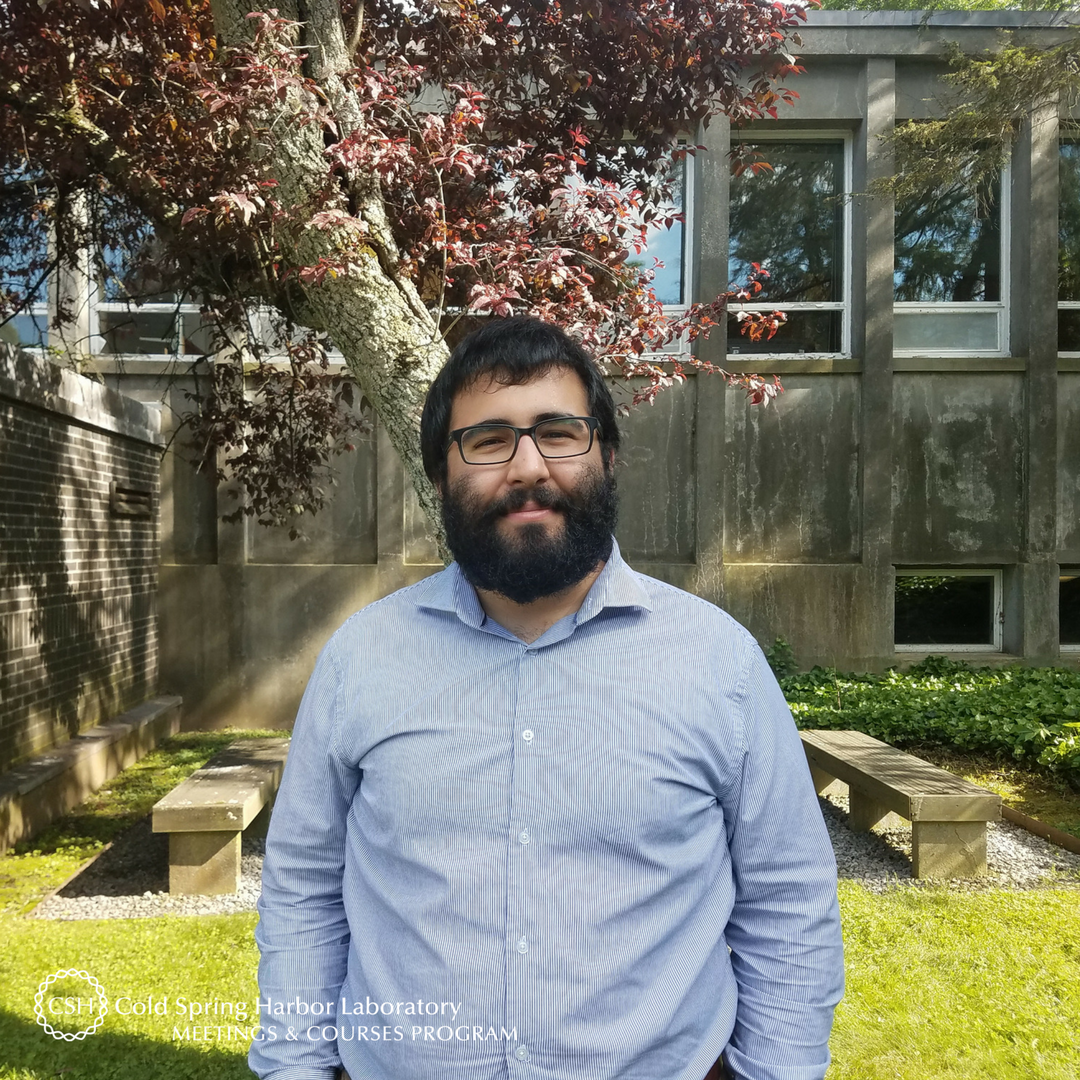
Visitor of the Week: Lee Shaashua

cshl-visitor-lee-shaashua

Meet Lee Shaashua of the Weizmann Institute of Science (Israel). Lee is a member of Ruth Scherz-Shouval's lab and is on campus for the biennial Workshop on Pancreatic Cancer. The postdoc fellow is new to the field of pancreatic cancer and attended the workshop for a comprehensive overview of the clinical and biological aspects of pancreatic cancer, as well as to have one-on-one interactions with senior investigators. Continue reading for more on Lee and her experience at the workshop.

What are your researching interests? What are you working on?
I am interested in the role of the tumor microenvironment in promoting pancreatic cancer aggressiveness, looking at different stromal subpopulations.

What is your key takeaway from the Course?
The importance of collaborative work and supportive environment in promoting research.

How many CSHL courses and/or meetings have you attended?
In addition to the Workshop on Pancreatic Cancer, I also attended the Biology of Cancer: Microenvironment, Metastasis & Therapeutics meeting in 2015. I look forward to attending future meetings and courses at CSHL. 

Was there something specific about the Workshop on Pancreatic Cancer that drew you to attend? 
As I am new to the field, I felt that this course would broaden my knowledge of both clinical and academic aspects of pancreatic cancer.

If someone curious in attending this workshop asked you for feedback or advice on it, what would you tell him/her?
I think this course is the best opportunity for students to get to know the field of pancreatic cancer as well as the leading faculty members.

What do you like most about your time at CSHL?
I really enjoy the casual and friendly atmosphere in the course. The people are great!

Thank you to Lee for being this week's featured visitor. To meet other featured scientists - and discover the wide range of science that takes part in a CSHL meeting or course – go here.

Visitor of the Week: Dadar Ahmadi-Pirshahid

Meet Dadar Ahmadi-Pirshahid of the Children's Medical Research Institute (Australia). Dadar, a PhD student under examination, is on campus for the 82nd Symposium: Chromosome Segregation & Structure. He is a member of The Cell Cycle Unit and presented a poster at the annual meeting. Read on for more on what brought the CSHL first-timer to attend the 82nd Symposium.  

What are you working on?
We know that the endomembrane system is actively involved in chromosome alignment during mitosis but we know very little about it. My work focuses specifically on the contribution of the membrane trafficking protein ‘Sorting Nexin 9’ to mitosis.

What is your key takeaway from the Meeting?
My takeaway is a challenge to understand chromosome alignment and segregation enough to reconstruct a functional model.

Was there something specific about the 82nd Symposium that drew you to attend? 
I was drawn to this meeting by its focus on the process of chromosome segregation, which is relevant to my work and generally interesting.

If someone curious in attending this meeting asked you for feedback or advice on it, what would you tell him/her?
Don’t hesitate. An amazing opportunity to learn from the best in a beautiful campus.

What do you like most about your time at CSHL?
Beautiful architecture set against the idyllic Oyster Bay. It is a pleasure to walk around the campus.

Thank you to Dadar for being this week's featured visitor. To meet other featured scientists - and discover the wide range of science that takes part in a CSHL meeting or course – go here.

A Word From: Vinay Pathak & Stefan Sarafianos

5S6A1159_retro_sm.jpg

This week, we hosted the CSHL meeting on Retroviruses. Started in 1975, this is one of only a handful of CSHL meetings that occur annually as opposed to every other year. This year’s organizers – Vinay Pathak and Stefan Sarafianos – are veterans of the meeting but new to organizing it. We checked in with them for a quick discussion about the meeting and major updates they’ve made to it. Among the changes they made are “five-minute poster pitches,” where select poster presenters summarize their projects in short talks in the Auditorium to entice more people to stop by during the poster sessions. Here’s what Vinay and Stefan had to say:

Stefan: Vinay and I increased the base number of scientists directly involved in the meeting in terms of participation in talks, sharing their art by displaying their science on the abstract book cover, and even chairing the sessions. This year, there are more session chairs and more talks because we introduced 5-minute talks. This is new for this meeting and we’re very happy so far.

Vinay: The people I’ve spoken with who gave a 5-minute talk have been appreciative of the opportunity. All of them presented the highlights of their work, uniformly stayed on time, and what this does is it gives people the opportunity to go to their posters and discuss the details of their works. I think they’ve all been very happy about it so far. We’ve heard no complaints about it so I hope that this will become a regular feature of the meeting in the future.

Stefan: Presenting a talk makes a difference for those who are still in the early stages of their career – including PI’s.

Regarding the session chairs that Vinay and Stefan chose:

Vinay: The idea is to give more junior faculty the opportunity to chair a session so they know what it’s like to stand in front of a crowd, direct the discussion and guide it.

Stefan: Chairing a session is an indication of accomplishment and recognition in your field. It’s something you can take to your department chairperson and include in your annual report. It is important.

Vinay: We were looking more for people who would benefit from chairing a session. There are a lot of senior people here who have done it before – it’s not a big deal to them. For someone who’s in their first, second or third year of an independent career, it’s a good opportunity for them to have this experience and, as Stefan said, they can take this to their department chair as an indication that they’re being recognized internationally.

Stefan: And among their colleagues. We made sure to pair the younger chairs with the more experienced ones so the meeting still runs smooth. They’ve all been very fantastic...they all deserve credit.

Another meeting feature the organizers updated this year is how the poster sessions were arranged. Rather than ordering the 151 poster presenters by name, they grouped them into research areas like Virus Entry and IFITMs, Uncoating, and Tetherin/Bst-2: 

Vinay: We organized this year’s poster sessions according to the subject. The last several years it’s been done alphabetically, which is a much more random way of doing it. We’ve gotten good feedback and people like the fact that it has been organized by topics this year.

For those who are on the fence about attending this longstanding meeting, we asked Vinay and Stefan for their advice and thoughts:

Vinay: This is the best meeting for basic science relating to HIV and retroviral replication throughout the entire year. So, I think for everyone who’s working in this field – molecular biology, cell biology, HIV replication – it is absolutely essential they come here and learn what’s going on in the field and to keep up-to-date.

Stefan: It’s a one-stop catch-up with everything that’s happening in the field. It’s a holistic kind of thing. You look at every step of the viral life cycle.

Thank you to both Stefan and Vinay for taking the time to chat with us. For more conversations with our other meeting organizers and course instructors, go here. Also, to gain a meeting-goer's perspective on this meeting, read our Q&A with Shaima Akhlaq

Lastly, Retroviruses will be back on campus May 21 – 26, 2018. 

Visitor of the Week: Shaima Akhlaq

cshl-visitor-shaima-akhlaq

Meet Shaima Akhlaq of the UAE University (United Arab Emirates). The graduate student, who defends her thesis this upcoming fall semester, works with Farah Mustafa in the Department of Biochemistry in close collaboration with Tahir Rizvi's research group within the Department of Microbiology and Immunology. She is on campus for the Retroviruses meeting where she presented a poster and a short talk. Read on for more on the CSHL first-timer's experience at the annual meeting.

What are you working on?
We are studying viral gRNA export from nucleus to cytoplasm, stability, translation and their interplay during retroviral replication. My current research interest lies in answering some of the basic aspects about the life cycle of Mouse Mammary Tumor Virus.

What is your key takeaway from the Meeting?
The immense learning and connections I have developed are my key takeaways from this meeting.

How many CSHL meetings and/or courses have you attended? 
This is my first visit to CSHL and my first CSHL meeting; though my poster was selected for last year’s Retroviruses meeting. Also, I would be very eager to participate in the annual Retroviruses meeting in the upcoming years.

Was there something specific about the Mechanisms in Metabolic Signaling meeting that drew you to attend? 
My first and foremost attraction was to meet the field specialists and catch up with the latest advancements. I was also excited to share my results with other colleagues in my scheduled talk and poster. And I intend to find a competitive PhD position with an established group participating in this meeting.

If someone curious in attending this meeting asked you for feedback or advice on it, what would you tell him/her? 
I would extend my words about this exceptional opportunity of meeting with all field specialists under one roof.

What do you like most about your time at CSHL? 
The scenic view of this campus is one thing which took my breath away in first sight because flying from a desert to this lush green island is nothing less than a scientific vacation.  

Thank you to Shaima for being this week's featured visitor. To meet other featured scientists - and discover the wide range of science that takes part in a CSHL meeting or course – go here.