Visitor of the Week: Luke Blakeway

cshl-visitor-bacterial-genetics-luke-blakeway

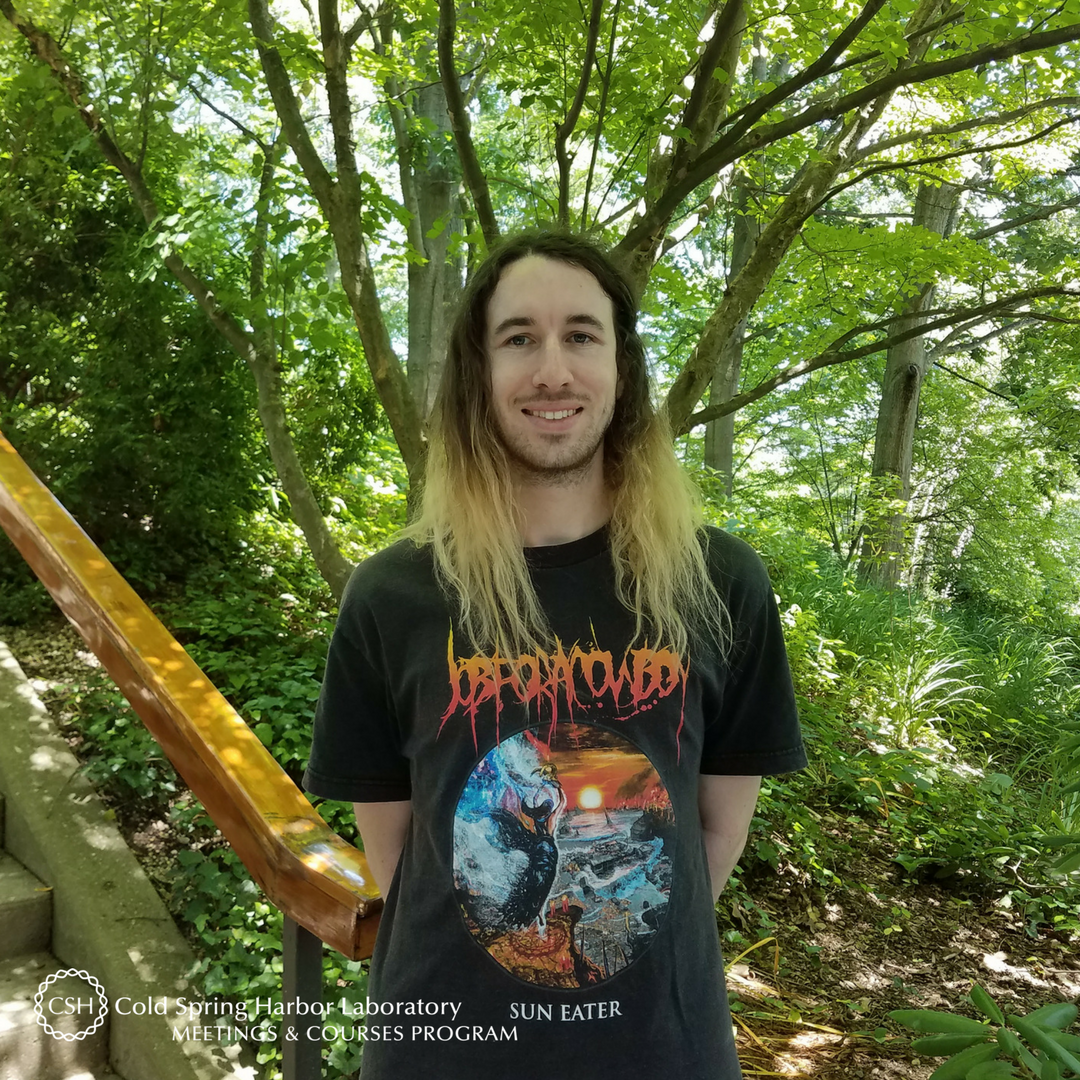
Meet Luke Blakeway of the Institute for Glycomics in Griffith University (Australia). The PhD student is a member of Kate Seib’s lab and is on campus to attend our Advanced Bacterial Genetics course. Read on for what the CSHL first-timer has to say about the annual course and his experience so far.

What are your research interests? What are you working on?
I work on bacteria that causes ear infections in young children called Moraxella catarrhalis, and how epigenetic regulation affects its ability to cause disease.

Was there something specific about the Advanced Bacterial Genetics course that drew you to apply?
There are a number of overlaps between my PhD project and the work of the course’s guest lecturers so having the opportunity to sit down and talk science with them really excited me! The course also provides next generation genome sequencing training, and where better to learn that than the home of molecular genetics?

What is your key takeaway from the Course?
Laboratories around the world do things very differently and I’ve had the opportunity to learn a range of techniques that I would never have been exposed to if I didn’t come to CSHL.

How many CSHL courses have you attended?
I’ve only attended my current course; Advanced Bacterial Genetics. I don’t have any plans yet to attend a future CSHL course or meeting, but I’d come back to CSHL in a heartbeat!

If someone curious in attending your course asked you for feedback or advice on it, what would you tell him/her?
I’d tell them to apply straight away. The course is a lot of fun, the techniques you learn are at the forefront of the field and have wide applications, and the instructors and attendees are some of the most amazing, insightful people you’ll ever met.

What do you like most about your time at CSHL?
I’ve truly made some lifelong friends from all over the world at CSHL. Everyone is so diverse but everyone is also on the same wavelength and we’re all here for the same learning experience, which makes for a great social atmosphere.

Luke received a stipend from the Howard Hughes Medical Institute (HHMI) to cover a portion of his course tuition. On behalf of Luke, thank you to HHMI for supporting and enabling our young scientists to attend a CSHL course where they expand their skills, knowledge, and network.

Thank you to Luke for being this week's featured visitor. To meet other featured scientists - and discover the wide range of science that takes part in a CSHL meeting or course – go here.

Visitor of the Week: Vita Stepanova

cshl-visitor-metabolomics-vita-stepanova

Meet Vita Stepanova of the Skolkovo Institute of Science and Technology (Russia). Vita is a PhD student in Philipp Khaitovich’s group in the Skoltech Center for Data-Intensive Biomedicine and Biotechnology. She sets foot on CSHL for the first time to attend the second iteration of the Metabolomics course. Read on for more on her work and feedback regarding the course.    

What are your research interests? What are you working on? 
My research interests focus on autism spectrum disorder (ASD) and human brain developmental disorders. I've been studying ASD genetics and now I am switching my focus from genes to metabolites to investigate pathways affected in autism.

Was there something about the Metabolomics course that drew you apply? 
This course is comprehensive and it takes a systemic approach to cover the whole area so we, the trainees, return to our labs with an understanding of metabolomics and certain methodologies.
 
What is your key takeaway for the Course?
Metabolomics is a powerful tool to explore new compounds and biological strategies, as well as a fascinating area of research. 

How many CSHL courses have you attended?
This is my first time here at CSHL and I've already been thinking what other course I can participate in so I can come back. 

If someone curious in attending your course asked you for your feedback or advice on it, what would you tell him/her? 
I would tell him/her a detailed story of my experience, including application submission, my personal feelings about the course, and what I got out of the course.

What do you like most about your time at CSHL?
I appreciate how much our course instructors are engaged at our needs, at our comfort, and making sure we absorb as much of the course as possible. 

Vita received a stipend from the Howard Hughes Medical Institute to cover a portion of her course tuition. On behalf of Vita, we want to thank HHMI for continuing to support and enable young scientists to attend a CSHL course to expand their skills, knowledge, and network. 

Thank you to Vita for being this week's featured visitor. To meet other featured scientists - and discover the wide range of science that takes part in a CSHL meeting or course – go here.
A Word From: Nicolas Wanaverbecq & Annalisa Scimemi

cshl-ion-channels-2017-nicolas-wanaverbecq-annalisa-scemimi

Last week, we spoke with co-instructors from Ion Channels in Synaptic and Neural Circuit Physiology course, Nicolas Wanaverbecq (soon to be starting a group at the Institut de Neurosciences de la Timone) and Annalisa Scimemi. Both share great insight into how the course remains at the forefront of technology while maintaining its core training ideology, and give a glimpse into the course by outlining a day in the life of an Ion Channels trainee. Nicolas and Annalisa also offer sage advice on how future applicants can increase their chances of being selected for the course. Given the Ion Channels course is highly competitive – accepting only 20% from its 2017 pool of applicants – their advice is worth its weight in gold.

Nicolas: The course is three weeks long. The first couple of days consist mainly of lectures given by instructors on the basics of electrophysiology, ion channels, and physiology of excitable cell and their implications for the function of neural circuits. Then we bring in invited lecturers to speak on specific topics. Each lecturer gives two talks during the morning half of the day: a didactical one followed by a talk on their research. We then take a lunch break after which we brief the students on the afternoon’s lab session, where they will work on the topic that was discussed in the morning. So the afternoons and evenings are spent recording from neurons and analyzing the results. Every day we cover a different, major topics ranging from single ion channels to synapses, using in vitro and in vivo experimental preparations. 
Annalisa: I like the lecturer format Nicolas mentioned. Sometimes the first part of a lecturer’s talk describes papers published in the 50’s and 70’s and then switches gears to discuss a 2017 approach to address more sophisticated questions. I appreciate the approach of looking back and looking forward within the same three hours of a morning, because it allows you to realize how much we have progressed but also how much is still unknown about some fundamental mechanisms of brain function. 
Nicolas: We ask our lecturers to stay at CSHL for as long as possible so they can interact with and help students in the lab. This gives students the chance to talk with prominent scientists in a very laid back atmosphere. Also, every night we have “Chalk Talks” where two students each give a five-minute talk on their project - what they do, why they applied for the course, and how they and their project will benefit from it.

Given their participation in the course over the last several years – Nicolas has been part of the training staff since 2013 and Annalisa was a teaching assistant in the early 2000’s – we discussed the curriculum of the course and specifically how it has changed to stay current with the evolving field.

Nicolas: The main philosophy hasn’t changed. Our goal is for the students – who are mostly unfamiliar with electrophysiology and ion channels physiology – to understand the concepts of electrophysiology and neuronal activity. Students get a general picture of neuronal activity, how to record and study it so they are able to return to their labs with a general "tool kit" to solve problems and carry out their experiments using what they learned. This philosophy has worked quite well and has been a constant in the course. 
Annalisa: The techniques may have changed but the spirit of the course hasn’t. It’s good that some techniques change because it means we’re teaching the state of the art. The conceptual approach — the rigor in which you have to perform your experiments, your attention to details, and the effort to squeeze information out of your recordings — is definitely there. 
Scientifically, I think the field has become more multidisciplinary. It’s a source of excitement and challenges because many of us were trained in just one of the many disciplines that we need to know right now. I personally like the new developments in imaging and quantitative approaches. Every day, there’s something new to learn, and that’s a humbling exercise that keeps me motivated.
Nicolas: I totally agree. I’m very interested in the development of transgenic approaches and viral infection to selectively target and manipulate neurons. They enable us to perform electrophysiological recordings from an identified population of neurons while analyzing their morphological and anatomical properties. This approach combines function with connectomic approaches – identifying how cells talk to each other as well as which cells talk to each other. 

We then asked them for advice they would offer to those interested in attending a future iteration of the course: 

Annalisa: Think about your scientific questions and how they can be complementary to the topics historically treated in the course. And, to those whose applications were not accepted, I would say try again. A part of science is being persistent, and not being accepted one year doesn’t mean you weren’t good. Maybe the pool of applicant was just very big that year. Also, keep doing your good science. It’s not a sprint run but a marathon.
Nicolas: We evaluate applications by making sure the personal statement shows an applicant’s motivation, how the Ion Channels course will be useful for them and for their project, and what aspect of their research will be improved with a technique we cover. We also look at an applicant’s background and originality of their project. If an applicant, let’s say, has a non-electrophysiological background but intends to add these techniques to their research, we would consider his/her application as well. The course is very competitive. We accepted only 12 students out of 60 applicants this year to maintain a 1:2 ratio of students to instructor/TA. With twelve students, we are able to follow them through the course and make it as efficient as possible for them.

Our chat winded down with both co-instructors sharing their personal experiences with the course and the benefits all parties gain from it:  

Annalisa: It’s useful to think about what has happened to people who took the course in the past and where they are now. In the past, I was a TA in this course with students who have now established themselves as individual investigators. When you attend as a student, you’re surrounded by friends who will become your colleagues in a few years. It’s an opportunity to form bonds that will last a lifetime. Cold Spring Harbor is one of the few places that offers this kind of opportunity, so it’s a privilege to be here as a student, a co-instructor, and as part of the community in general. So I definitely would encourage anyone to take this chance of a lifetime. 
Nicolas: Personally, I enjoy the connections made. Through the course, I have the opportunity to talk with students who have a real interest and curiosity for the field. I’m enthusiastic to share my knowledge and help young scientists grasp the techniques as best I can. It’s also interesting to meet fellow scientists, discuss our research, and set up future collaborations. Another benefit is the potential to meet and discover candidates for future postdoc openings. I think it’s bilateral – as much as the students benefit from meeting established scientists, we benefit from meeting them, getting to know them, and seeing how they work. 

Thank you to both Nicolas and Annalisa for taking the time to chat with us. For more conversations with our other meeting organizers and course instructors, go here. Also, to gain a trainee's perspective on the Ion Channels course, read our Q&A with Aalok Varma

A Word From: Benjamin Allen & Amy Ralston

cshl-mouse-course-2017-ben-allen-amy-ralston

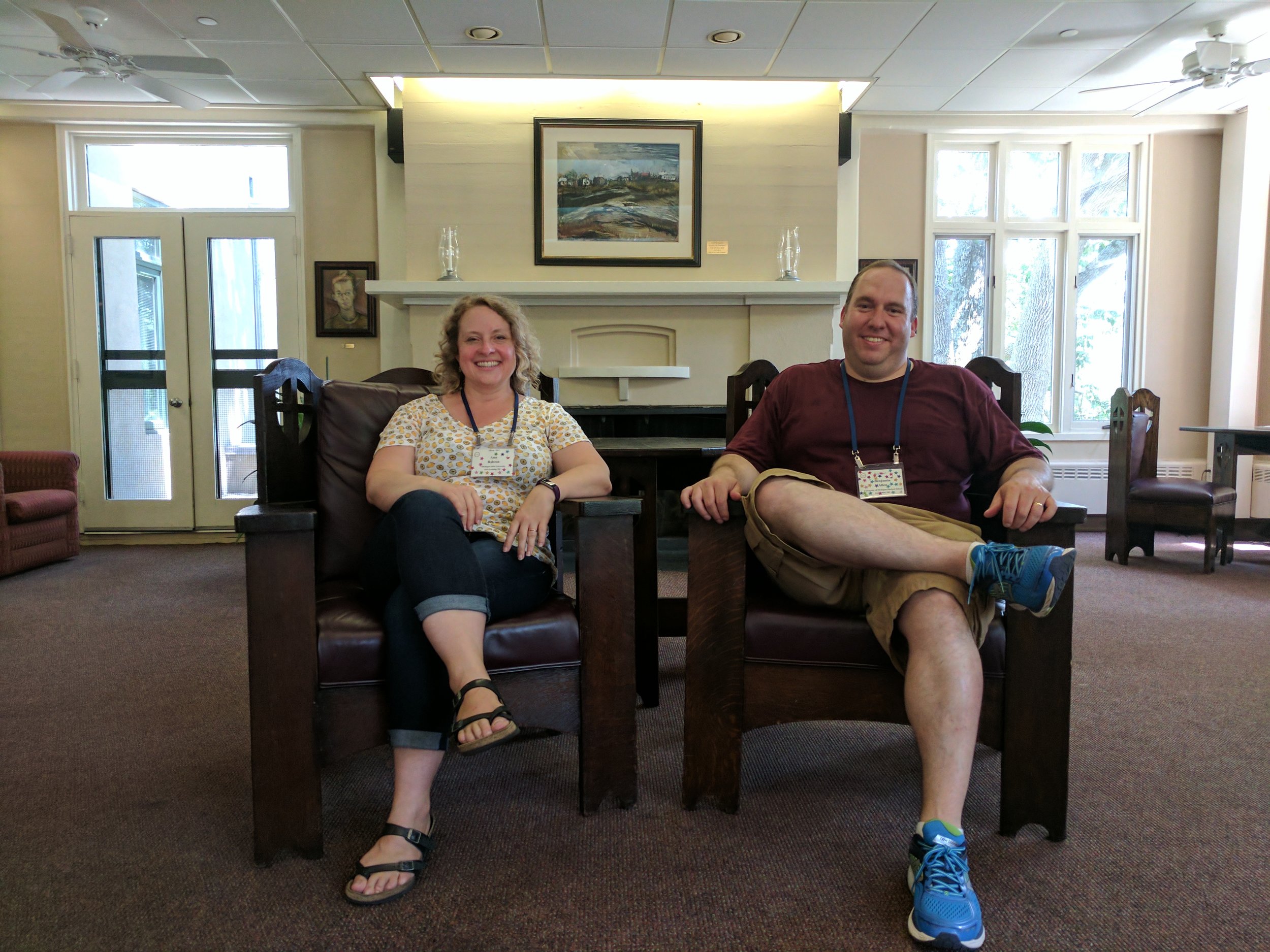
We recently chatted with the Mouse Development, Stem Cells & Cancer course instructors Benjamin Allen and Amy Ralston. Ben and Amy, for a number of years, have been involved with the course in various capacities but this is the first year both are co-lead instructors so we dived right into the benefits of participating in the course.  

Ben: From my standpoint, the students get two important things out of the course. Sure they learn how to do these techniques and practice them a few times while they’re here but, more importantly, they get introduced to the people who are experts in each of those techniques. So even if they walk out of here not an expert in a particular technique, they’re now friends with an expert they can contact. So if they’re doing experiment X and running into technical troubles, they can feel free contact one of the best people in the world to get advice.

Amy: In addition to the professional and scientific opportunities, we’re trying to maximize our students’ networking opportunities. We bring in about 30 additional experts from fields we’re not experts in so the students are exposed to a broad number of topics and taught classes and labs by those experts. One thing that is new to this year’s course is “First Drink”, where the students sign up to host a lecturer of their choice and take the lecturer to the Blackford Bar to buy his/her first drink. I think the students really like it! I’ve asked feedback from the lecturers too, and one comment I heard from a lecturer who has been here several times was that there were interactions that probably wouldn’t have happened otherwise.

Curious as to what other updates were made, we asked the first-time lead instructors if they made any changes to the curriculum. 

Ben: Amy and I replaced a few of the labs with ones that fit more smoothly with the flow of the course and that give the students a fuller grasp of the different stages of mouse development. We also swapped out some of the lecturers.

Amy: Another thing we’ve done, which is in response to survey feedback from last year’s students, is to give the students multiple opportunities to try each experiment rather than offering more experiments with fewer opportunities to practice. So far, I see people mastering things a little bit more and I’ve seen a lot less frustration than in previous years when we were ambitious with the number of experiments we taught.

In addition to the changes made to the course curriculum and lecture lineup, Amy and Ben incorporated a hot new experimental approach into this year’s course. 

Amy: Top secret! No, I’m kidding. It’s CRISPR. The course was originally designed to teach scientists how to make transgenic mice or knock-in mice the old fashioned way. But now that CRISPR exists, we adapted a lot of those same approaches to facilitate CRISPR, which is more efficient than the old approaches but it requires the same skillset.

Ben: CRISPR is the newest and biggest thing we incorporated into this year’s course. Last year was the first year we taught CRISPR and it was successful…

Amy: Successfully CRISPR-ed.

Ben: …we expanded it this year and we’re hoping it will be successful again.

cshl-mouse-course-35-anniversary-symposium-group


The Mouse course celebrates its 35th iteration this year. To commemorate the course’s milestone anniversary, the organizers coordinated a special one-day symposium. Trainees of this year’s Mouse course – in between checking in on their experiments, of course – were treated to a full day of talks from scientists who made significant contributions to both the course and to mouse biology. 

Amy: We’re really excited that we were able to invite all 3 of the founders of the Mouse course. They were all present for the Symposium: Brigid Hogan gave a talk at the Symposium, Liz Lacy gave a lecture this week, and Frank Costantini is arriving in a few days. It’s special to have all the founders present to acknowledge the course’s 35th anniversary.

We closed our laughter-filled conversation with their advice for future Mouse course applicants. 

Amy: It’s very important to justify how the Mouse course will enhance their career and research project. When we have a clear understanding that the student is familiar with what happens at the course, then we can be confident that they’ll have a satisfactory experience.

Ben: Also, we would recommend they ask their advisor or letter writers to do the same, to emphasize how the course is going to be a practical benefit. We don’t want this to be an intellectual exercise. Our hope is that students walk out of here trained, to actually use the techniques we’re teaching them here.

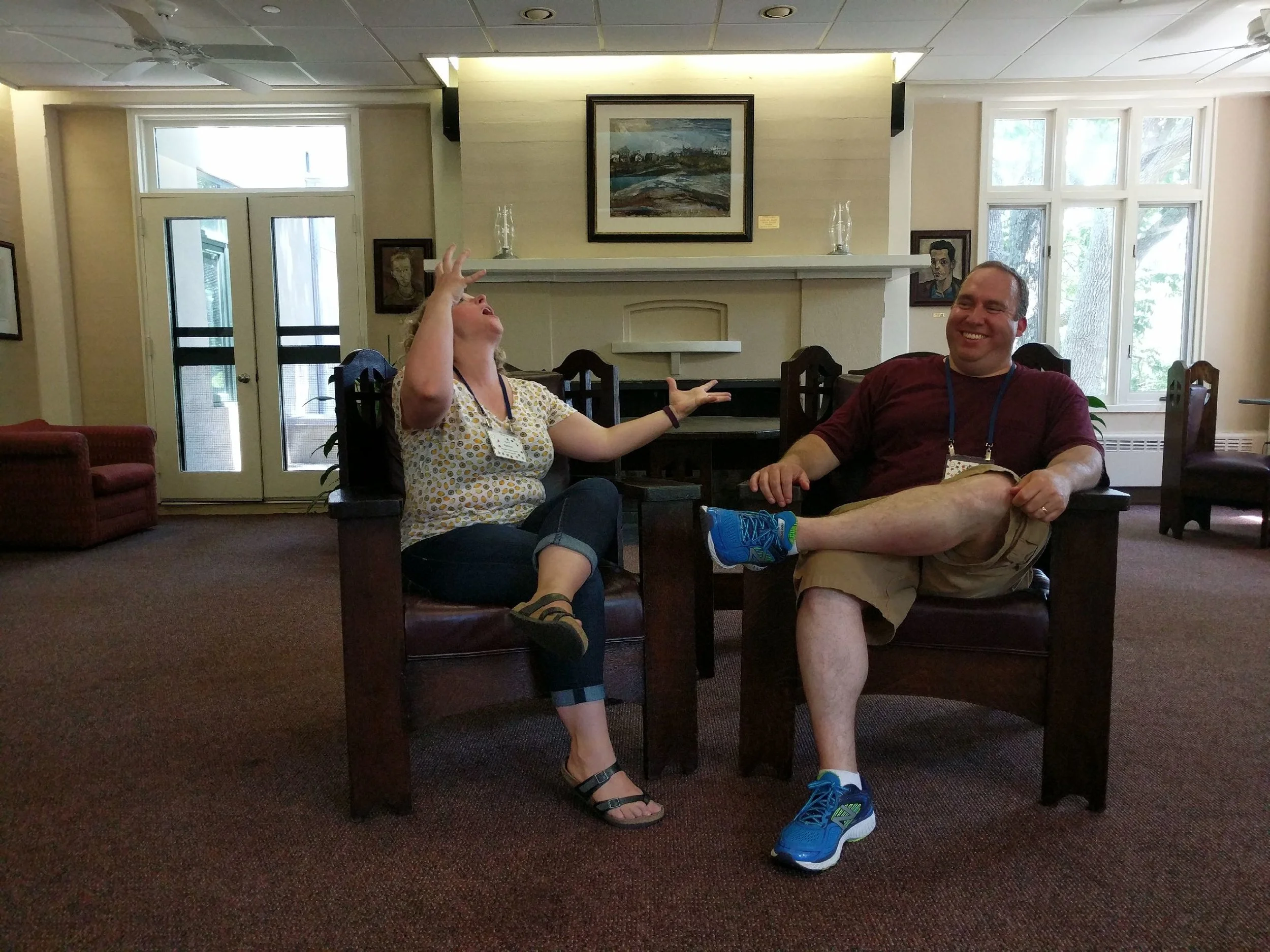
Thank you to both Amy and Ben for taking the time to chat with us. For more conversations with our other meeting organizers and course instructors, go here. Also, to gain a trainee's perspective on the Mouse course, read our Q&A with Rebecca Lea. In the meantime, enjoy the results of our rapid-fire photography session with Ben and Amy. 

cshl-mouse-course-2017-fun1
cshl-mouse-course-2017-fun2
cshl-mouse-course-2017-fun3

Visitor of the Week: Rebecca Lea

cshl-visitor-mouse-2017-rebecca-lea

Meet one of this week's featured visitors, Rebecca Lea of the Francis Crick Institute (United Kingdom). The PhD student, who is just coming towards the end of her first year, is on campus for the annual Mouse Development, Stem Cells & Cancer course. She is a member of the Early Mammalian Development and Stem Cell Laboratory led by Kathy Niakan. Read on for more on the CSHL first-timer's experience in the course and advice for those who wish to attend it next year.

What are your research interests? What are you working on?
Our lab wants to understand the molecular pathways underlying early pre-implantation mammalian development, specifically how a ball of cells with unlimited potential for forming a complete organism decides its fate. To do this, we make use of cutting-edge techniques including CRISPR/Cas9 genome editing, RNA-seq and fluorescent imaging in embryos and embryonic stem cells.

Was there something specific about the Mouse Development, Stem Cells and Cancer course that drew you to apply? 
It was my supervisor who first drew my attention towards this course, and I think I was hooked on the idea of applying as soon as she told me that she wished she had applied when she was a graduate student in the US – if it was a dream for her, an amazingly successful PI and a real role model for me, then I absolutely had to give it a shot! Aside from that, the course offered me an amazing opportunity to get a grounding in the area of developmental biology, and I was really excited to learn the technique of microinjecting small molecules into mouse zygotes, which we do often in my lab.

What is your key takeaway from the Course?
I think the main thing that I have learnt in the last week is that I am capable of so much more than I ever realized! Between the complex lab techniques we have been learning and the intensity of the overall academic schedule, I feel like I’ve already come a long way in both expanding my technical skillset and improving my ability to effectively manage my time. Both of these aspects will be a huge benefit when I return to my lab and continue my research, hopefully enabling me to be a much more effective scientist.

How many CSHL courses have you attended?
This is my first time at CSHL and I’d love to return to this amazing place!

If someone curious in attending your course asked you for feedback or advice on it, what would you tell him/her?
Go for it! Absolutely! I can’t recommend it highly enough, as both an academic and a personal experience – you’ll have the chance to interact with leaders in the field and learn an amazing amount, as well as meeting your peers from a broad range of labs who you’ll have plenty of opportunity to have fun with. For me, this was my first time travelling trans-Atlantic and my first time travelling alone altogether, and I was pretty scared to do it – but one week in, I have absolutely no regrets, so I would say to anyone who might be worried about that aspect that it is totally worth it.

What do you like most about your time at CSHL?
I absolutely love the campus! I’ve never seen labs set in such a beautiful environment, and being a real nature-lover, it’s amazing to walk through such picturesque scenery on my way to and from the lab each day. In fact, if I had to pick one non-science-related highlight, I think it would be walking out of Grace and immediately seeing a real-life chipmunk running across the path ahead of me!

Rebecca received a stipend from the Howard Hughes Medical Institute (HHMI) to cover a portion of her Mouse course tuition. Thank you to HHMI for supporting and enabling our young scientists to attend CSHL courses where they expand their skills, knowledge and network.

Thank you to Rebecca for being this week's featured visitor. To meet other featured scientists - and discover the wide range of science that takes part in a CSHL meeting or course – go here.