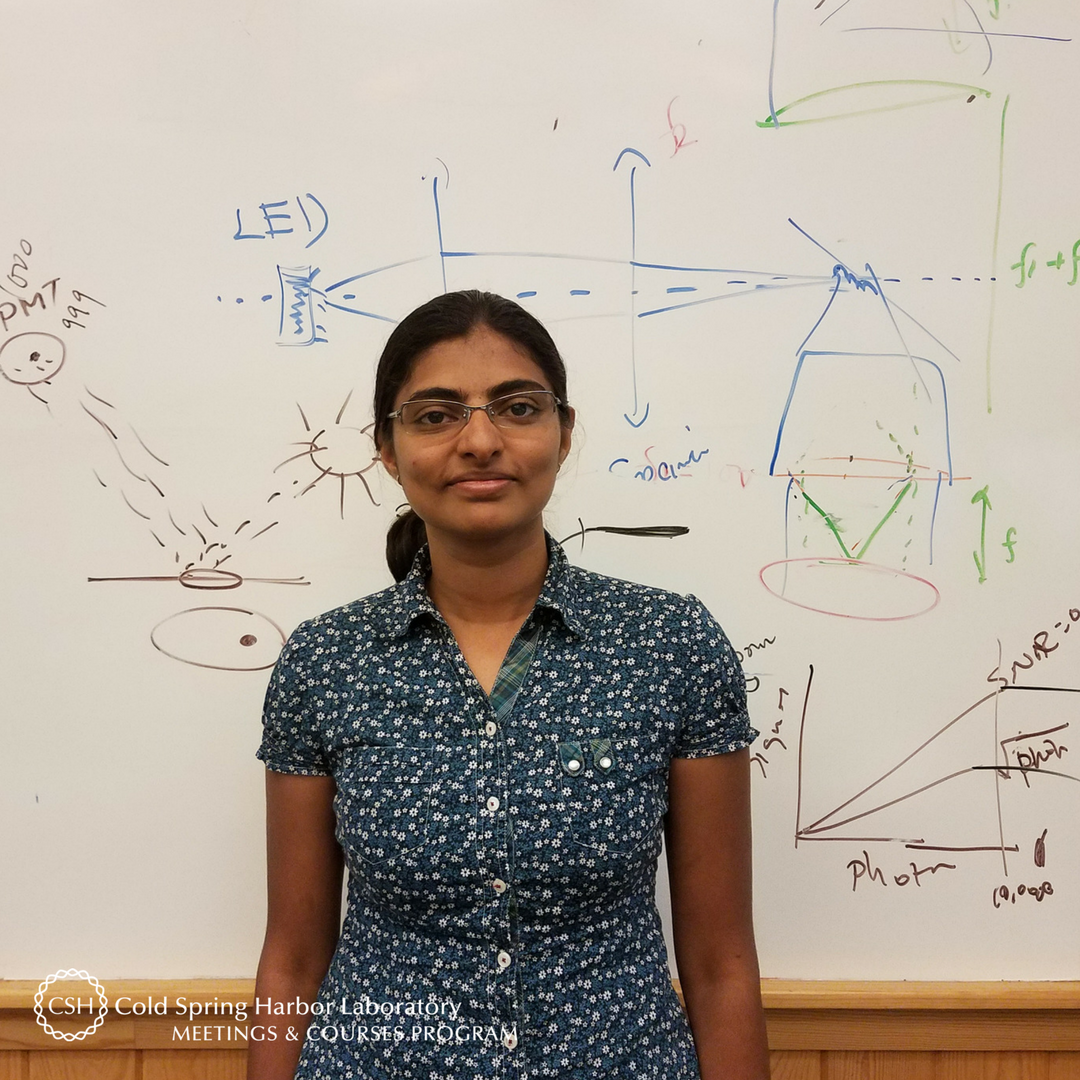
Visitor of the Week: Janani Sundararajan

cshl-visitor-janani-sundararajan

Meet Janani Sundararajan of Duke University. A graduate student in Richard Mooney's lab, Janani is on campus for the Imaging Structure & Function in the Nervous System course where she is gaining hands-on experience on the latest imaging techniques and technologies from the ground up. 

What are your research interests? What are you working on?
I am currently working on how movements affect our ability to hear and the neural circuitry underlying changes in auditory perception during resting and movement.  

Was there something specific about the Imaging Structure & Function in the Nervous System course that drew you to apply? 
I was most interested in learning about the latest imaging techniques in neuroscience that I could apply to my work. I particularly wanted to learn more about intrinsic imaging, calcium imaging and photo stimulation techniques to look at the activity of different subpopulations of auditory cortical neurons in different behavioral states.

What is your key takeaway from the course?
I have learnt a lot of concepts in the course that are directly applicable to my current and future work. The course focuses on training students on both the basics of optics and the current cutting-edge imaging techniques in neuroscience including confocal and 2-photon microscopy which are very useful to my research work. It has also given me the opportunity to try out these techniques in the practical sessions and learn about digital image processing methods.

How many CSHL courses have you attended? How about CSHL meetings? 
This is my first CSHL course. I am really enjoying it so far and hope to attend a CSHL meeting in the future.

If someone curious in attending your course asked you for feedback or advice on it, what would you tell him/her?
I would absolutely encourage anyone interested in this field to take the course. A great thing about the course is that it is very interactive. The course itself is interactive and we are presented with opportunities to meet and speak with a number of experts in the field. 

What do you like most about your time at CSHL?
The casual environment which lets you interact with other members in the scientific community. Also, the scenic location of the campus with the harbor on one side and greenery on the other is very beautiful and refreshing.

Janani received a stipend from the Howard Hughes Medical Institute (HHMI) to cover a portion of her course tuition. On behalf of Janani, we would like to thank HHMI for supporting and enabling our young scientists to attend a CSHL course where they expand their skills, knowledge, and network. 

Thank you to Janani for being this week's featured visitor. To meet other featured scientists - and discover the wide range of science that takes part in a CSHL meeting or course – go here.
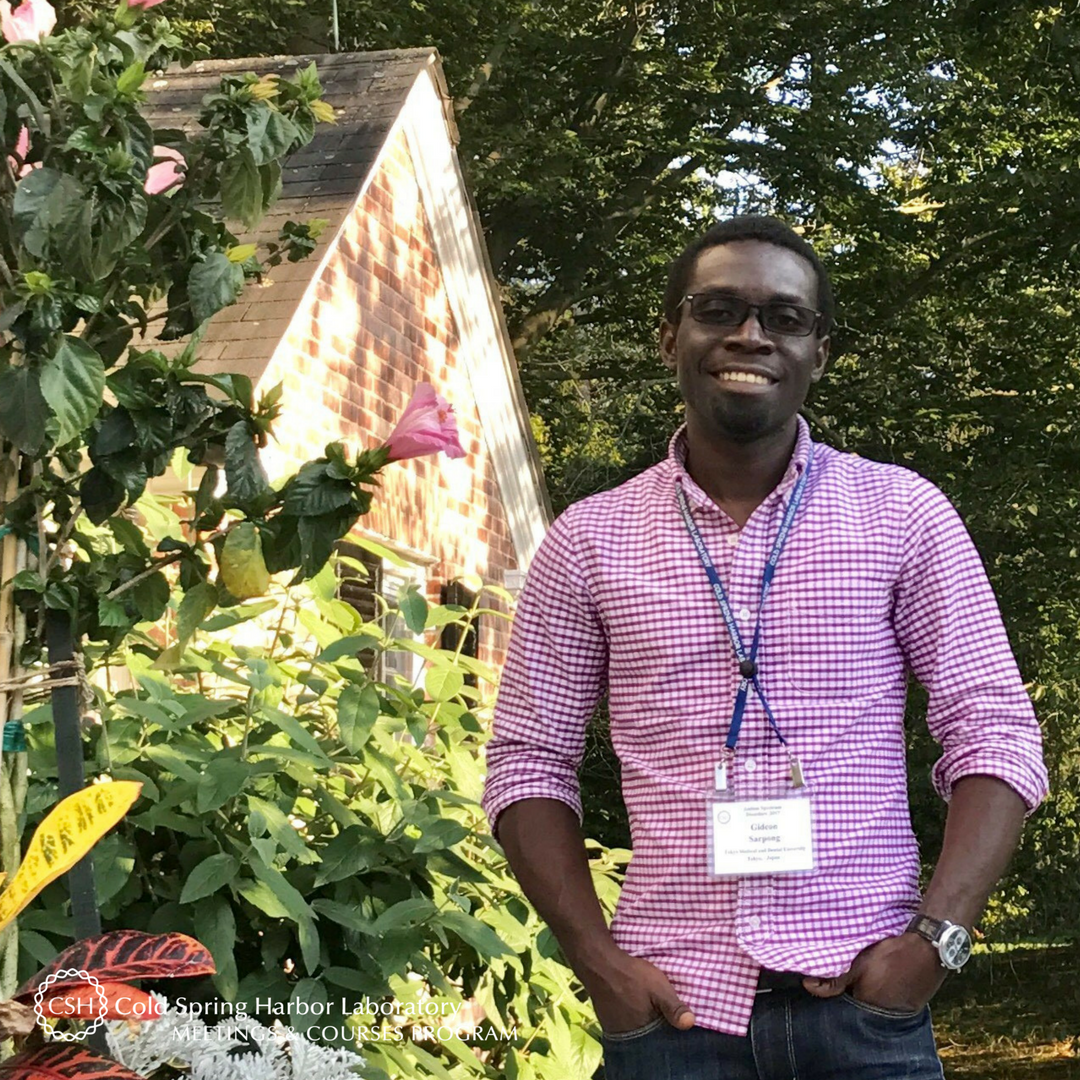
Visitor of the Week: Gideon Sarpong

cshl-visitor-gideon-sarpong

Meet Gideon Sarpong of the Tokyo Medical and Dental University (Japan) where he is a graduate student in the Systems Neurophysiology lab headed by Izumi Sugihara. Gideon made his first visit to the Laboratory for the Workshop on Autism Spectrum Disorder. The workshop runs until this Sunday, and Gideon filled us in on what attracted him to the workshop and he has learned so far. 

What are your research interests? What are you working on?
My research involves the cerebellar system, which is important in adaptation in the reflex behaviors and movement executions of animals. It is also one of the areas where morphological abnormality is most often found in individuals with Autism Spectrum Disorders (ASD). 

Our work aims to understand the structure and function of the neuronal circuitry that underlies particular neural systems by using neurophysiological, neuroanatomical, and genetic approaches.

Was there something specific about the Workshop on Autism Spectrum Disorder that drew you to apply for it? 
Yes. In addition to learning about current etiological theories and hypotheses, I have a strong interest in understanding the neurobiology of ASD from different perspectives including human genetics and developmental neurobiology, which have been explored in the course thus far. The course also provides the opportunity to meet many potential collaborators working in this field.

What is your key takeaway from the Workshop?
I have been able to examine and appreciate the dimensions of Autism Spectrum Disorders on various levels, which include the implications of circuits and systems in ASD, genetic approaches, neuroimaging methods, as well as current cellular neuroanatomical challenges and findings. Furthermore, and highly rewarding, the instructors and other invited speakers offered key and practical advice on grants and career development.

If someone curious in attending your Workshop asked you for feedback or advice on it, what would you tell him/her?
There is no better place for such a course than at CSHL. The workshops are small by design and ensure an excellent instructor-to-student ratio. Moreover, the instructors provide a stimulating, supportive, and an engaging teaching environment. In the words of Isaac Newton, “If I have seen a little further than others, it is by standing upon the shoulders of giants."

What do you like most about your time at CSHL? 
I had the opportunity to meet and interact with an exceptional faculty, peers and colleagues of different backgrounds, nationalities, ages and aspirations. Aside the numerous informal discussions, there are attractive recreation on the beautiful campus of the Banbury Center, including a beach and a pool, not forgetting the entertainment room in the basement of Robertson House.

Gideon received a stipend from the Nancy Lurie Marks Family Foundation to cover a portion of his course tuition. On behalf of Gideon, thank you to the Nancy Lurie Marks Family Foundation for supporting and enabling our young scientists to attend a CSHL course where they expand their skills, knowledge, and network. 

Thank you to Gideon for being this week's featured visitor. To meet other featured scientists - and discover the wide range of science that takes part in a CSHL meeting or course – go here.
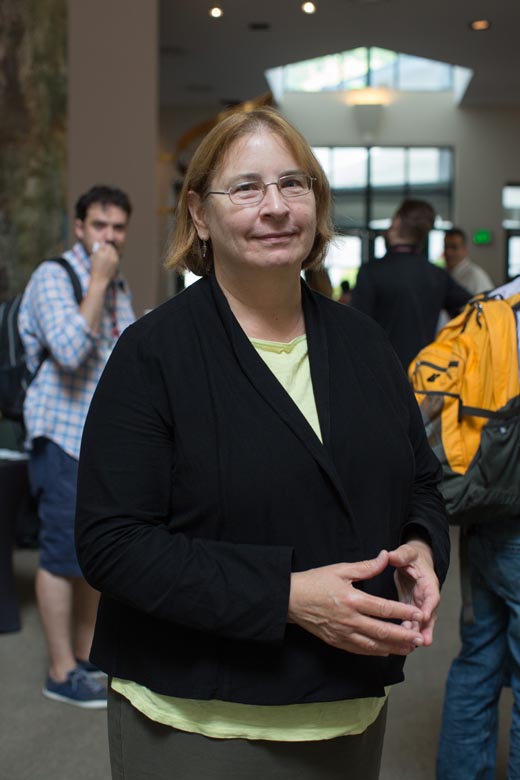
A Word From: Mark Reimers & Pascal Wallisch

2017 Neural Data Science instructors Mark Reimers and Pascal Wallisch (L to R)

2017 Neural Data Science instructors Mark Reimers and Pascal Wallisch (L to R)

We recently sat down with co-lead instructors and co-founders, Mark Reimers and Pascal Wallisch, to talk about their biennial course on Neural Data Science. The course was first offered in 2015 to help neuroscientists develop conceptual and practical capabilities for analyzing large datasets such as those resulting from single- and multi-electrode extracellular recordings, local field potentials and electroencephalograms (EEGs), as well as two-photon and wide-field optical imaging. Cutting edge data analysis methods are still very much the focus of the Neural Data Science course. Here, Mark and Pascal go into detail about the course’s importance to neuroscience.

Pascal: We now have a lot of new ways of recording, storing, and processing neural data but we don’t yet have a good understanding of how to analyze the data. The richness of the newly-available data demonstrates how much we still don’t understand about the brain and that one would be well-advised to be more modest and humble about what we actually understand about brain function. A lot of other courses focus on existing theories and models; whereas our course de-emphasizes modeling and theory. We won’t tell you what to think about how the brain works, but rather how to analyze your data. 
Mark: I would agree that this course really is very distinct from other computational neuroscience courses. We’re not focused on trying to simulate the brain or impose models on data. We’re exploring the data in a hypothesis-free context rather than use it to buttress or falsify a particular theory. I think the real imperative for neuroscientists now is to look closely at their data and to let it inform them, rather than impose their ideas on their data. Because the new technologies enable us to see more richly than before, I would argue that it’s appropriate in this stage of neuroscience to be more exploratory. 
Pascal: I think the students are loving the exploration aspect of it. It’s a very hands-on course. Someone came up to me this year and said, “This course instills in me confidence.” He is trained as a medical doctor with no mathematical background and was always afraid of equations. But our hands-on approach showed him that he can absolutely do this. It’s actually not that hard once one gets the hang of it.
Mark: The students are asking questions about their data that we can show them how to address. Many of them feel that some of the longstanding theories and ideas are not really giving them insight or traction on their data. So I think they’re welcoming of this new perspective.
Pascal: Regardless of whether someone takes this course or not, those continuing in neuroscience will, in my opinion, need a solid understanding of statistics and at least one relevant programming language to be successful in the field. 
Mark: I second that. I think it’s a fundamental transformation in all of biology, though it’s been particularly rapid and, perhaps, hard for some people at this point in neuroscience. It used to be that it was important for you to have understanding of the animals, ability to do careful surgery, really good microscope skills, be able to identify neurons, and be familiar with your technical apparatus and its artifacts. All of these are still very important but, increasingly, you also have to think quantitatively and pose questions that can be addressed by data analytic methods.
Pascal: Which may be challenging for someone who has no training in that kind of skillset. Biology used to be a field where you could have a long, productive and respectable career while skirting math and statistics for the most part. But this is no longer the case – at least not in neuroscience. So a course like this is desperately needed. 

For the second iteration of the course this summer, Mark and Pascal made revisions to the curriculum and schedule that maximized what the trainees learned. 

Pascal: We made four big changes to this year’s course that made things run much more smoothly. The first is that the course now runs a full two weeks instead of just ten days, with one week dedicated to data recorded with electrical methods and the other to data recorded with optical methods. The second change is that we cut topics that were not directly related to electrical and optical methods, like information theory and fMRI, as there are other courses that focus more directly on those topics. The third change we made is that we streamlined the way we teach, in the sense that we now work with much fewer data sets. In 2015, each invited lecturer brought his/her own data, and we spent hours and hours learning the structures of all the different data sets. Finally, we increased the number of teaching assistants in the course. 
Mark: Most of our theories are built on a kind of information processing model that increasingly seems unlikely to be true except for a few specific areas, such as the visual system, so we no longer emphasize information theory in the curriculum. In addition, we’ve oriented the course towards the new revolutionary technologies like optical imaging. Our plan for the future is to try and pivot toward emerging transformational technologies as they become important. They all pose dramatically different (and difficult) data analysis issues.

We then switched gears and talked about what a typical day for their trainees look like.

Mark: We typically have intense conversations about neuroscience over breakfast, occasionally about politics as well. Then starting at 9 o’clock, we have three hours of seminars, followed by a lunch break. We bring in one invited lecturer to give two talks each morning. The lab sessions then run from 1 to 4:30 and when we say lab, we don’t mean pipetting and test tubes.
Pascal: We mean MATLAB. A key feature of the afternoon lab sessions is that the students work in pairs, and the partners are assigned by us based on their experience with MATLAB. We purposely assign two students per computer so they have someone to talk to while they’re doing analyses and grappling with the data. It prevents the students from feeling isolated and it’s been working really well.
Mark: In the late afternoon, the students have free time when they can go to the tennis court or beach, or take a walk or run around the estate. Dinner is at 6 and, of course, we have even more intense conversations about neuroscience, politics, teaching, and universities. We resume again at 7:30 with evening sessions that are more of a diversion. For example, we’ll have a presentation on how to write a good scientific paper, a discussion about contentious issues in data analysis, or a presentation by someone from Mathworks on new capabilities in their program. The students typically stay up late to do more coding or work on what they didn’t finish during the day. 

Acceptance into the Neural Data Analysis course is competitive. We asked Mark and Pascal what they look for in potential course trainees and their application materials. 

Mark: We’re looking for someone who’s wrestling with fundamental questions about the brain, who’s exploring and using some of the cutting-edge technologies, and who is quantitatively-minded but doesn’t have the tools to analyze the data they’re getting in any detail. We would like to help our students formulate rigorous statistical and mathematical approaches for answering questions that may be lying underneath their experiments, that they want to address but don’t know how to formulate. 
Pascal: We look for three things: 1. Scientists who will benefit from the course. We’ve rejected some applicants because we felt they already knew too much about the material. 2. People who are working on data from electrical or optical methods. Some people who applied for the course were qualified, but were interested in clinical neurology, neurosurgery, or neuro-imaging, and there are other courses for developing those skills. 3. And, of course, we look for overall curiosity and a demonstrated record of achievement. 
Mark: For those whose applications were not accepted this year, I would encourage them to try again. The competition this year was stiff and there were many talented students we couldn’t accept. 
Pascal: We only have 20 spots and we’re already at maximum capacity, so we had to make some really tough choices, heartbreaking in some cases. 

We ended by asking what their favorite moments have been throughout the two iterations of the course.

Mark: During the 2015 course, I fondly remember singing math songs. 
Pascal: I remember that! That was definitely a community building moment. 
Mark: Several of our perhaps best-remembered moments were those where students see that someone is taking seriously a fundamental confusion or uncertainty of theirs, something they had but never articulated very clearly, or had never seen articulated explicitly. Before the course, they’d just had to cope, sort of make do, make stuff up, or do something to produce what’s expected. And now they see that yes, something is really problematic: that it’s not clear how to go from, let’s say, an electrical trace to a discrete set of times where a particular set of neurons has fired. We really need to make processes of the brain visible to researchers so they can come up with better ideas of how the brain works.

Make sure to read the rest of our A Word From... series.

A Word From: Maria Jasin

cshl-crispr-feature-maria-jasin

Last weekend, we hosted the third CSHL meeting on Genome Engineering: The CRISPR/Cas Revolution. We met with Maria Jasin, one of the three original organizers and a CSHL meeting veteran, to talk about the CRISPR meeting. Here is a quick overview of her research:

We study double strand break repair and genomic instability, with a particular interest in the breast cancer suppressors BRCA1 and BRCA2. We’ve also had a major interest in understanding meiotic recombination and how double strand breaks are repaired there, and maybe aberrantly repaired in other syndromes. 

Maria provided a great overview of the meeting, how it has evolved with the field, and the developments she’s most excited about. 

One major change is the expansion in the number of enzymes and nucleases that are being used. The first meeting focused primarily on Cas9 itself. Now, many different enzymes are used that have better applications than Cas9 in some contexts, which is an exciting development in the field that is much more represented in the meeting than it was in the past. It’s a recognition of how large the CRISPR repertoire is in bacteria, the almost limitless number of proteins that can be cloned and characterized, that have somewhat different specificities or other reasons that make them preferable in different situations. 
This year’s meeting started with a lot of CRISPR biology which I found really exciting, because it lets us non-CRISPR biologists understand this beautiful genetic system of adaptive immunity in bacteria. Also, there’s been an emergence of anti-CRISPRs - peptides that can halt CRISPR activity. These peptides are numerous and act differently by blocking different steps, which is a really fascinating system. It’s perhaps not surprising that there are some practical uses to them as well. 
One of the really exciting things for me was Kathy Niakan’s talk about using human zygotes to address important questions about embryonic development in humans. Obviously, it’s a very difficult system that needs to be heavily regulated. But as much as we know about mouse development and the very earliest stages of mouse embryos, one thing that’s clear is how different things are in human embryos. We have known for a long time that human oocytes are very prone to aneuploidy, and that results in miscarriages or birth defects. Trying to understand the genome instability that arises in the early stages of embryos is something that’s also important for human health and infertility. 
Another talk I was excited about was given by Danwei Huangfu, who uses human pluripotent stem cells to understand pancreatic development. For a long time, we’ve only been able to use cell lines in humans that are transformed and highly aberrant. The ability to use cells that can be differentiated into human lineages is really exciting and highlights the ability to understand, again, human embryonic development at a much later stage. It’s related to human genetics that in the past we wouldn’t have been able to do.  
Also, my student, Weiran Feng gave a talk about his work on homologous recombination – one of the pathways people like to use to modify the genome. It was very touching for me to see one of my students develop a beautiful story and present it in a beautiful way. 

These days, there’s no shortage of scientific meetings focused on CRISPR. We asked Maria what sets the CSHL meeting apart from others, and also who benefits most from attending it.

There certainly has been a large explosion of CRISPR and genome engineering meetings, but the one thing that’s particularly exciting about this meeting is its emphasis on biology. We, of course, have talks that are more technical, about improving the CRISPR systems or adapting new systems or doing screens. But we’ve balanced it by having a lot of biologists present who are trying to understand human development. We even had a talk this year on using killifish  as a new model for aging, so the meeting brings together a lot of biologists.   
Commercial interest companies love this meeting because they are able to showcase their work here. Most of the talks are from academic scientists though, who love this meeting for the basic biology and technology developments that are coming from and presented by academic labs. 
And Cold Spring Harbor is always a great place for graduate students and postdocs. We do have invited speakers, but the number of talks given by postdocs or grad students outnumber the invited talks. My first talk as a scientist was at CSH when I was a graduate student! Attending a Cold Spring Harbor meeting is an ideal way to start your career because you are able to not only interact with a number of scientists but also have the opportunity to speak or present a poster. 

We ended the conversation on how this year’s meeting turned out. 

I had thought that, with time, the meeting would get less exciting but this year’s meeting was just as exciting as the first one. It’s a testament to the growth of the field, the creative approaches people are taking, and the expansion of the number of nucleases involved. We brought in people with different expertise – stem cells, modifying human embryonic cells, etc. – which brought together people who don’t know or often see other. The meeting hits a lot of different areas in biology even if there’s a CRISPR coherence to it, and that promotes great scientific interactions.

The Genome Engineering: The CRISPR/Cas Revolution meeting will return to campus on August 22-25, 2018. Follow us on Facebook or Twitter for meeting updates. 

To read more conversations with CSHL meeting organizers and course instructors, browse through our A Word From... series

Visitor of the Week: Leandro Watanabe

VOTW-insta.png

Meet Leandro Watanabe of the University of Utah. The Brazilian national is a PhD student in Myers Research Group within the Department of Electrical and Computer Engineering, and is on campus for the Synthetic Biology course. 

What are your research interests? What are you working on?
My research interests consist of applying computer engineering principles to synthetic biology. Currently, I am working on model standards and simulation methods for biological models to facilitate the model-based design of genetic circuits.

Was there something specific about the Synthetic Biology course that drew you to apply?
Absolutely! Since I am developing computational tools for synthetic biology, it is important to understand what goes on in the lab. However, as a computer, I have never had the opportunity to do lab experiments. Therefore, this course is enabling me to better understand the lab part of my work. 

What is your key takeaway from the Course?
The diversity of the synthetic biology field is amazing, and hearing of how people are drawn into the field is always very entertaining.

If someone curious in attending a future iteration of the Synthetic Biology course asked you for feedback or advice on it, what would you tell him/her?
There are so many reasons to attend the course! Regardless of field or level of experience with a particular skill, I strongly encourage people to apply because this course has a nice learning environment with highly-competent instructors and teaching assistants. Also, the students have different expertise and readily share their knowledge with those interested. In addition, throughout the course, we have seminars featuring top-notch scientists with major contributions to the synthetic biology field. Having the chance to learn of their work and to interact with them is phenomenal. As long as you are motivated, you will get a lot from this course.  

What do you like most about your time at CSHL?
We have so much food. It is great!

Leandro received a financial support from The Helmsley Charitable Trust. On behalf of Leandro, thank you to The Helmsley Charitable Trust for supporting and enabling young scientists to attend a CSHL course where they expend their skills, knowledge, and network. 

Thank you to Leandro for being this week's featured visitor. To meet other featured scientists - and discover the wide range of science that takes part in a CSHL meeting or course – go here.