Visitor of the Week: Britt Adamson

cshl-visitor-brittany-adamson

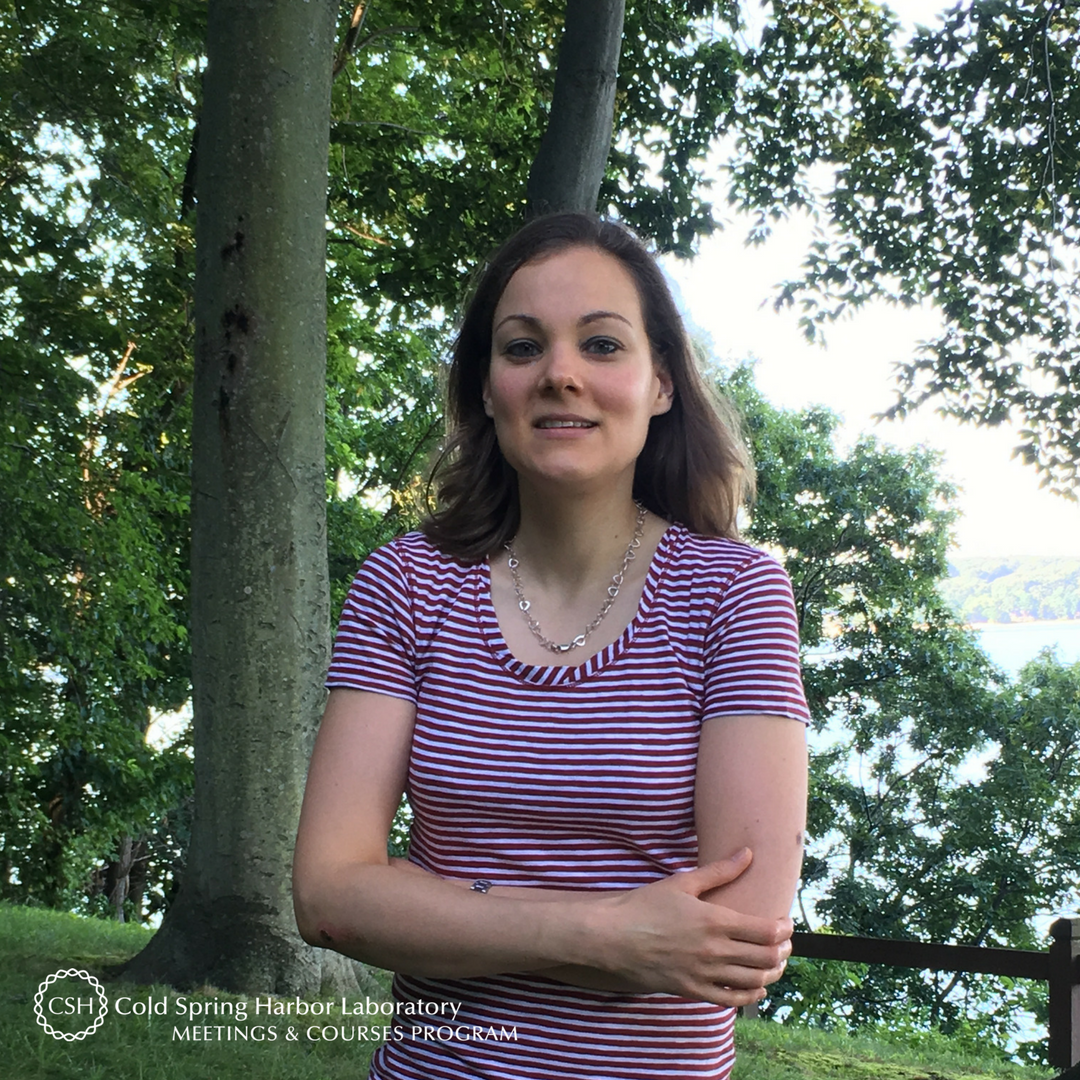
Meet Britt Adamson of the University of California, San Francisco. A postdoc and member of Jonathan Weissman's lab, Britt attended the Genome Engineering: The CRISPR/Cas Revolution meeting where she gave a talk titled "Perturb-seq -- A multiplexed single-cell CRISPR screening platform".
 
What are your research interests? What are you working on? 
My research is focused on understanding how cells respond to stress. I am interested in the mechanisms by which cells manage and respond to environmental challenges and how interconnected stress response networks work together to monitor basic cellular processes. I use a lot of CRISPR-based technologies in my work.

Was there something specific about the Genome Engineering: The CRISPR/Cas Revolution meeting that drew you to attend? 
I’ve worked with (and on) CRISPR technologies throughout my postdoc. It’s incredibly valuable to see how the field is maturing, gain new insights, and reconnect with colleagues -- all three of which I'm able to do at this meeting.
 
What is your key takeaway from the Meeting?
My big takeaway from the meeting is that the CRISPR field is rapidly maturing from a phase of basic technology development towards a real focus on applications.
 
How many CSHL meetings have you attended?
This is my second CSHL meeting. Last year, I attended the Protein Homeostasis in Health & Disease meeting.
 
If someone curious in attending this meeting asked you for feedback or advice on it, what would you tell him/her?
It’s a great meeting for anyone interested in working on CRISPR biology, technology, or application. 
 
What do you like most about your time at CSHL? 
As an East Coast transplant in California, there is nothing more beautiful than summer in the northeast.

Thank you to Britt for being this week's featured visitor. To meet other featured scientists - and discover the wide range of science that takes part in a CSHL meeting or course – go here.

A Word From: Karla Kaun, Alex Keene, Chi-Hon Lee & Stefan Pulver

2017 Drosphila Neurobiology co-lead course instructors Karla Kaun, Stefan Pulver, Alex Keene, and Chi-Hon Lee (L to R)

2017 Drosphila Neurobiology co-lead course instructors Karla Kaun, Stefan Pulver, Alex Keene, and Chi-Hon Lee (L to R)

A few days ago, another batch of alumni from the course on Drosophila Neurobiology: Genes, Circuits & Behavior were welcomed into the ever-expanding network. We met up with Karla Kaun, Alex Keene, Chi-Hon Lee, and Stefan Pulver to talk about the annual course and exchange fly-centric one-liners. Drosophila Neurobiology, aka “the fly course,” is among our longest running courses and has therefore evolved significantly over the last 34 years. Here is an overview of the course format today and the major updates Alex, Chi-Hon, Karla and Stefan have made to keep it current and engaging. 

Stefan: One of the things we try to do in the course is continually reinvent and change it in response to student needs and feedback. The content of the course is usually structured by us ahead of students applying. But we build in flexibility so we have avenues where students can explore – maybe improvise different modules and extend some of the modules we teach, all while having a solid framework of learning objectives. The course isn’t a static thing that moves from one year to the next. It’s a growing, living thing that can actually change – sometimes even within the three weeks of the course. We make adjustments “on the fly!” 
Chi-Hon: One of the most significant changes we made is the addition of the capstone project. The course was originally designed to teach students how to use Drosophila to study neuroscience. The capstone project allows the students to link what they learn at the course with their own research interests.  
Karla: At the end of the course, the students give chalk talks on their capstone projects and what they want to do in the future in their own labs using what they learned in the course. We really like chalk talks because they create a lot of back-and-forth discussions between the students and faculty. 
Stefan: Another new thing we’ve introduced over the last few years is a do-it-yourself (DIY) component. We have a few sessions where we teach students how to build apparatus and create their own equipment. These are systems students can create by using 3D printed materials or purchasing separate components. The systems we DIY – generally behavioral apparatus and opti-genetic LED controls – are expensive if you buy them outright. 
Alex: With the advent of 3D printing, DIY-ing is becoming more and more common across science and we wanted to make sure we integrated it into the course. 
Karla: And the students love it. One of the scientific advantages to DIY is it permits a lot more creativity. We try to reveal to our students that it’s not that expensive to do it yourself, so anybody can do it. You don’t have to buy a pre-built thing. The only limitations are your imagination and ability to order materials.
Alex: Another thing that’s been ramping up is the integration of computational biology into the course’s physiology and behavioral sections. Computational biology is something that’s growing within the neurobiology field, and we make sure our students get a healthy background in it. 
Chi-Hon: We aim to empower our students. In Drosophila neuroscience, there is a norm to use creativity to overcome hurdles. Most of what you want to do, you cannot buy the right tool: you have to invent it, or write your own program to achieve a goal. Our sessions are designed to help students get to the stage where they can build a tool or program and realize it’s not that hard. 

We next asked them to describe the day-to-day life of their trainees.

Chi-Hon: The day starts at 9 o’clock with a lecture. Students then spend the latter half of the morning, which sometimes runs into the afternoon, to explore and work on achieving a specific  goal in the laboratory. We come back to the lecture room in the afternoon for the students to present their observations and discuss how to process their data. In the evenings, students continue to work on and practice very difficult techniques, and also hear invited lectures from world-renowned scientists. 
Karla: The faculty we invite as lecturers are experts in many different things and can tailor what they’re teaching to the students’ interests. So it’s rather dynamic in that way.
Stefan: We bring in a range of faculty members. And oftentimes, they bring along course aides or assistants – like postdocs and graduate students – who contribute to the course too. So you don’t only have faculty but also members of their laboratories coming in to help teach course practicals.
Alex: Oftentimes, the invited  lecturers come in to give a two-hour talk but stay for 3 or 4 days. They want to spend as much time with the students as possible. That generates opportunities for students to informally interact with them, talk to them about their projects and get feedback, which I think is one of the more valuable things the students get out of this course. 

The course runs close to three weeks and during that time, the trainees also have access to the equipment and technology acquired for the course. 

Stefan: Although we study Drosophila, this really is an integrative neuroscience course. We use Drosophila in part because we can teach a whole bunch of different concepts in neuroscience, from genetics to cellular physiology to behavior, that are very tricky to do with other model organisms. Cold Spring Harbor Laboratory is exceptionally good at bringing in cutting-edge technologies and giving students access to it 24 hours a day, 7 days a week. It’s important to not underestimate the access to resources and equipment here; we have equipment that is not easy to access in a lot of institutions. So students can see the full array of possibilities for addressing a question, from two-photon microscopy to live imaging to electrophysiology to inexpensive ways of doing behavior experiments.
Karla: And some of the most complex software for analyzing behavior, too. Altogether, it’s $2-3 million dollars worth of equipment.
Stefan: We have chunks of time in the course where there is no scheduled learning. So students can do their own experiments and access this fantastic equipment any time of day or night. 

When it comes to the value of the course, here is what the instructors had to say: 

Alex: We had an analysis done and it showed that 64% of the graduates of this course go on to faculty positions. Part of that is accepting some of the best people as students but we like to believe that the course itself contributes to this. I really think it’s priceless.
Karla:  On a recent long-term survey to people who had previously taken the course, we got amazing feedback from a lot of them. For me, I’m an assistant professor fairly new to professor-ing and it’s pretty amazing when these really big names email you and say, “This course was amazing! Thank you so much for continuing it!” I think this course is something that sticks with you your whole life. 
Alex: Go online and look through the roll of honor. The people who’ve taken the course over the last 34 years include huge names and people who have started new areas in the field, like Karla. To come in and see this year’s students, I can’t help but think that at least half of them will go on to make their own big contributions. 
Chi-Hon: This course offers more than just skills, knowledge, and technology – we provide an environment to network.
Karla: The lifelong friendships that start in the course are priceless and make the biggest impacts. 
Stefan: Having a network of colleagues you can trust and go to with questions or problems is really helpful. Each year of students formulates that network.      
Chi-Hon: We have a mixer with the Advanced Techniques in Molecular Neuroscience course where we invite a world-renowned scientist to give a research talk to students of the two very different but overlapping fields. The students in both courses intermingle and discuss their field’s perspective on the same topic. It’s followed by a cheese and wine reception so the discussions continue for hours afterwards.
Alex: This year, we had Amita Sehgal of the National Academy give this talk. Amita’s in my field and I’ve seen her talk probably a dozen times, but it was neat to see her teaching to a small group.
Karla: We also do a mixer with the Frontiers and Techniques in Plant Science course. 
Alex: We “cross-pollinate!”

Acceptance to the Drosophila Neurobiology course is competitive. We asked the course instructors for tips on what they look for in applications and how they make their selections. 

Alex: I would advise applicants to clearly state what they hope to get out of the course. In addition to them being very talented, that’s one of the important things we look for in an application. 
Karla: Our goal is to create a really dynamic group of students that is diverse scientifically, by gender, and by nationality. It’s helpful for applicants to include a few sentences about their expertise so we know what they can contribute to the course and what they can take away from it. 
Stefan: We look for excellence in science and for people who, in a general sense, are going to be leaders in the field. Also, our makeup is international and we welcome people from Drosophila labs all over the world. Karla’s point about the students’ expertise is important in that the course can be considered a two-way street: Students teach other students about their own work, so those who can come in and contribute something new are actually really nice to have in the course.
Chi-Hon: We look for people who not only want to do their own thing, but are also willing to share. People who not only learn from lecturers and instructors, but those who can work with and learn from other students. 
Karla: It isn’t only graduate students and postdocs that apply to our course. We also receive applications from faculty at undergraduate institutions. And we welcome them because flies are particularly useful tools for doing undergraduate laboratories, so these faculty can have a really big impact on future generations of Drosophila scientists. 
Stefan: I would also say, if you apply to the course and don’t get in, don’t be afraid to try again. Don’t take an initial no as a permanent no. We have had students who, in our opinion, weren’t quite ready to come to the course one year, but then apply again and gain acceptance in another year. 

Here are a few more pieces of advice from the instructors:

Karla: Bring insect repellent!
Alex: And sunscreen!
Karla: And sleep a lot before you come!
Chi-Hon: I’ve been to many, many courses in different institutions and I always come back to Cold Spring Harbor. This is the best place.

If you'd like to learn of the Drosophila Neurobiology course from a trainee's perspective, read our Q&A with 2017 fly alum Tayfun Tumkaya. Also, for more on how to prepare for your time at CSHL, check out our course trainee informational guide series.

Make sure to read the rest of our A Word From... series. 

Visitor of the Week: Anne-Dominique Gindrat

cshl-visitor-2017-anne-dominique-gindrat

Meet Anne-Dominique Gindrat of Deutsches Primatenzentrum GmbH (Germany). The biologist and postdoc research fellow is a member of the Neurobiology Laboratory of Hansjorg Scherberger. Read on for what she's working on and how the Neural Data Science course will help in her work. 

What are your research interests? What are you working on? 
My current post-doc project focuses on the cortical components of the hand grasping network in macaque monkeys and its first-time investigation with the novel technique of optogenetics. In order to establish causal links between specific neural components of the hand grasping network and grasping behavior, the project will combine optogenetics, intracortical electrophysiological recordings, and hand kinematic tracking in macaque monkeys performing a visually-instructed delayed grasping task.

Was there something specific about the Neural Data Science course that drew you to apply?
I was highly interested in learning the state of the art in single- and multi-electrode extracellular recordings because I will use this technique for my current project. Secondly, learning how to integrate neural data with behavioral data was particularly relevant to me since I am interested in drawing causal effects between optogenetic stimulation, neuronal responses, and effects on hand kinematics. On top of that, I thought I could benefit greatly from the course's strong emphasis on MATLAB programming.  

What is your key takeaway from the Course?
Due to the development in recording techniques and storage capacities, today’s neuroscience is evolving towards dealing with larger and larger datasets. In consequence, it is important to have the skills and know-how to process data and conduct statistical analyses. The program of the Neural Data Science course perfectly answers these needs.

If someone curious in attending this course asked you for feedback or advice on it, what would you tell him/her?
I would strongly recommend him/her to apply! The Neural Data Science is both a theoretical course and a tutorial where you can then practice MATLAB programming on real data. Moreover, the class is very interactive. 

 What do you like most about your time at CSHL? 
The campus itself is a very pleasant and quiet place in the middle of the country. Difficult to imagine that we are near NYC! Moreover, everything has been very well organized for our comfort. And finally, I have met a lot of interesting people!

Anne-Dominique received financial support from The Helmsley Charitable Trust. On behalf of Anne-Dominique, we would like to thank The Helmsley Charitable Trust for supporting and enabling our young scientists where they expand their skills, knowledge, and network. 

Thank you to Anne-Dominique for being this week's featured visitor. To meet other featured scientists - and discover the wide range of science that takes part in a CSHL meeting or course – go here.

Visitor of the Week: Tayfun Tumkaya

cshl-visitor-2017-tayfun-tumkaya

Meet Tayfun Tumkaya of the National University of Singapore and Institute of Molecular and Cell Biology, A*Star. The third-year graduate student and member of Adam Claridge-Chang's lab and made his first visit to CSHL for the Drosophila Neurobiology: Genes, Circuits & Behavior course.

What are your research interests? What are you working on? 
Most of our preferences for scents and flavors are shaped by experience, and vary between individuals. Some, on the other hand, are hardwired and shared among all humans. My research aims to understand how flexible and hardwired preferences are different, and how are they processed in the brain.

Was there something specific about the Drosophila Neurobiology course that drew you to apply? 
The course has been organized for around 35 years; and it was inspiring to see that many of the leading figures in the Drosophila neurobiology field were once enrolled in the program. Moreover, I thought learning all the modern neuroscience techniques, such as functional imaging, optogenetics, and electrophysiology from some of the best scientists in the world was a fantastic opportunity; so I applied.

What is your key takeaway from the Course?
My key takeaway from the course as of today is that collaboration helps to make research high standard and enjoyable.

If someone curious in attending your course asked you for feedback or advice on it, what would you tell him/her? 
First of all, I strongly recommend everyone in the fly field to attend the course. This is a very comprehensive course where one can learn state-of-the-art techniques and of the latest research from diverse areas. My advice to them is to get as familiar as possible with the instructors' studies beforehand, even the ones outside of their research areas. This makes the lectures much more fun and beneficial, and helps with networking.
 
How many CSHL courses have you attended? How about CSHL meetings?
This is the first course I've attended at CSHL, but I am looking forward to attending more courses and conferences in the future. Also, I'll be attending the future Neurobiology of Drosophila meetings.

What do you like most about your time at CSHL?
I really enjoyed the morning jogs around the lake on campus, as well as the tasty food.

Tayfun received financial support from The Charitable Helmsley Trust and Singapore International Graduate Award (SINGA). On behalf of Tayfun, we want to thank both agencies for continuing to support and enable young scientists to attend a CSHL course to expand their skills, knowledge, and network.  

Thank you to Tayfun for being this week's featured visitor. To meet other featured scientists - and discover the wide range of science that takes part in a CSHL meeting or course – go here.
Visitor of the Week: Kenny Yu

cshl-visitor-2017-kenny-yu

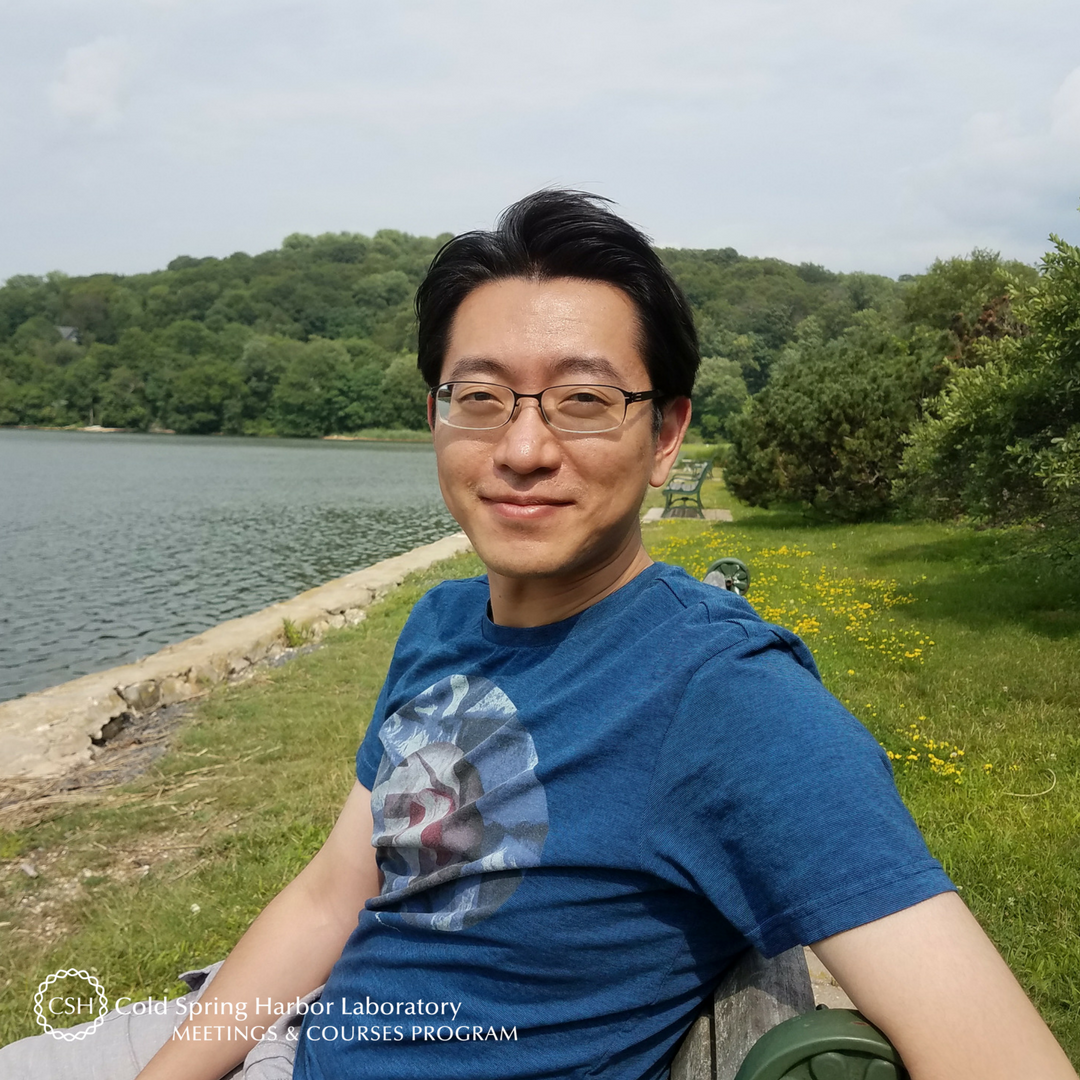
Meet Kenny Yu of the University of Manchester (United Kingdom). Kenny, a NIHR Academic Clinical Lecturer (which is the U.S. equivalent to a resident with a research component in his/her training) at his home institution, is currently at St. Michael's Hospital (Canada) to conduct his research at Peter Dirks' lab. The Single Cell Analysis course brought the CSHL first-timer onto our campus where he expanded his research technique repertoire and established lifelong connections.

What are your research interests? What are you working on? 
I am a neurosurgeon-in-training from the UK and did a PhD during my residency. My specific interest is in the tumor infiltrating immune cells in brain tumors. 

Was there something specific about the Single Cell Analysis course that drew you to apply?
Being a novice to the single cell analysis field, I was drawn to the combination of practical modules and the subsequent data analysis that this course offered.

Kenny Yu delivering his student presentation towards the end of the course.

Kenny Yu delivering his student presentation towards the end of the course.

What is your key takeaway from the Course?
Single cell technology is a powerful technique that is able to probe tissues in unprecedented detail, and this course has opened my eyes to a wide range of potential single cell technologies.

If someone curious in attending your course asked you for feedback or advice on it, what would you tell him/her? 
The emphasis on taking a single cell experiment from cell isolation to RNA extraction, sequencing and subsequent analysis is a fantastic learning experience, and to interact with world-class faculty and cutting edge technology is invaluable. I would recommend this course without hesitation. 

What do you like most about your time at CSHL? 
I have met a great group of people who, hopefully, will become both lifelong friends and collaborators!

Kenny received a stipend from the Howard Hughes Medical Institute (HHMI) to cover a portion of his course tuition. On behalf of Kenny, we want to thank HHMI for continuing to support and enable young scientists to attend a CSHL course to expand their skills, knowledge, and network. 

Thank you to Kenny for being this week's featured visitor. To meet other featured scientists - and discover the wide range of science that takes part in a CSHL meeting or course – go here.