Visitor of the Week: Mateus Milani

cshl-visitor-mateus-milani-2017

Meet Mateus Milani of the University of Liverpool (UK). The PhD student is a member of Shankar Varadarajan's lab in the Department of Molecular and Clinical Cancer Medicine with the Institute of Translational Medicine. Mateus made his first visit to CSHL to attend the 2017 Cell Death meeting.

What are your research interests? What are you working on?
Our lab is interested in studying the mechanisms by which cells can undergo apoptosis (a programmed form of cell death). We want to understand how key proteins that control apoptosis can be exploited as targets for cancer therapy. Currently, I am working on how to optimally target these proteins in several kinds of cancer and determining the cellular consequences of targeting them for cancer therapy, such as changes in mitochondria and endoplasmic reticulum.

Was there something specific about the Cell Death meeting that drew you to apply?
The caliber of the speakers and research from by the community made for an excellent motive to attend the meeting.

What is your key takeaway from the meeting?
In order to provide an ideal treatment for cancer patients, we still have a lot to do and understand about cell death. We have to put our efforts together in a collaborative way so as to greatly improve people's life and make good science.

If someone curious in attending a future Cell Death meeting asked you for feedback or advice on it, what would you tell him/her?
Be prepared to be amazed: Cold Spring Harbor Laboratory is based in an astonishing location surrounded by nature and beautiful views. On top of that, the meeting gathers the very best in the field who present their most advanced discoveries. The combination cannot go wrong: having good ideas and feedback in a beautiful place is all a researcher can ask for.

What do you like most about your time at CSHL?
The Laboratory is a natural spectacle and walking around it is just so calming and beautiful. The gardens and art scattered throughout campus are delightful, and the beach is an added bonus. 

Thank you to Mateus for being this week's featured visitor. To meet other featured scientists - and discover the wide range of science that takes part in a CSHL meeting or course – go here.

Visitor of the Week: Jose Aguilar Rodriguez

Photo by Constance Brukin

Photo by Constance Brukin

Meet Jose Aguilar Rodriguez of the University of Zurich (Switzerland). Next month, the PhD student and member of the Molecular Evolution and Evolutionary Systems Biology Laboratory headed by Andreas Wagner will be defending his PhD dissertation titled "Genotype-Phenotype Maps in Complex Living Systems". Then in November, the Swiss National Science Foundation postdoctoral fellowship recipient will join Dmitri Petrov in the Department of Biology of Stanford University and Daniel Jarosz in the Departments of Chemical & Systems Biology at Stanford University School of Medicine. Jose attended the 2017 Yeast Genetics & Genomics course, which concluded earlier this week, to help him prepare for his postdoc at Stanford. 

What are your research interests? What are you working on?
I am a biologist with broad research interests centered on the evolution of biological systems and the fundamental organizational principles of life. My research aims to elucidate how genotypes map onto phenotypes and fitness in diverse living systems. Having worked on a genotype-phenotype map using mostly computational approaches during my PhD, in my postdoc I intend to leverage recent advances in DNA synthesis, high-throughput sequencing, and DNA barcoding to go a step further and approach this question experimentally in the budding yeast Saccharomyces cerevisiae. More specifically, I plan to study how different environments and genetic backgrounds change the fitness effect of mutations in major signaling pathways. To do so, I will combine computational approaches with cutting-edge techniques for genome engineering and high-resolution lineage tracking. 

Was there something specific about the Yeast Genetics & Genomics course that drew you to apply?
I have not carried out any experimental work with yeast during my PhD so yeast is a completely new model organism for me. However, since I intend to work extensively with yeast during my postdoc at Stanford, it was important that I learn as much as possible about state-of-the-art experiment methods in yeast and in a short period of time. The yeast course allowed me to learn the methods much faster than I would or could have otherwise, and I now have the technical competence to confidently carry out my postdoctoral research.

What is your key takeaway from the course?
My main takeaway from the course is that budding yeast and related species constitute an extraordinary model system to study many important genetic and evolutionary phenomena that I find fascinating.

How many CSHL courses have you attended? How about CSHL meetings?
To date, I have just attended the 2017 Yeast Genetics & Genomics course but I would love to take CSHL's Advanced Bacterial Genetics course. I would also like to present my research in a CSHL meeting. I find the Systems Biology: Networks meeting interesting, and my research would fit well with the meeting program.

If someone curious in attending your course asked you for feedback or advice on it, what would you tell him/her?
I would tell them that the course may be challenging at times but the experience is totally worth it. You will often need to work in the lab well past midnight but you learn a lot in a very short period of time. Look back, I am amazed by how many different experiments we carried out in just three weeks. The course dexterously combined classical techniques with techniques that are at the forefront of the field. For example, the course included – for the first time in its long history – a deep mutational scanning experiment, which is a cutting-edge method that simultaneously determines the functional effects of thousands of mutations in a single macromolecule. The instructors, teaching assistants, and other attendees are amazing people and great scientists – you will learn from all of them. I specially enjoyed the chalk talks by the invited speakers, as well as the opportunity to talk science with them. Also, a piece of advice: Read the course manual before the start of the course. You won’t have time to read it once the course starts. No joke.

What do you like most about your time at CSHL?
The campus is beautiful and the social atmosphere in the course was fantastic. I made great friends!

Jose received a Helmsley Fellowship. On behalf of Jose, thank you to The Helmsley Charitable Trust for supporting and enabling our young scientists to attend a CSHL course where they expand their skills, knowledge, and network.

Thank you to Jose for being this week's featured visitor. To meet other featured scientists - and discover the wide range of science that takes part in a CSHL meeting or course – go here.

Visitor of the Week: Ulrike Boehm

Photo by Constance Brukin

Photo by Constance Brukin

Meet Ulrike Boehm of the National Cancer Institute at the National Institutes of Health. Ulrike is a physics-trained postdoctoral research fellow and a member of Daniel Larson's team in the Laboratory of Receptor Biology and Gene Expression. She came onto campus to attend the 2017 Chromatin, Epigenetics & Gene Expression course, which concluded this earlier this week, for an intensive, three-week immersion into the world of gene expression. 

What are your research interests? What are you working on?
My research interests are primarily focused on developing novel imaging tools for application in biological and clinical research. At the NIH, I develop and combine new technologies (super-resolution microscopy, single molecule imaging, genetic engineering, next generation sequencing approaches, mathematical and biophysical modeling) to understand gene expression in eukaryotic cells which requires the understanding of the organization of the genome in time and space.

Was there something specific about the Chromatin, Epigenetics & Gene Expression course that drew you to apply?
I am a trained physicist and specialized in advanced imaging techniques during my PhD studies in Germany. As a result, at the beginning of my postdoctoral studies, I was a newcomer to the field of chromatin, epigenetics, and gene expression. I applied for the GeneX course to get to know the community, and to gain an overview of the fundamental and more recent lab techniques. But this course was much more than just a pure-method course and it exceeded my expectations. I met amazing scientists, spoke about my work and future career plans, and I am now part of a vibrant network.

What is your key takeaway from the course?
During the hands-on sessions, I was exposed to a number of experimental methods (Hi-C, 3C, ChIP-seq, qRT-PCR, etc.) and data analysis strategies that I am able to immediately implement in my current research. Furthermore, I met some amazing women in science. The course instructors Karen Adelman and Geeta Narlikar, and speakers Karolin Luger and Maria Elena Torres Padilla – who are each a successful scientist and an incredible mentor – offered advice on career development, how to lead a successful research group, and how to achieve work-life balance. Also, and most importantly, speaking with them motivated me to keep on striving for a career in science.

How many CSHL courses have you attended? How about CSHL meetings?
This is my first CSHL course and, so far, I have not yet attended a CSHL meeting. However, I plan to attend and present my work at the the 2018 Epigenetics and Chromatin meeting. In addition, there are talks about my joining the 2018 Imaging Structure and Function in the Nervous System course as a teaching assistant; and I intend to build a superresolution microscope for and with that course's trainees.

If someone curious in attending your course asked you for feedback or advice on it, what would you tell him/her?
It is an amazing but also demanding course with topnotch faculty members who carry out a very comprehensive curriculum. In my opinion, it is the perfect course for anyone in need of a quick and thorough crash course in the field of chromatin, epigenetics, and gene expression. 

What do you like most about your time at CSHL?
I have a long list and to name a few: winning the 2017 Plate Race; getting together and watching the beautiful sunsets at the CSHL Beach; having intense discussions with the instructors, speakers, and my fellow trainees in Blackford Bar; and the lobster banquet on the final day of the course. 

Ulrike was awarded a Helmlsey Fellowship to cover a portion of her course tuition. On behalf of Ulrike, thank you to The Helmsley Charitable Trust for supporting and enabling our young scientists to attend a CSHL course where they expand their skills, knowledge, and network.

Thank you to Ulrike for being this week's featured visitor. To meet other featured scientists - and discover the wide range of science that takes part in a CSHL meeting or course – go here.

Visitor of the Week: Sadie Nennig

cshl-visitor-sadie-nennig

Meet Sadie Nennig of the University of Georgia in Athens. The graduate student is a member of Jesse Schank's lab in the Physiology and Pharmacology Department of the College of Veterinary Medicine, and will soon start her fourth year in the Interdisciplinary Neuroscience Program. Sadie is also a CSHL first-timer. She is on campus for the Cellular Biology of Addiction course and shares her experience of the annual course so far.

What are your research interests? What are you working on?
I recently finished a project investigating the role of transcription factor NFkB in alcohol reward. My ongoing dissertation studies aim to elucidate the neural circuitry underlying comorbid alcohol abuse and depression in hopes of identifying potential therapeutic targets for this specific subpopulation of alcoholics. 

Was there something specific about the Cellular Biology of Addiction course that drew you to apply?
Since starting my graduate studies, I have found that it is very easy to primarily focus on the recent literature and exciting findings of the particular drug of abuse that you work with. Although I currently study alcohol abuse, I have always been intrigued by how all drugs of abuse work in the brain. Thus, I was ecstatic to learn about this course and to have the opportunity to apply. I knew that this course would be immensely valuable not only for my current studies during my PhD, but also for my career as an addiction researcher.

What is your key takeaway from the course?
This course has allowed me to gain a more in-depth knowledge of the incredible techniques available to study addiction and complex factors leading to the development of dependence. From behavioral neuroscience, to genetics and biochemistry, we have had the opportunity to learn about ways to study addiction from many different and valuable perspectives. It is truly amazing to see the work going on across fields aimed at understanding this devastating disorder and how we can treat it more effectively.

How many CSHL courses have you attended?
This is my first one, and I can already say I cannot wait to return!

If someone curious in attending the Cellular Biology of Addiction course asked you for feedback or advice on it, what would you tell him/her?
I would recommend this course in a heartbeat. The atmosphere created here allows you to interact with well-known researchers, postdocs, and graduate students in an intellectually engaging yet comfortable setting.  I am someone who is typically intimidated to ask questions in settings such as large conferences. However, the instructors, lecturers, and students alike have created a learning environment in which I feel comfortable to engage in discussions. I have been able to learn so much in this environment and apply what I have learned to my own studies. 

What do you like most about your time at CSHL?
Night swimming with the glowing algae! 

Sadie received a stipend from the National Institute on Drug Abuse (NIDA) to cover a portion of her course tuition. On behalf of Sadie, thank you to NIDA for supporting and enabling our young scientists to attend a CSHL course where they expand their skills, knowledge, and network.

Thank you to Sadie for being this week's featured visitor. To meet other featured scientists - and discover the wide range of science that takes part in a CSHL meeting or course – go here.

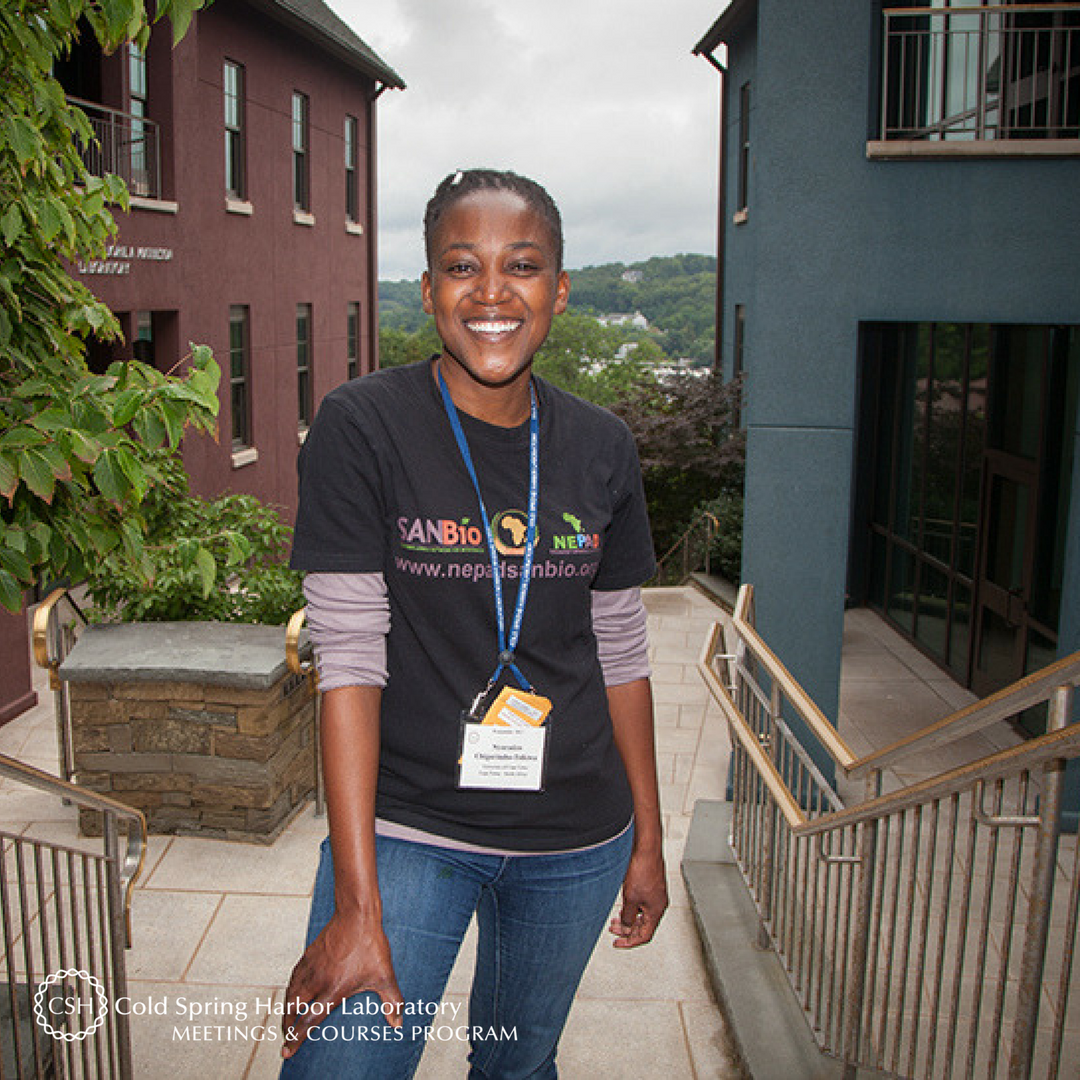
Visitor of the Week: Nyaradzo "Nyari" Chigorimbo-Tsikiwa

Photo by Constance Brukin

Photo by Constance Brukin

Meet Nyaradzo "Nyari" Chigorimbo-Tsikiwa of the University of Cape Town (South Africa) in the Desmond Tutu HIV Foundation and Division of Immunology. The early career fellow makes her first visit to the Laboratory to participate in the Proteomics course.

What are your research interests? What are you working on?
I am working on understanding how HIV transmission takes place in males in order to prevent its transmission. 

Was there something specific about the Imaging Structure & Function in the Nervous System course that drew you to apply? 
I applied to this course because I want to learn how to perform targeted proteomics and label-free quantification for use in biomedical research. I am happy to say that I have learnt both, as well as other methods including quantitative labeling from the method's inventor, Darryl Pappin.

What is your key takeaway from the course?
Proteomics is an exciting field with many possibilities and challenges; such as designing robust experiments that are reproducible especially for clinical applications.

If someone curious in attending your course asked you for feedback or advice on it, what would you tell him/her?
Anyone interested in understanding the history, present and future of proteomics should attend this course. It is a great place to learn new techniques and grow from others .

What do you like most about your time at CSHL?
I especially liked meeting different people from all over the world and in different stages of their academic careers. There was a great sense of camaraderie as a result of shared common experiences and frustrations, and the realization that our challenges and aspirations are the same regardless of our geography.

Nyari received a stipend from the Eunice Kennedy Shriver National Institute of Child Health and Human Development (NICHD) to cover a portion of her course tuition. On behalf of Nyari, we would like to thank NICHD for supporting and enabling our young scientists to attend a CSHL course where they expand their skills, knowledge, and network. 

Thank you to Nyari for being this week's featured visitor. To meet other featured scientists - and discover the wide range of science that takes part in a CSHL meeting or course – go here.