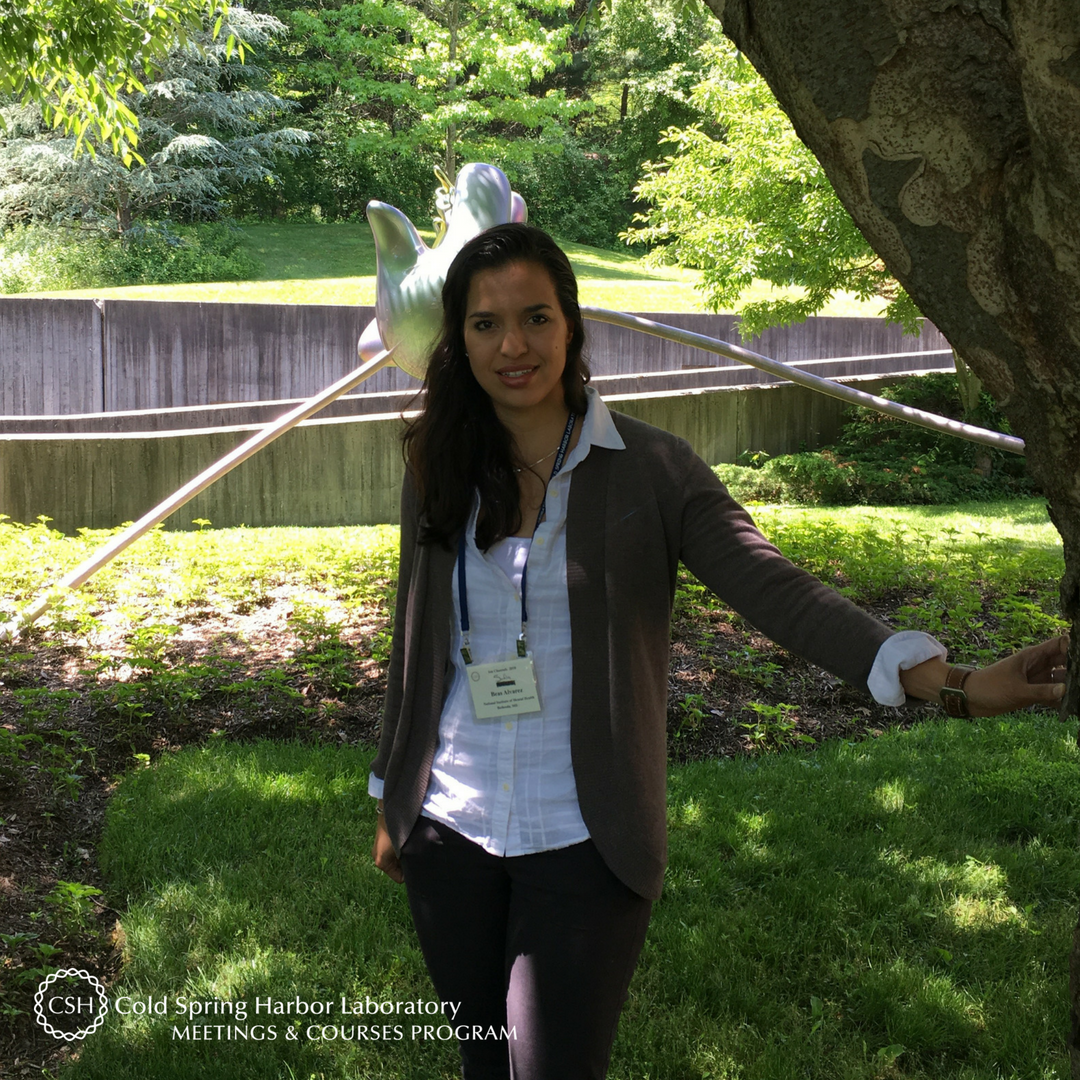
Visitor of the Week: Sofia Beas

sofia-beas-visitor-2018

Meet Sofia Beas of National Institute of Mental Health (NIMH). Under the mentorship of Mario Penzo, Sofia is part of the Unit on the Neurobiology of Affective Memory. The postdoctoral fellow is on campus attending her first course at CSHL: Ion Channels in Synaptic and Neural Circuit Physiology

What are your research interests? What are you working on?
My research interests are on understanding the neural mechanisms underlying motivational and affective behaviors, and how they can be dysregulated in pathological conditions. In particular, I am studying the neural mechanism by which stress impacts the neurocircuitry of the paraventricular nucleus of the thalamus, an area of the brain important for linking stress detection to the emergence of adaptive behavioral responses to stress.

How did you decide to make this the focus of your research? 
I first became captivated with the area of psychology and human behavior during my undergraduate career. However, when it came time to apply to doctoral programs, I soon realized that the neuroscience field was a better fit for me as it combined the two fields I really enjoyed: behavior and science.  

How did your scientific journey begin? 
The neuroscience field fascinated me early in my undergraduate career. While working under the guidance of Dr. Laura O’Dell,  I received an undergraduate fellowship that allowed me to work full time in her lab and fully immerse myself in the neuroscience field. Thereafter, while pursuing my PhD, I joined the lab of Dr. Jennifer Bizon who mentored and gave me unbelievable opportunities that furthered my education.  

Was there something specific about the Ion Channels in Synaptic and Neural Circuit Physiology course that drew you to apply?
Since my current research interest relies heavily on using electrophysiology techniques, I applied to the course to gain exposure using different electrophysiology techniques and to learn from the experts in the field.  

What and/or how will you apply what you've learned from the course to your work? 
So far, I have learned that electrophysiology can give you a wealth of information about how neurons communicate. This technique can help decode intercellular and intracellular messages, and investigate the specific ion channels, membrane potentials, and molecules that give each neuron its physiological characteristics. Also, I will impart my new knowledge base to my fellow lab mates so they too will benefit from the electrophysiology techniques I learned at this course.  

What is your key takeaway from the course?
My key takeaway is the individualized advice on specific techniques imparted by the experts in the field. For example, Matthew Xu-Friedman gave a very interesting and insightful lecture about mEPSCs which included fun examples that really brought the point home. He also sat next to me during a lab session and imparted useful advice on how to make the recordings better. These are particularly useful because, immediately upon returning to the lab, I plan to record mEPSC from neurons.

If someone curious in attending this course asked you for feedback or advice on it, what would you tell him/her?
First, so as to easily grasp the concepts taught, I would recommend getting acquainted with the basic concepts of electrophysiology. Next, I would suggest that they come with an open mind and the mindset that this is an intensive program, yet very rewarding nonetheless. 

What do you like most about your time at CSHL?
I like several things. First, I love the place, the campus is beautiful. I also like the friendships I have developed with those in the course. Finally, I must say that the food at the dining hall was quite good. 

Sofia received a scholarship from the Helmsley Charitable Trust and funding from the Society for Neuroscience’s (SfN) Neuroscience Scholars Program to cover a portion of her course tuition. On behalf of Sofia, thank you to the Helmsley Charitable Trust and SfN for supporting and enabling our young scientists to attend a CSHL course where they expand their skills, knowledge, and network.

Thank you to Sofia for being this week's featured visitor. To meet other featured scientists - and discover the wide range of science that takes part in a CSHL meeting or course - go here.

Visitor of the Week: Ashton Creasy

ashton-creasy-visitor-2018

Meet Ashton Creasy of the University of Florida. Ashton began her career in the pharmaceutical industry before a desire to play a more direct role in the global population led her to change gears. A MPH/PhD student in Eric Nelson’s lab, Ashton is on campus participating in Advanced Bacterial Genetics – her first CSHL course. 

What are your research interests? What are you working on?
I am interested in previously-undescribed antibiotic resistance mechanisms and antibiotic drug targets of Vibrio cholerae, the pathogen that causes cholera.

How did you decide to make this the focus of your research? 
Cholera affects the most vulnerable of the global population: impoverished children and their families. The global perturbation of increasing antibiotic resistance only worsens and extends cholera outbreaks.

How did your scientific journey begin? 
Prior to starting graduate school, I worked in the pharmaceutical industry for six years as a quality control analyst. I felt unfulfilled there and wanted my work to have more of an impact on the global population. 

Was there something specific about the Advanced Bacterial Genetics course that drew you to apply?
I knew I had great research questions, but I didn’t know the best way to carry them out. The course instructors and my fellow course mates have been really great to bounce ideas off of and help optimize research methods.

What and/or how will you apply what you've learned from the course to your work? 
Several of the methods we have learned can be easily applied to my work, specifically transposon insertion sequencing and CRISPR-cas editing. I am looking forward to sharing what I have learned here with my home institution to help others develop and apply these research methods.

What is your key takeaway from the course?
I have learned many methods of bacterial genetic transformation that would benefit future research and has fostered new ideas -- we’re only halfway through the course and I have already written up five new possible research questions!    

How many CSHL courses have you attended?
This is my first one and I would love to come back for another one!

If someone curious in attending this course asked you for feedback or advice on it, what would you tell him/her?
Be ready to work really hard, but also have a lot of fun. The days are long, but the company and the connections you make will last throughout your career.

What do you like most about your time at CSHL? 
I like the time spent with my classmates discussing our projects and possible collaborations in the future. 

Ashton received a fellowship from the Helmsley Charitable Trust to cover a portion of her course tuition. On behalf of Ashton, thank you to the Helmsley Charitable Trust for supporting and enabling our young scientists to attend a CSHL course where they expand their skills, knowledge, and network.

Thank you to Ashton for being this week's featured visitor. To meet other featured scientists - and discover the wide range of science that takes part in a CSHL meeting or course - go here.

Visitor of the Week: Abigail Wright

VOTW (2).png

Meet Abigail Wright of the University of Sussex (United Kingdom). Abigail is a PhD student in the Sussex Psychosis Research Interest Group (SPRiG) and is in the Banbury Center participating in her first CSHL course: Workshop on Schizophrenia & Related Disorders.  

What are your research interests? What are you working on?
My research focuses on understanding factors that predict poor functioning in First Episode Psychosis (FEP). It has long been known that cognitive impairments and symptoms of psychosis (particularly negative symptoms) play a role in functioning. However, these factors only account for a small amount of variance, and therefore a large number of variance in functioning is still unexplained. From this, I have begun to understand the role of metacognition (i.e., the way you think about yourself, your abilities and your life) and how it could be used to understand the unexplained variance in functioning in FEP. 

How did you decide to make this the focus of your research? 
Before starting my main research project, I collaborated with a group of individuals with psychosis to further understand their experience and identify aspects in their life which they found most challenging and, therefore, most in need of more research. It was apparent that whilst symptoms can be extremely distressing for people, many reported difficulties (or dissonance) in leading a fulfilling and meaningful life. Given the onset of psychosis is typically during early adulthood, a time in which people are most likely to be first starting their careers, the experience of psychosis had an impact on individuals going back to work or school.

For my research, it was important to understand what is influencing these difficulties in functioning so we are then able to develop novel interventions to improve daily functioning in psychosis. Also, for the individuals who have experienced psychosis, we know it can be a distressing and very disruptive experience on their lives. I keep this knowledge at the forefront of my mind whilst conducting my research to ensure it is meaningful and important to make a change for people’s lives.

How did your scientific journey begin? 
Over a high school summer holiday, I worked in a psychiatric hospital and was struck by the profound difficulties these individuals faced. Then during college, I volunteered at a center aimed to provide the space and facilities for individuals with severe mental health difficulties to build skills to enable them to go back into the workforce e.g., cooking, gardening, and serving customers. Following conversations with users of the service, I became intrigued in the experience of psychosis particularly their views about themselves and their lives, which appeared to be directly influencing their ability, confidence, and motivation to work. From this, I wanted to further understand ‘why’ people continued to experience difficulties, in hopes to help more people in the future. I was also encouraged by my undergraduate supervisor, Professor Vincent Connelly, to apply for a PhD in psychosis and I have always been grateful for his influence on my academic career.
 
My supervisors at University of Sussex, Dr. Kathy Greenwood and Professor David Fowler have been fantastic to work with during my PhD research, providing space for exciting conversations about psychosis, and helping me refine my interests and skills whilst ensuring we kept the individuals with psychosis at the forefront of our research. 

And recently, I have been inspired to learn more about the role of metacognition in psychosis from research of Professor Paul Lysaker, and learning how to improve outcomes in employment and education in Severe Mental Illness (SMI) from Professor Kim Mueser and Professor Susan McGurk. I was honored to have the opportunity to work with all three academics this summer and am excited to implement their approaches within my research.
 
Was there something specific about the Workshop on Schizophrenia & Related Disorders that drew you to apply?
Firstly, I was drawn to the variety of fantastic speakers and organizers of the workshop. I also applied as it would be particularly beneficial to generate new ideas with regard to analyzing the current data using new methods learnt from the course. 

In addition, this workshop allowed me to meet other early-career researchers from around the world, engage with different perspectives within schizophrenia research, and develop potential collaborations. Such future collaborations would be beneficial to the course of my academic career. 

What and/or how will you apply what you've learned from the workshop to your work? 
It has been quite helpful to learn the most up-to-date techniques and approaches to psychosis research. As I am the first student from University of Sussex to attend this workshop, I agreed to deliver a seminar sharing the knowledge learnt here with our group at University of Sussex so others will benefit from and learn the new techniques and methodologies explored within this workshop. Also, I am looking forward to developing new research questions to apply these approaches to the range of datasets of our lab group - particularly within FEP.

What is your key takeaway from the workshop?
The key takeaway, for me, has been the importance of finding your own niche and collaborating with others in the field to produce high-quality research. I have been struck by the friendly academic community and the importance of collaboration because despite working in various areas of psychosis, many of the speakers work collaboratively with the organizers of the workshop. 
 
If someone curious in attending this workshop asked you for feedback or advice on it, what would you tell him/her?
I would encourage any early-career researcher to attend Workshop on Schizophrenia & Related Disorders. Jeremy Hall, Anissa Abi-Dargham, and Akira Sawa have done a fantastic job of developing a schedule packed with world-renown academics in the field. The talks have all been engaging and novel; some even with unpublished data presented so participants receive, firsthand, the most up-to-date research in the area. Alongside the presentations, I have enjoyed the opportunity to engage with the speakers in relaxed settings and gain an expert perspective on your research.  

I have also met many wonderful early-career researchers in the area of psychosis who are equally encouraging and inspiring. As it is a stay-in course, it is great to have spent time with different researchers, hear about the research projects across the world, and to build potential future collaborations. 

What do you like most about your time at CSHL?
The Banbury campus is a beautiful place and the scenery is magnificent. It is very quiet so it’s an ideal place to learn and ponder. A few of the other attendees and I started a morning running group which has been a great way to see the area beyond the campus and prepare us for the long and exciting day of talks. 

Abigail received funding from the University of Sussex, Economic and Social Research Council (ESRC). On behalf of Abigail, thank you to the University of Sussex and ESRC for supporting and enabling our young scientists to attend a CSHL course where they expand their skills, knowledge, and network.

Thank you to Abigail for being this week's featured visitor. To meet other featured scientists - and discover the wide range of science that takes part in a CSHL meeting or course - go here.
Visitor of the Week: Mary Phillips

mary-phillips-2018

Meet Mary Phillips of the University of Alabama at Birmingham. The fifth-year graduate student in Lucas Pozzo-Miller's lab made her first visit to CSHL to participate in the 83rd CSHL Symposium on Quantitative Biology. At Brains & Behavior: Order & Disorder in the Nervous System, Mary presented a poster entitled "Ventral hippocampal input to the mPFC regulates social memory". 

What are your research interests? What are you working on?
I am currently defining the involvement of the long-range excitatory projection from the ventral hippocampus to the medial prefrontal cortex in social memory, and how its altered function contributes to social deficits in a mouse model of autism. My broader research interest is on the encoding of social memory at the synaptic and circuit levels.

How did your scientific journey begin?
I’ve always been fascinated with behavior: trying to understand why animals are driven to perform different tasks. As I kid, this interest got me into training service dogs where I could use different motivational and training strategies to modify behavior. In college, I took a course called The Biological Basis of Behavior and my interest in neurobiology solidified.

How did you decide to make this the focus of your research?
I became very excited about using computer vision to classify social behaviors during my time as a technician at Janelia Research Campus. When I went to graduate school, I was fascinated by long-range connections and how different brain regions integrate and influence one another. Naturally, I combined the two interests and now use computer-vision to classify social behaviors using circuit manipulations and map synaptic changes.

What is your key takeaway from the meeting?
The lateral orbitofrontal cortex is a happening place! In addition, The brain and psychiatric illness is under-understood, but the field is growing and making remarkable progress to help us understand both basic mechanisms and in identifying possible therapies.

Was there something specific about the 83rd CSHL Symposium that drew you to attend?
This meeting is bringing together the top people in field – the speaker list is unparalleled for such a small conference. There were many people attending this conference I would like to potentially work with in the future, so I mainly came to this conference to network and to share my own work in a poster presentation.

What did you pick up or learn from the meeting that you plan to apply to your work?
I am coming away with more knowledge about my niche. I’ve met some great young scientists I would love to stay in contact with, set up contacts for technical help on projects, and chatted with experts in my field. I hope to continue to learn about what other labs are working on and perhaps identify a few I may want to work with in the future.

If someone curious in attending a future iteration of the symposium asked you for feedback or advice on it, what would you tell him/her?
I am really enjoying the meeting: it’s size and participants. I would definitely recommend coming!

What do you like most about your time at CSHL?
The friendliness of the staff, researchers, and students. Everyone is helpful, inclusive, and collaborative. The gorgeous environment is definitely something worth noting as well!

Thank you to Mary for being this week's featured visitor. To meet other featured scientists - and discover the wide range of science that takes part in a CSHL meeting or course - go here.

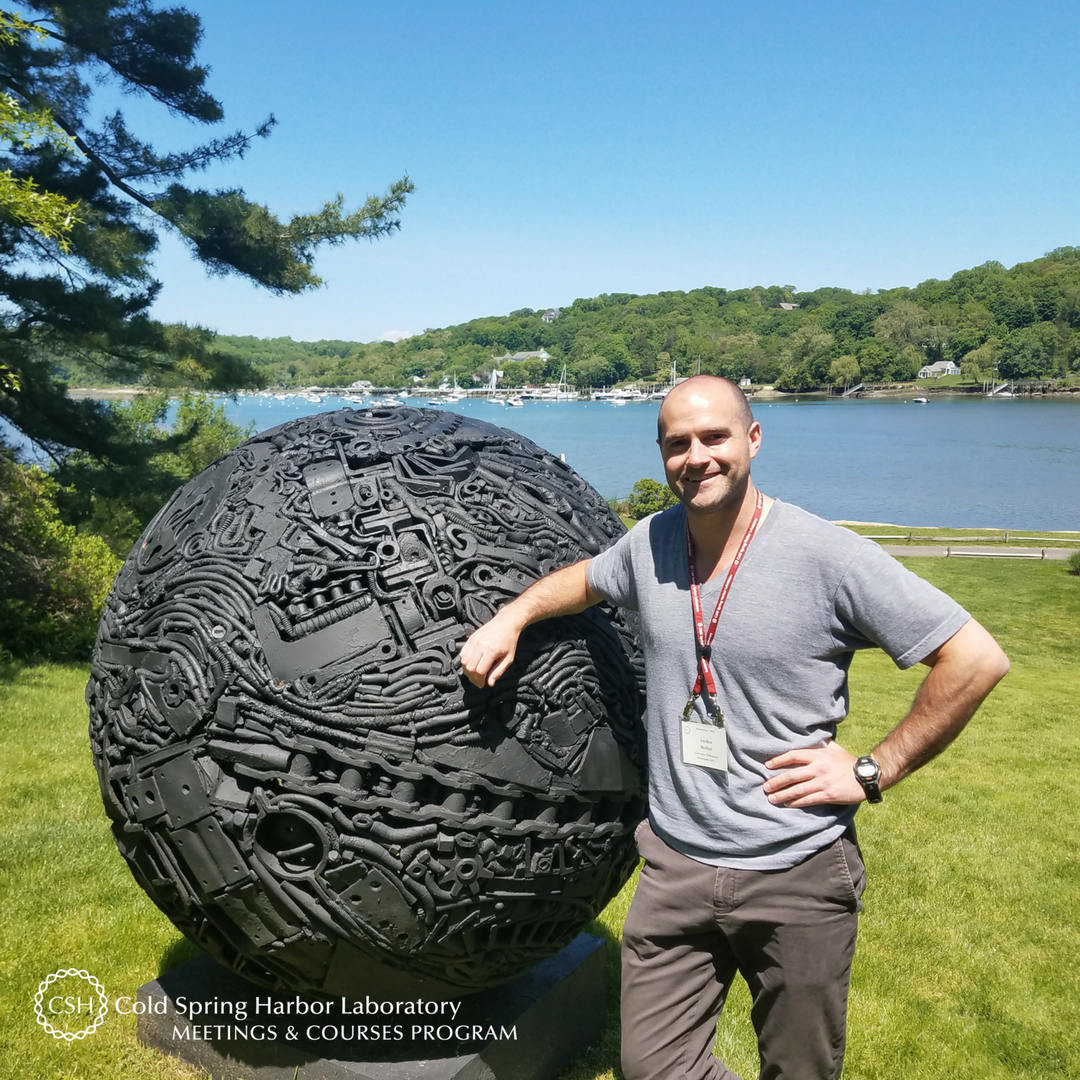
Visitor of the Week: Jordan Becker

jordan-becker

Meet Jordan Becker of the University of Minnesota, Twin Cities. Jordan recently joined Reuben Harris’ lab as a postdoc after earning his PhD from the University of Wisconsin-Madison last October. He received the Uta von Schwedler Prize last year and returned again this year – his third, consecutive Retroviruses meeting – to present a talk titled "Subcellular distribution of APOBEC3 proteins regulate interactions with and restriction of HIV-1".

What are your research interests? What are you working on?
Viruses are the world's best cellular biologists: they are amazing at learning how to manipulate their hosts. Much in that way, I'm a cellular biologist who has used viruses to understand how cells function and how viruses hijack, avoid, or remove cellular factors. More specifically, I study viral RNA trafficking, interactions with cellular RNA-binding proteins, and how a family of nucleic acid mutating enzymes (APOBEC3 proteins) lead to viral mutation and evolution.

How did you decide to make this the focus of your research?
I completed my PhD with Nathan Sherer and became adept at fluorescence microscopy to, literally, observe how fluorescent versions of viral and cellular proteins and RNAs move in cells. As the saying goes, “a picture is worth a thousand words” and seeing where things are in cells and how viruses can mess that up are powerful. However, being able to quantify those images and support my observations with traditional biochemical methods (e.g. blots, PCR, infectivity assays) is even more powerful. To be fair I like the way I study RNA trafficking just as much as the field and results themselves.

How did your scientific journey begin? 
Prior to beginning   my PhD, I worked first as an undergraduate researcher then as a technician in a cancer immunology lab with Douglas McNeel. I processed blood samples and performed functional immune assays from clinical trials in prostate cancer patients. I enjoyed working with translational/clinical samples that could inform patient health as well as tell us about cancer immunology. More than that, I really learned to love the academic environment with great graduate students, postdocs, fellows, and my first mentor Doug. His lab was a place where happy people thought about interesting ideas; and as I've worked in other labs, I have always found broad curiosity and interesting/creative ideas to be one of the most important features of a lab! That was the case with Nate Sherer and my graduate lab coworkers, and it continues in my new lab with Reuben Harris. 

Was there something specific about the Retroviruses meeting that drew you to attend?
The retrovirus community is intense but also quite friendly. The CSHL Retroviruses meeting is an amazing venue to both incite and settle controversies – some again and again. Science is iterative and by knowing the history of the field and returning to interesting ideas we can gain insight into what has been done right and what can be done better.

What is your key takeaway from the meeting? 
For me, the key takeaway is it’s time to take imaging of HIV RNA trafficking and RNA-binding proteins to a new level. There’s definitely an expectation or hope to keep trying new experiments in more relevant cell types and with diverse viral strains. I’ll see how that goes!

What did you pick up or learn from the meeting that you plan to apply to your work?  
I really enjoyed the recent fluorescent microscopy performed by the Markus Thali lab using lightsheet microscopy to image HIV-1 lymphocytes over long periods of time, and work by Collin Kieffer using multiscale imaging techniques to look at sites HIV-1 assembly in humanized mice. I'm always excited of new ways to look deeper and see more.  

If someone curious in attending a future iteration of this meeting asked you for feedback or advice on it, what would you tell him/her?
Come, bring your data and love for virology (and coffee and beer). The scientists who attend this meeting are all incredibly friendly, creative, brilliant, and always willing to settle disagreements over a beer.

How many CSHL meetings have you attended?
This is my third CSHL meeting – all Retroviruses (2016, 2017, and 2018). 

What do you like most about your time at CSHL?
CSHL is like going to summer camp. You're here, you're not going anywhere else, and you meet amazing new friends. I like to go for walks along the bay or out to the end of Bungtown Road, and have lunch out on the lawn to work on my tan. 

Thank you to Jordan for being this week's featured visitor. To meet other featured scientists - and discover the wide range of science that takes part in a CSHL meeting or course - go here.