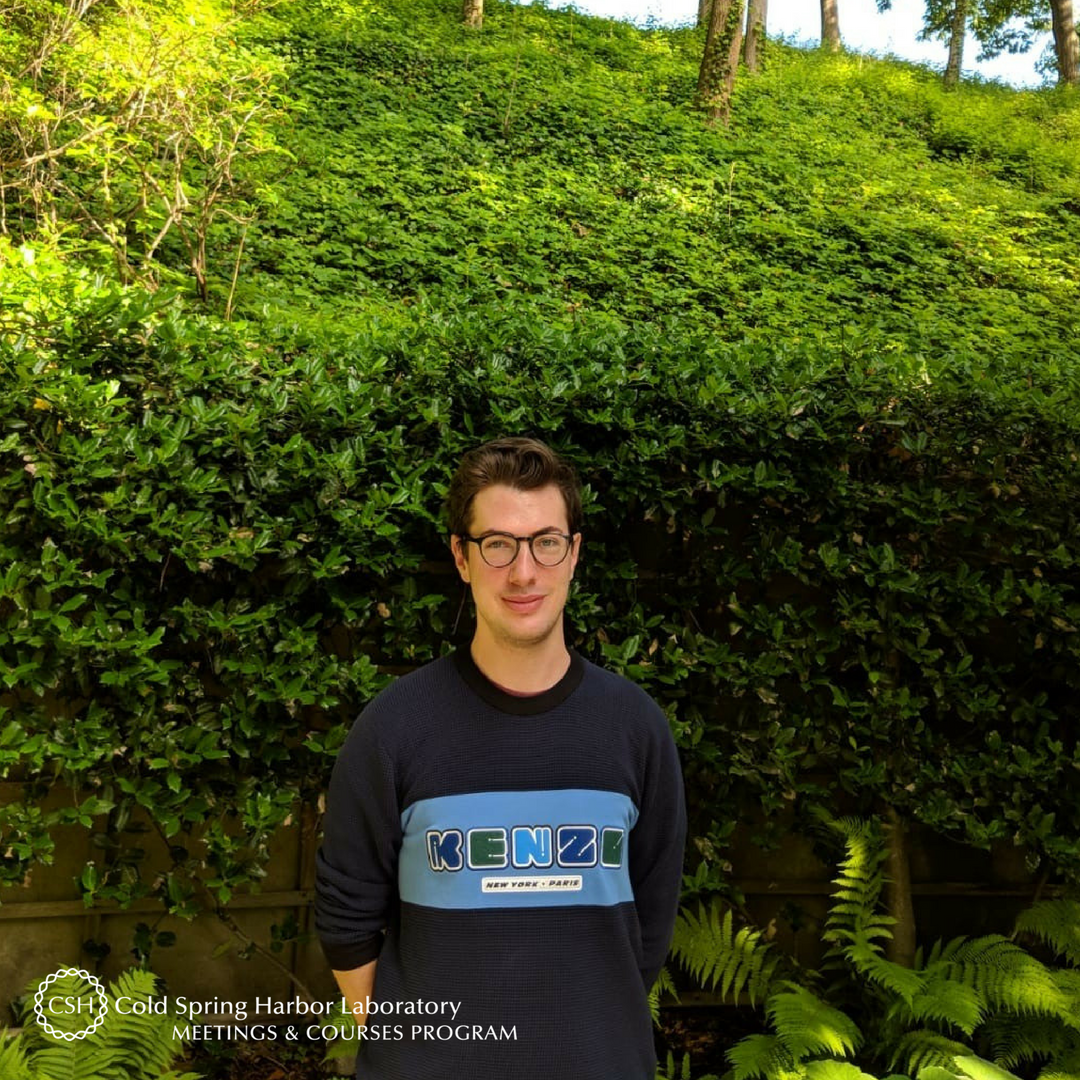
Visitor of the Week: Jonathan Diedrich

VOTW (2).png

Meet Jonathan Diedrich of the St. Jude Children’s Research Hospital (SJCRH) in Memphis, TN. Jonathan is a postdoctoral fellow in Dr. Daniel Savic in the Pharmaceutical Sciences Department. He is on campus for the Statistical Methods for Functional Genomics course and we’re hoping to have him back for The Biology of Genomes meeting next year. 

What are your research interests? What are you working on?
My project employs functional genomic techniques to identify non-coding regulatory elements involved in chemotherapeutic drug resistance in childhood acute lymphoblastic leukemia.  

How did you decide to make this the focus of your research? 
I have always wanted to transition into the functional genomic field because I thoroughly believe that functional genomics and large-scale data analysis is the future of cancer research and precision medicine. As a postdoc in an extremely collaborative and supportive environment, I am in an excellent position to learn cutting edge functional genomic techniques and hone my analytical skills. 

How did your scientific journey begin? 
I actually started my research “career” in zoology! I studied comparative anatomy of carnivore skulls at Michigan State University where I fell in love with the research aspect of science and quickly knew I wanted to transition into the cancer field. I completed my PhD in Cancer Biology at Wayne State University with Dr. Izabela Podgorski as my mentor. My thesis project was to interrogate the effects of bone marrow adipocytes on metastatic prostate tumor progression. Dr. Podgorski’s exceptional mentoring and support during my PhD inspired me to pursue a career in academia; I am now in the first year of my postdoc and very excited for a career in science!

What and/or how will you apply what you've learned from the course to your work? 
Being competent in statistical analysis in the field of functional genomics is extremely crucial and this course has helped me develop my skills to become the expert in Dr. Savic’s laboratory regarding various statistical analyses for large-scale RNA-seq, ATAC-seq, ChIP-seq, and 3-dimensional profiling datasets. My participation in this course will benefit my data analysis as well as the members of my laboratory and department at SJCRH. I will be able to assist in the analysis and scientific discussions of my team and become an integral asset in functional genomic analyses.  

What is your key takeaway from the course?
The most important takeaway from this course is to understand the conceptual reasoning behind the complex analyses performed to evaluate large-scale genomic datasets, and to efficiently utilize the programs to visualize and interpret your data in a reproducible and reliable manner.  

How many CSHL courses have you attended?
This is my first course at CSHL and I am planning on hopefully attending next year’s Biology of Genomes meeting. I am very excited about the possibility of going!

If someone curious in attending this course asked you for feedback or advice on it, what would you tell him/her?
Be prepared to learn a lot! This is an amazing opportunity for anyone interested in functional genomics to learn directly from the experts in the field, so take full advantage of the course while you are here! To keep pace, practice maneuvering through R and get familiar with basic R syntax ahead of time. Also, don’t be afraid to ask as many questions as possible! The instructors are amazing, very eager to help, and want you to get as much as you can out of this course. 

What do you like most about your time at CSHL?
The best (non-science related) aspect of this course is the ability to meet and network with people from all over the world and who have similar interests and experiences. I have met so many great people within the first (of two) weeks I have been here and hopefully will have lasting friendships and future collaborations!

Thank you to Jonathan for being this week's featured visitor. To meet other featured scientists - and discover the wide range of science that takes part in a CSHL meeting or course - go here.

Visitor of the Week: Claire Olingy

VOTW (3).png

Meet Claire Olingy of La Jolla Institute for Allergy and Immunology (LJI). Claire is a postdoctoral fellow in Catherine “Lynn” Hedrick’s lab in the Division of Inflammation Biology. She’s participating in her first course at CSHL: Single Cell Analysis

What are your research interests? What are you working on?
I am interested in the role myeloid immune cells play in anti-tumor immunity during cancer progression and metastasis. I’m currently working to understand whether we can leverage these cells as early diagnostics and to enhance patient responses to immunotherapies.

How did you decide to make this the focus of your research? 
Cancer is the second leading cause of death in the United States after heart disease, yet there is still so much we don’t understand about this diverse group of diseases. During my PhD in biomedical engineering, I became increasingly interested in the role that the immune system plays in health and disease. Our immune systems are really involved in everything! I closely followed the success stories of cancer immunotherapies and recognized the immense potential the field holds, both for treating cancer and many other diseases. This inspired me to pursue a postdoctoral fellowship at La Jolla Institute for Allergy and Immunology in the lab of Lynn Hedrick, who is a leader in myeloid cell biology. LJI is a great place to learn about and conduct immunology research because you are surrounded by experts and have access to the resources necessary to study important questions in immunology.

How did your scientific journey begin? 
I have always loved math and knew I wanted to study engineering in college. However while I was in high school and my grandfather was diagnosed with colon cancer, I realized I also wanted to work in a field where I could have an impact on human health. I majored in biomedical engineering at my grandfather’s alma mater, Washington University in St. Louis. I became involved in undergraduate research and recognized that research would give me the opportunity to better understand and contribute to unanswered questions in biology and medicine.

Was there something specific about the Single Cell Analysis course that drew you to apply?
I applied to the Single Cell Analysis course because of the diversity of techniques the course offered to study cells at the single cell level, including bioinformatics tools to analyze single cell data. Some of these techniques can be intimidating for a first-timer like myself so I was looking for exposure, as well as how to appropriately design experiments in my research. Initially, I was most interested in the single cell sequencing approaches this course covers, but many of the skills I’ve so far learned in the first week could be applied to my research. 

What and/or how will you apply what you've learned from the course to your work? 
The immune system is extremely heterogeneous so that it can respond to the wide range of pathogens and diseases our bodies face. The techniques I’ve learned in this course will enable me to study this diversity during the progression of cancer, which is really only possible with single cell approaches. And I’m looking forward to sharing what I’ve learned with my labmates and collaborators at my home institution.

What is your key takeaway from the course?
The instructors did a great job designing this course so that it highlights a lot of exciting technologies that are being used in a wide range of biological fields. My key takeaway is that it can be very valuable to look to other fields for inspiration that can be applied to my own work. I’ve also learned that understanding how new technologies work before applying them to my research is critical when it comes to designing experiments that will actually answer the scientific questions I’m interested in.
 
If someone curious in attending this course asked you for feedback or advice on it, what would you tell him/her?
I think it’s important to come to this course with a willingness to learn new techniques outside your immediate field and to consider how you may be able to expand your own research. Many of my peers (including myself) came primarily to learn about a specific technique, but to me, one of the most valuable takeaways is the new ideas we’re bringing back to our home institution. Also, to ensure you get the most out of this course, spend time before the course learning some basic programming! 

What do you like most about your time at CSHL?
I have most enjoyed getting to know a really diverse group of scientists who are at different stages in their scientific journey, studying different fields, and from all over the world. Everyone is here to learn and the beautiful CSHL environment makes it a really enjoyable experience!

Claire received a fellowship from the Helmsley Charitable Trust to cover a portion of her course tuition. On behalf of Claire, thank you to the Helmsley Charitable Trust for supporting and enabling our young scientists to attend a CSHL course where they expand their skills, knowledge, and network.

Thank you to Claire for being this week's featured visitor. To meet other featured scientists - and discover the wide range of science that takes part in a CSHL meeting or course - go here.

Visitor of the Week: Felix Chan

felix-chan-visitor-2018

Meet Felix Chan of Brown University. Felix is a postdoctoral research associate in Judy Liu’s lab within the Department of Molecular, Cell Biology, and Biochemistry. He was on campus for three weeks last month participating in the third iteration of the Metabolomics course. 

What are your research interests? What are you working on?
My interest is in characterizing the metabolic activity of the brain during physiological and pathological brain activity. Currently, I am working to characterize the link between pathological seizure activity and sleep in the context of tissue metabolism. 

How did you decide to make this the focus of your research? 
The brain is a unique organ with a high metabolic demand - it only takes up about 2% of the body weight but consumes 20% of the body’s oxygen supply. Yet, not much is understood about the metabolic change that occurs in the brain during a period of intense brain activation, whether in a physiological condition (during cognition, for example) or pathological condition (during a seizure, for example). 

How did your scientific journey begin? 
I have always been interested in psychological theories and research, and the leap I took to study neuroscience stems from how the brain -- as a single organ -- can be responsible for many different functions from crude ones like movement, sensation, and speech to fine-tuned ones like emotion, cognition, and perception. I owe my commitment to an academic research career to the many researchers I interacted with as I earned my Masters and PhD in Newcastle University; particularly my graduate mentors Dr. Gavin Clowry and Professor Mark Cunningham

Felix with fellow coursemates Karin Mitosch and Smitha Pillai getting hands-on practice at operating and analyzing liquid chromatography.

Felix with fellow coursemates Karin Mitosch and Smitha Pillai getting hands-on practice at operating and analyzing liquid chromatography.

Was there something specific about the Metabolomics course that drew you to apply?
I was attracted to the course by the wide range of techniques listed on its overview (here); such as GC-MS to LC-MS, and even Seahorse metabolic flux analyzer. In addition to picking up new techniques, I acquired hands-on experience on instrumentation use and data analysis which was really helpful in learning the theory behind the instruments and practical applications of the techniques. 

What and/or how will you apply what you've learned from the course to your work? 
The knowledge and techniques I acquired from the course will be implemented to design a metabolomics experiment to answer my research question regarding metabolic changes in the brain. 

What is your key takeaway from the course?
I came into the course with a naive perception that metabolomics is an all-encompassing technique to dissect metabolism in a comprehensive manner. Whilst it remains a powerful technique, as with other techniques, it cannot measure every metabolite. Careful thought into the experimental design is what can lead to precise measurements of the metabolites in which you are interested. The course has well-equipped me with skills, knowledge, and techniques to consider my experimental design so that it can answer the scientific hypothesis I have in mind. 

How many CSHL courses have you attended?
This is the first CSHL course that I have attended and it hopefully won’t be the last! 

If someone curious in attending this course asked you for feedback or advice on it, what would you tell him/her?
Come in with an open mind and curiosity to learn about metabolomics. The instructors have worked really hard to design a comprehensive and meaningful course that addresses a wide range of aspects about metabolomics. The course schedule will be intense but with a strong passion in metabolomics, you will get the most out of this course.

What do you like most about your time at CSHL?
I enjoyed the fact that I am learning cool science in a beautiful, serene, and picturesque place that has a rich history in advancing science and technology. You can easily walk around CSHL and see the many evidences of their involvement in advancing biomedical sciences. It helps also that the food served is top-notch and you can eat your meals on a balcony overlooking the beautiful Cold Spring Harbor - never gets old!

Thank you to Felix for being this week's featured visitor. To meet other featured scientists - and discover the wide range of science that takes part in a CSHL meeting or course - go here.
Repeat Visitor: Shasta Webb

c-info-17-shasta-webb

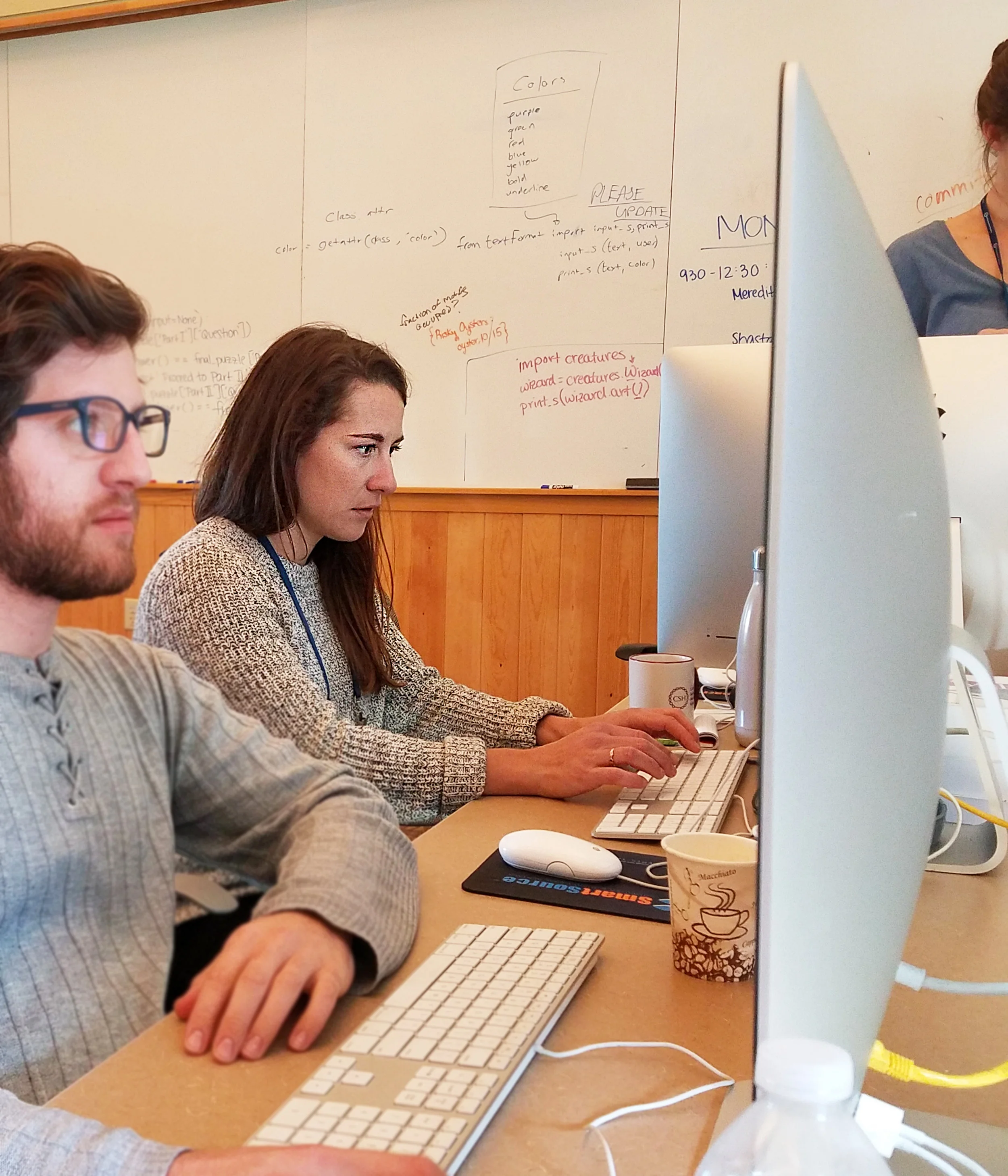
Since 1999, Cold Spring Harbor Laboratory has run an annual course in Programming for Biology aimed at lab biologists with no prior coding experience. The course provides trainees with the bioinformatics and scripting skills necessary to design biological data analysis pipelines using computer code. In 2017, lead instructors Simon Prochnik and Sofia Robb changed the language being taught from Perl to Python, a popular scripting language with a growing community of users. 

Python’s increasing popularity is one of the reasons Shasta Webb, a PhD student at the University of Calgary, returned to CSHL last October and took part in her second consecutive Programming for Biology course. Shasta is now an alum of both the 2016 and 2017 courses, where she learned to program in Perl and Python, respectively. We sat down with her to chat about how she uses scripting languages in her work, why she first attended the Programming for Biology course, why she returned, and her thoughts on the changes Simon and Sofia made to the course. 

I am housed in an anthropology department but the work I do spans anthropology, biology, and metagenomics. My work focuses on how gut bacterial communities (the microbiome) change throughout pregnancy and lactation. I study this question using a wild system of white-faced capuchin monkeys in Costa Rica. One of my goals is to unite field methods that look at behavior, ecology, and diet in this primate species, and then combine those methods with metagenomics to see how, internally, the primates are responding to social cues.

A big part of my work involves raw sequencing data from the microbiome. We extract and sequence bacterial DNA, which results in huge data files that we need to parse, organize, and clean up for downstream analysis. As I was launching into this work, it became clear that I needed some way to do all of that by myself. That was the initial impetus for taking a programming course. Plus, personally, I prefer to work closely with my own data as opposed to outsourcing its analysis. I want to understand what's going on behind the scenes with my sequencing data.

In the 2016 course, you learned how to program in Perl. What was your motivation in coming back for the 2017 course?

Part of the reason I came back was that we started some new collaborations, and a lot of the people we now work with code in Python. As a result, it became increasingly clear that Python would be a really useful language to learn in order to maintain and grow the lab’s collaborations. I don’t have the authority to say whether Perl or Python is better, whether the core fundamentals of one language are better or worse than the other. It’s just out of convenience and the way my research trajectory has gone that I decided to pursue Python as well.

L to R: Shasta Webb, Meredith Cenzer, Drew Behrens, Jared Brewer, Adam Blanchard

L to R: Shasta Webb, Meredith Cenzer, Drew Behrens, Jared Brewer, Adam Blanchard

But there are other things that drew me back. The way that the course is designed is a really nice fit for my learning style. In the first week, it’s a mixture of lectures and putting into practice what we learned during the lectures. It’s so well-balanced: you never feel like the lecture chunks or the programming-practice chunks are too long. In the second week, we work on direct applications. I’ve attended smaller workshops for other languages and, oftentimes, you’re given coding practice but there’s a missing component in how to link it to your own research. In this course, we get to not only hear about other projects that leaders in bioinformatics have done, but we also get to do our own projects where we put into practice all the basic stuff we learned in the first week. Overall, the organization is just really good.

Also, the community facilitated by Simon and Sofia is really positive and fun. They are great about reminding us that no one is falling behind, that everyone is improving and doing well. I have never felt intimidated by Simon, Sofia, or the TAs, and I get the sense that they want us to have fun learning and coding. I had a great time at the 2016 course so when I saw they switched to Python, I jumped at the chance to come back.

Although prior coding experience isn’t a prerequisite for the course, did your participation in the 2016 course help you in the 2017 course? 

Initially, it was a little more hectic because it was all so new. It’s pretty humbling to come in and learn a totally new skill, to look at a blank screen and have to write a script. I remember that from 2016. At the beginning of every problem set, before I got warmed up, I felt really intimidated, stressed out, and concerned that I wasn't becoming a programmer fast enough. But once you have a foundation and some of the core components of programming, learning another language feels easier. In 2017, I sat down and was able to quickly produce a script for one of the first Python problem sets. It was this nice moment of confidence that set the tone for the rest of the course. I suddenly felt like I would be able to handle even challenging scripts, because if you can get something down in the text editor, then you have something to build off of.

There are still challenges when learning another scripting language. The problems are new, and the syntax between languages are different. Once we started getting into the more advanced stuff – like complicated data structures – it became difficult and challenging, but in a good way. To take the time to attend this course for two weeks, I don’t want it to be easy. Feeling challenged is good because you feel so accomplished when you actually get through a difficult script.

Besides switching to Python from Perl, was there anything else introduced in 2017 that you found helpful?

What I've found really useful is the course’s inclusion of GitHub, which is a place for anyone to submit and openly share code, text files, or anything to do with programming. It was really nice to have a formal introduction to GitHub because I’d been meaning to learn it for a long time. In 2017, the entire course was run through it – our access to all of the course documents, problem sets, and example code was through GitHub. It’s something I will use daily at my home institution because I want to be able to share my code easily with other people.

The Programming for Biology course returns to the Laboratory this October. Applications for this year's course are being accepted until July 15, 2018 here

Thank you to Shasta for sharing with us her experience, and we look forward to having her back for at the Laboratory again. To meet other featured scientists - and discover the wide range of science that takes part in a CSHL meeting or course - go here.
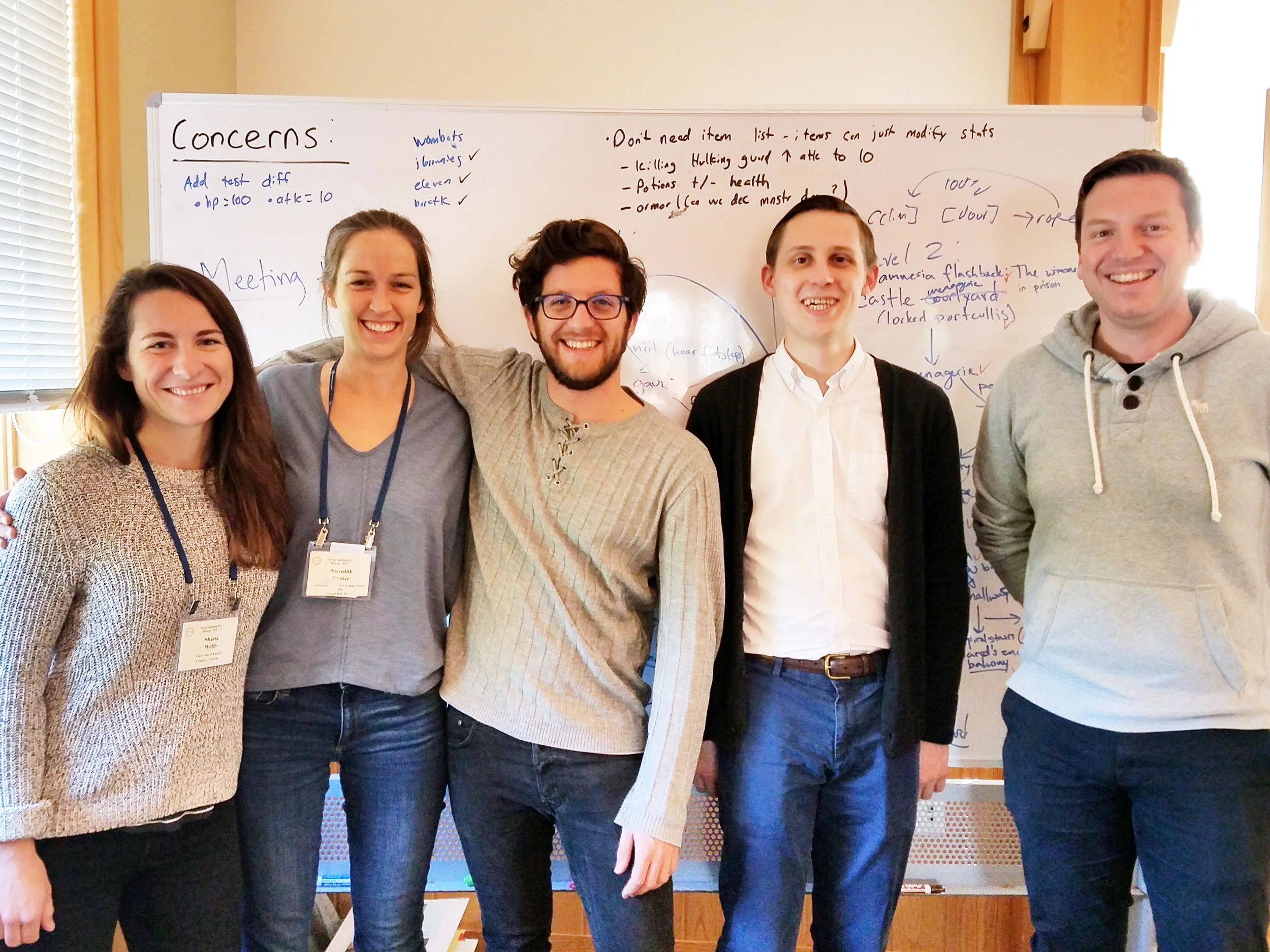
Visitor of the Week: Guillaume Burnet

VOTW.png

Meet Guillaume Burnet of the University of Queensland (Australia). Since the beginning of this month, the first-year PhD student and Josephine Bowles lab member has been on campus training in the Mouse Development, Stem Cells & Cancer course. 

What are your research interests? What are you working on?
I am working on male germ cell development and spermatogonial stem cells specification. I am particularly interested in the role a protein called Cripto plays in the maintenance of pluripotency of those cells. 

How did you decide to make this the focus of your research? 
Given germ cells ultimately give rise to sperm or oocytes, and are responsible for the maintenance of the population at the species level, I find the germ cell biology field fascinating and dedicated my PhD journey wanting to understand how these cells achieve such a function. 
 
How did your scientific journey begin? 
I completed my postgrad studies in France, majoring in genetics and developmental biology. I did several summer projects, including one in my current lab, which is where and when I knew I wanted to work in research and start a PhD. 

Was there something specific about the Mouse course that drew you to apply?
I am interested in learning more about embryos and organ culture; and was most excited to gain hands-on experience producing a transgenic mouse, from microinjecting embryos to performing an oviduct transfer. 

What and/or how will you apply what you've learned from the course to your work? 
Through the course, I became more proficient in microinjection which I can reproduce  at my home institution. I will also be able to try new conditions of embryo culture that could help with my project. And if I have any questions regarding a technique, I can contact the instructors and teaching assistants. Another advantage of taking this course is the possibility of returning back home with collaborations. I met many different people during the course and already have possible collaborations in mind. 

What is your key takeaway from the course?
I feel so much more confident about trying new experiments by myself. I discovered a lot of new techniques during this course, a lot of which I can envision incorporating into my research. I also met a lot of the field’s experts and being exposed to their ideas have sparked new thoughts for my project. 

How many CSHL courses have you attended? Have you participated in a meeting at CSHL?
This is my first course and I hope to attend a future Germ Cells meeting here. 

If someone curious in attending this course asked you for feedback or advice on it, what would you tell him/her?
I would highly recommend they attend this course – no matter their level of experience. In the start of the course, a number of my course mates did not have any experience with mice whatsoever but they are now handling mice like pros. And for those who have some experience working with mice, the range of techniques taught is so diverse that there is something for you. Plus, you will meet the leaders in the field, and can easily interact with them thanks to the relaxed environment. 

What do you like most about your time at CSHL?
I really liked bonding with my course mates and teaching team – all of who I now happily call a friend. I also enjoyed connecting with the invited speakers over an occasional drink!

Guillaume received a scholarship from the Howard Hughes Medical Institute (HHMI) to cover a portion of his course tuition. On behalf of Guillaume, thank you to HHMI for supporting and enabling our young scientists to attend a CSHL course where they expand their skills, knowledge, and network. 

Thank you to Guillaume for being this week's featured visitor. To meet other featured scientists - and discover the wide range of science that takes part in a CSHL meeting or course - go here.