Visitor of the Week: Ahlem Assali

chsl-visitor-ahlem-assali

Meet Ahlem Assali of the Medical University of South Carolina. The French-Tunisian national is a postdoctoral scholar in Christopher Cowan’s lab. Ahlem returned to CSHL for her second Molecular Mechanisms in Neuronal Connectivity meeting where she presented a poster titled “Role of EphB1 in axon guidance and fear memory.”

What are your research interests? What are you working on?
I’m interested in the molecular mechanisms that underlie proper brain wiring during development. Using mouse mutants, I currently investigate the role of certain genes in axon guidance, synaptic connectivity and, later on, in behavior as well as the potential involvement of these genes in neurodevelopmental disorders.

How did you decide to make this the focus of your research?
My fascination with brain development began in my PhD years in Patricia Gaspar’s lab during which I used the visual system to study the establishment of neuronal connectivity. I focused on activity-dependent mechanisms involved in synaptic refinement with Alexandra Rebsam and on cAMP signaling involved in the pruning of axonal branches with Xavier Nicol. In line with my PhD and current post-doc work, I would love to pursue my contribution to our understanding of the molecular mechanisms involved in the development of brain connectivity. One phenomenon that particularly amazes me is the neuronal plasticity occurring during critical periods of brain development, when experience interacts with genetics to shape the young brain and predict future personality/behavior.

How did your scientific journey begin?
Since my first experience in a lab, I realized that scientific research fits really well with my curious personality. As scientists, we develop creative hypotheses based on available knowledge and our own preliminary observations, then we design/perform experiments to test our ideas and analyze the data until we come close to some truth. It’s this combination of intellectual and manual work that makes science so personally fulfilling. Science also has a remarkable way to bring people together from all backgrounds/countries to advance our knowledge as a human community.

Nicolas Narboux-Nême introduced me to this fun world of neuroscience: he walked me through my first brain dissection, taught me how to stain for my first proteins, and how to brainstorm on/troubleshoot my first experimental issues. I’m very grateful for the time he granted me during the weeks I followed him around the Gaspar Lab.

Was there something specific about Molecular Mechanisms of Neuronal Connectivity meeting that drew you to attend?
As a mid-term postdoc, I’m in a stage in my career where identifying the focus of my work and heavily networking are important. This meeting is a perfect opportunity to do both: cutting-edge research topics in neurodevelopment are featured through the great talks and poster presentations, and allows me to interact with the more global scientific community.

What is your key takeaway from the meeting?
My key takeaway from this meeting is the discovery of the fascinating roles glial and microglial cells play in brain development, nerve injury, and multiple other brain functions. As neuroscientists, we sometimes tend to focus our work on neurons but should it would be beneficial for us to take into consideration this crucial brain population of glial and microglial cells. I’m glad that the meeting organizers added a beautiful session centered on these cells!

What did you pick up or learn from the meeting that you plan to apply to your work?
While I was presenting my poster, I received a very useful feedback from someone very knowledgeable about the field I work in which I’ll take into account as I design my next experiments.

If someone curious in attending a future iteration of this meeting asked you for feedback or advice on it, what would you tell him/her?
It is a great meeting! It is a small meeting featuring a focused-but-still-diverse topic and experts in the different fields of neurodevelopment who you can interact with and who will provide useful insight and feedback on your project. The most current advances on brain development are discussed it’s a productive way to step away from your very-focused everyday-lab work and gain fresh perspectives on your work and think at a global level.

How many CSHL meetings have you attended? How about courses at CSHL?
This is my second CSHL meeting and I have every plan to come back for future ones. And I’ve never attended any of the courses but I would love to!

What do you like most about your time at CSHL?
I love the fact it is surrounded by nature and that the talks are transmitted to screens placed on the patio. Attending a talk while feeling the breeze and hearing the birds sing in the background is a treat you don’t often experience. Its waterfront, and somewhat isolated location is ideal – and conducive – for focusing on science for a few days. I enjoyed re-connecting with those I worked with in the past and to catch up with friends. And the food was really great too.

Thank you to Ahlem for being this week's featured visitor. To meet other featured scientists - and discover the wide range of science that takes part in a CSHL meeting or course - go here.
Visitor of the Week: Mike Tramantano

cshl-visitor-mike-tramantano

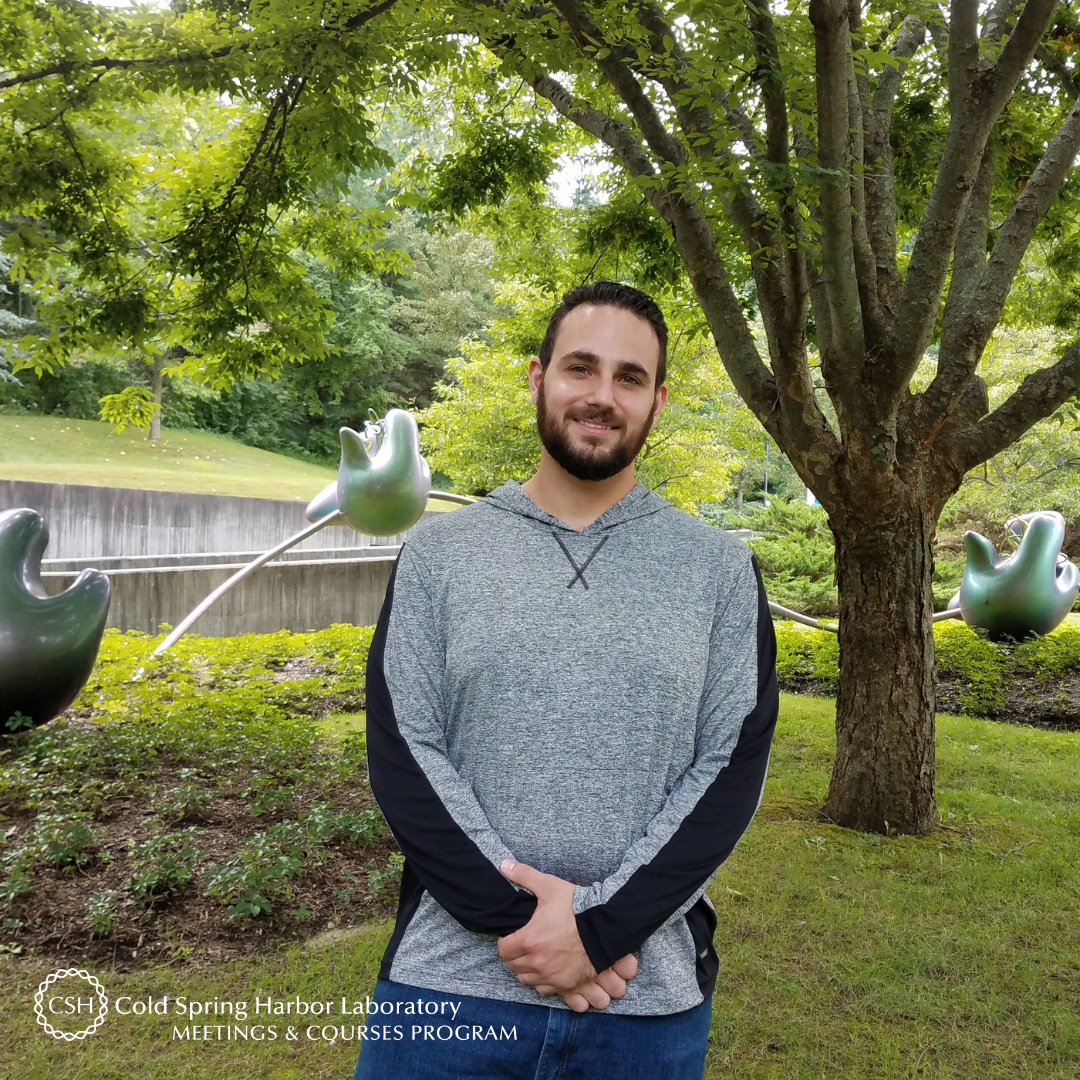
Meet Mike Tramantano of Cold Spring Harbor Laboratory (CSHL). Prior to joining CSHL President and Chief Executive Officer Bruce Stillman’s lab in February 2017 as a postdoctoral fellow, Mike earned his Ph.D. in Molecular and Cellular Biology from Stony Brook University (SBU). Since 2012, Mike has participated in six meetings at CSHL plus The Genome Access Course (TGAC) which kicks off later this afternoon.

What are your research interests? What are you working on?
In mammalian cells, stepwise assembly of large multi-protein complexes occurs at specific sites in the genome and is required to initiate DNA replication prior to cell division. My research focuses on understanding the recruitment mechanism that occurs upstream of this assembly and answering the question: How do cells recognize the correct sites in the genome for assembly to begin and what factors are involved in this process?

How did you decide to make this the focus of your research?
How human cells select sites for DNA replication is not well understood. If we can better understand this selection process, it can have broader implications to diseases where normal cell division is disrupted, such as cancer.

How did your scientific journey begin?
My passion for science began in high school Biology when I was first exposed to the topic of genetics. I was struck by the fact that all the information needed to make a human being was encoded in our DNA.

The Genome Access Course is your first CSHL course – was there something about this course in particular that drew you to register for it?
There is an increasing amount of data and tools publicly accessible to scientists online. TGAC appealed to me because it is an intensive instructional course teaching about these resources and how they can be best utilized in your research.

Your course kicks off later today - what do you hope to get out of the two-day course and how will it help with your work?
I hope to learn the fundamentals of analyzing deep sequencing data and the proper way to present this data. My research is beginning to enter a period where genome wide data and analyses will be necessary in order for me to continue my project.

If you can take part in another course or two, which one(s) would you register for and why?
I would like to register for either the Computational Genomics or Chromatin, Epigenetics and Gene Expression course, as the in-depth training in working with next generation sequencing technologies and chromatin biology present in those courses would be helpful in planning future experiments for my project.

Since you’re well-integrated in campus and have participated in a good number of meetings, what tips or insider-knowledge can you share with those attending their first CSHL meeting or course?
Don’t miss the wine and cheese! It is a Cold Spring Harbor tradition where many great ideas are shared and discussed in a casual atmosphere. I also suggest taking a walk up to Hillside (by the Quick building) to get the best views of the Harbor.

What, in your opinion, are the best features of a CSHL meeting that make it unique and worthwhile to participate in?
What I enjoy most about the meetings at CSHL is that they are relatively casual compared to other conferences at which I have participated. The interaction between visiting scientists always seems very constructive and positive. In addition, established faculty are very willing to share their knowledge with younger researchers – especially over a beer at the bar after the talks.

Thank you to Mike for being this week's featured visitor. To meet other featured scientists - and discover the wide range of science that takes part in a CSHL meeting or course - go here.

Visitor of the Week: Fan Liu

VOTW.png

Meet Fan Liu of the Sylvester Comprehensive Cancer Center in the University of Miami. The research assistant professor in Stephen Nimer’s lab was back on campus for her second CSHL meeting: Epigenetics & Chromatin

What are your research interests? What are you working on?
My research focuses on epigenetic regulation in normal and malignant hematopoiesis, and targeting abnormal epigenetic landscape in myeloid malignancies. 

How did you decide to make this the focus of your research?
I got into this field because I was always curious about the transcriptional regulation of gene expression and how it influences cancer cell behavior. Although we used to think that cancer is a disease of genomic alterations, it is clear now that it is actually a genomic and epigenomic disease combination.

How did your scientific journey begin? 
I officially started my scientific journey 18 years ago, when I was accepted into the PhD program in the University of New Mexico. Before that, I interned in a hospital in China where I saw, first-hand, too large a number of patients die from various cancers; especially children who passed due to leukemia. Since then, and it may seem very naïve now, those experiences were what led me to devote my career to finding a cure for this terrible disease. 

Was there something specific about the Epigenetics & Chromatin meeting that drew you to attend?
The new concept, cutting-edge techniques, and sophisticated research work from world-famous laboratories are the major attractions of this meeting.   

What is your key takeaway from the meeting?
My takeaway is that cancer cells could have millions of ways to disrupt the normal epigenetic landscapes; and therefore, targeting epigenetic regulators in the hope of reversing the malignant phenotype could be cell context dependent.  

What did you pick up or learn from the meeting that you plan to apply to your work?  
I learned a lot from this meeting. I have been having a hard time figuring out the mechanisms of a crosstalk between histone arginine methylation and lysine methylation but I got some ideas from the work presented in this meeting by colleagues. I plan to test these ideas when I get back to my lab. 

If someone curious in attending a future iteration of this meeting asked you for feedback or advice on it, what would you tell him/her?
I will strongly recommend this meeting. 

How many CSHL meetings have you attended?
This is my second meeting so far and would love to attend more in the future. 

What do you like most about your time at CSHL?
CSHL is a great organization with a beautiful campus. And the food is great.

Photo provided by: Fan Liu

Thank you to Fan for being this week's featured visitor. To meet other featured scientists - and discover the wide range of science that takes part in a CSHL meeting or course - go here.

Visitor of the Week: June Bryan de la Pena

2018-visitor-june-bryan-de-la-pena

Meet June Bryan de la Pena of the University of Texas at Dallas. Under the direct supervision of Dr. Zachary Campbell, the Filipino national is a postdoctoral research scientist in the Laboratory of RNA Control and the Center for Advanced Pain Studies (CAPS). June Bryan was on campus this week for the Translational Control meeting. This is June Bryans’ first CSHL meeting and his participation debut included him presenting a poster entitled “Mechanistic insights into translational controls that drive chemotherapy-induced peripheral neuropathy”. 

What are your research interests? What are you working on?
My current research is focused on the translational control mechanisms that govern chronic pain. In particular, we study translation in peripheral pain-sensing neurons in response to insult or injury and how it contributes to pain plasticity. 

How did you decide to make this the focus of your research?
I have always been fascinated by the notion of doing research to improve our quality of life. Chronic pain causes tremendous burden and suffering to millions of people worldwide; yet current strategies to manage it are limited and has even led to new problems, such as the opioid epidemic. The enormity and the obvious need of solving this problem has led me to focus on this topic. 

How did your scientific journey begin? 
My scientific journey began at home. My father, a national Farmer Scientist in the Philippines, encouraged me to wonder, dream, and explore. My mother also nurtured my inquisitiveness. With the full support of my family, I set out on my scientific journey, crossed the ocean, and braved the exciting world of scientific research. In this journey, I have met a lot of people that inspired me to move forward and soar higher. 

Was there something specific about Translational Control meeting that drew you to attend?
My primary motivations to attend this meeting are to be exposed to the translational control field and to become abreast of the latest developments and techniques. In addition, I was given the opportunity to present my preliminary data and receive input from colleagues.  

What is your key takeaway from the meeting?
In this meeting, I learned that translational control is a huge, diverse, and exciting field. The principles and techniques of translational control can be used to shed light into the mechanism of – and ultimately develop – new treatment strategies for various clinical disorders.   

What did you pick up or learn from the meeting that you plan to apply to your work?  
The field of translational control is all new to me. This meeting has exposed me to what other people are working on and has given me ideas on how to expand and tweak my current research project. I have also established contacts with colleagues who I can potentially collaborate with in the future. 

If someone curious in attending a future iteration of this meeting asked you for feedback or advice on it, what would you tell him/her?
I only have good words to tell them. This meeting is jam-packed with relevant and the latest content for anyone interested in translational control. Each session was very informative, and the speakers are all well-respected in the field. The atmosphere is filled with contagious enthusiasm that promotes discussion and learning. 

How many CSHL meetings have you attended?
This is my first CSHL meeting and I will definitely attend another one in the near future. This has been one of the most comprehensive and informative meeting that I have attended so far, and has set the standard for me of what a scientific meeting should be.  

What do you like most about your time at CSHL?
This was my first time in CSHL and I am greatly pleased. Surrounded by lush greenery and breathtaking waterfront, the campus is both relaxing and stimulating. The food was great too!

Thank you to June Bryan for being this week's featured visitor. To meet other featured scientists - and discover the wide range of science that takes part in a CSHL meeting or course - go here.

Visitor of the Week: Sulagna Das

VOTW.png

Meet Sulagna Das of the Albert Einstein College of Medicine. A postdoctoral fellow in Robert H. Singer’s lab, Sulagna was on campus for her first CSHL meeting, Single Biomolecules. She also presented a talk titled “Simultaneous imaging of activity-regulated endogenous mRNAs in hippocampal neurons.”

What are your research interests? What are you working on?
My research focuses on visualizing single mRNAs in space and time in hippocampal neurons, and understanding how their dynamics contribute to long-term memory formation and maintenance.
 
How did you decide to make this the focus of your research?
I have been studying neuroscience since my first foray into research! Our amazing capability to learn and remember relevant information always intrigued me, and when I learned from Eric Kandel’s work that underlying memory storage is a dialogue between genes and synapses, I decided to focus on this exciting field. To understand how this dialogue is maintained over space and time, the live single molecule imaging of mRNAs and proteins in neurons is important. 
 
How did your scientific journey begin? 
I was inspired by my grandfather who was a scientist and solving equations about mechanical fatigue even at the age of 80. He always said that the power of observation can unravel lots of scientific mysteries which triggered my interest in biology, a dynamic system where you can learn a lot by observing complex cellular behavior. 
 
Was there something specific about Single Biomolecules meeting that drew you to attend?
The first Single Biomolecules meeting at CSHL is very timely, especially since the field is rapidly expanding. More and more people have adopted single molecule imaging to understand the complex dynamic behavior of their favorite biomolecule. I was specifically interested in the new improvements to the imaging technologies, better image analysis methods, and how one can use these technologies to understand gene expression.   

What is your key takeaway from the meeting?
How biological systems work is an example of how chemicals interact in different physical dimensions to bring out the complex behavior. The Single Biomolecules meeting brought together physicists, chemists, and biologists with the sole aim of trying to deconvolve complex biological systems to single molecules and understand how each of these molecules interact to determine cellular structure and functions.  

What did you pick up or learn from the meeting that you plan to apply to your work?  
One of the challenges in single molecule imaging is to discern signal from noise in our live imaging datasets. To analyze the datasets with robustness and precision is something I tried to pick up from the meeting. I have established contacts, where an exchange of resources for data analysis will help me in my future experiments.  

If someone curious in attending a future iteration of this meeting asked you for feedback or advice on it, what would you tell him/her?
This meeting was a great learning experience and the close interactions developed during the meeting can lead to potential collaborations in the near future. I would strongly encourage everyone working on single molecule imaging or planning to work on it, to attend this meeting. It was the perfect combination of the technological advancements in the field and the applications to various biological problems.  

What do you like most about your time at CSHL?
My time at CSHL has been rewarding both scientifically and as a way to take a break from the hustle of city life! This is a great place to do and think about science while you take a long walk in the campus soaking in the great views and incredible history of the place.

Thank you to Sulagna for being this week's featured visitor. To meet other featured scientists - and discover the wide range of science that takes part in a CSHL meeting or course - go here.

Photo by: Sulagna Das