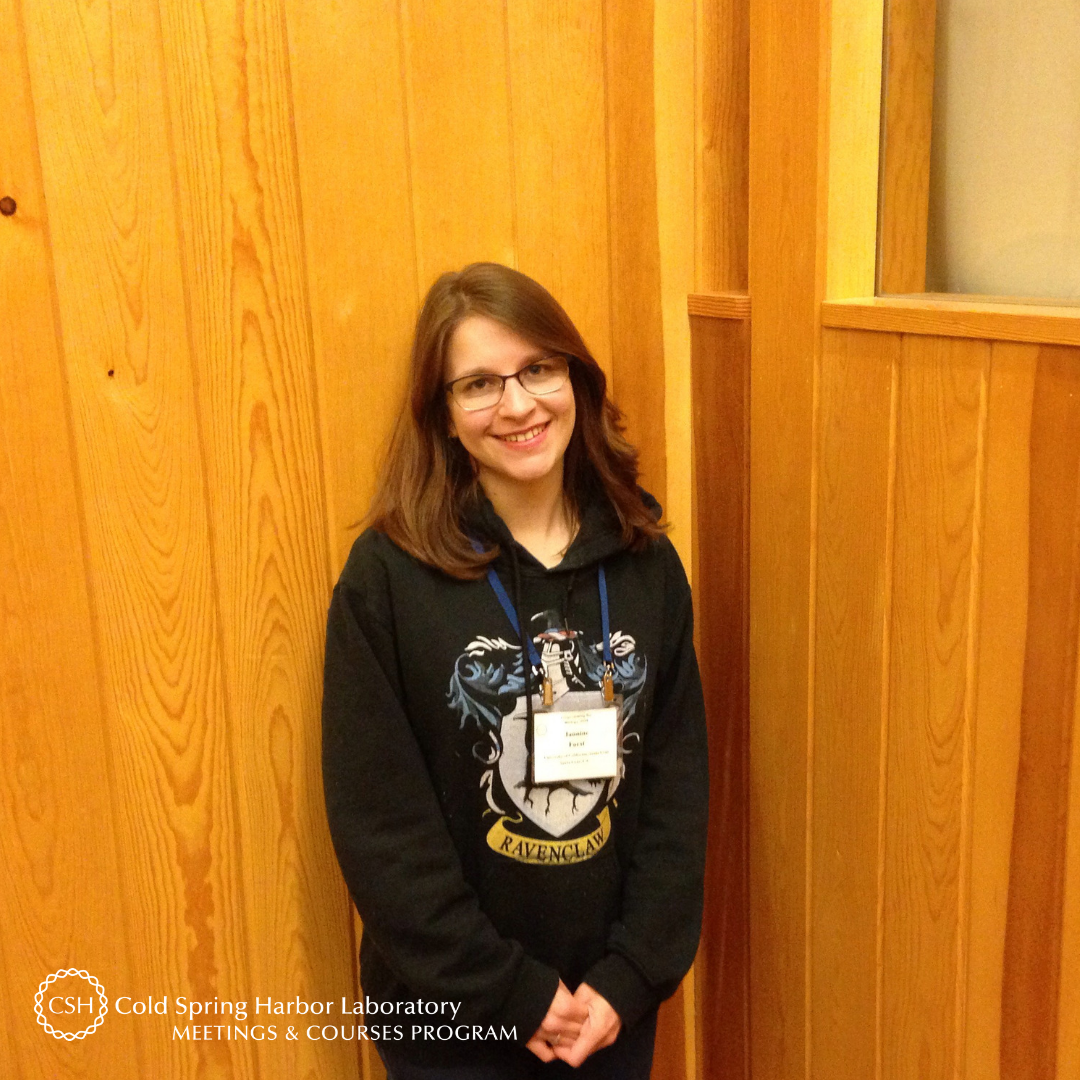
Visitor of the Week: Jannine Forst

2018-cshl-visitor-jannine-forst

Meet Jannine Forst of the University of California, Santa Cruz. The postdoctoral scholar is a member of the Human Paleogenoics Lab led by Prof. Lars Fehren-Schmitz. She is on campus strengthening her programming skill set via Programming for Biology – her first course at CSHL.

What are your research interests? What are you working on?
My research is in ancient DNA - using genetics to study archaeological material, from humans to animals, diseases to microbiomes. My current project is concerned with deciphering the human population history of Pre-Columbian South America, specifically at Machu Picchu, but my personal research interests lie in population genetics, human health, and disease.

How did you decide to make this the focus of your research?
I’ve always been interested in history, archaeology, and genetics - which made ancient DNA research a perfect match for me.

How did your scientific journey begin?
My mom, a geneticist, definitely inspired me. She encouraged me to explore all the topics I found interesting and supported me in my endeavors, no matter the direction they took me. From watching Bill Nye the Science Guy as a kid to summer camps at the museum, she helped cultivate my curiosity which eventually led me to ancient DNA research.

Was there something specific about the Programming for Biology course that drew you to apply?
I came to the Programming for Biology course looking to jump-start my programming skills. With the widespread use of high-throughput sequencing, researchers cannot manually look through the hundreds of thousands of sequences per sample generated. So programming in a common language like Python - which is what this course teaches - is becoming indispensable for many biologists, ancient DNA researchers included.

What and/or how will you apply what you've learned from the course to your work?
For my work, I will start by coding solutions to the many small ideas that pop up when analyzing ancient genetic data, which is very different from working with modern genetic data. I will also make all the e-books, problem sets, and resources given to me at Programming for Biology available to my lab mates.

What is your key takeaway from the course?
Learning how to program mainly takes practice! Practice, practice, and more practice.

If someone curious in attending this course asked you for feedback or advice on it, what would you tell him/her?
Be prepared for a lot of work but a lot of fun! You will learn a lot of things in a very short period of time. The instructors did a great job on the course material, structure, and timing.

What do you like most about your time at CSHL?
What I liked most about my time at CSHL is the community. The meetings and conferences eat together so you get to interact with various interesting people who you may not normally have a chance to meet.

Thank you to Jannine for being this week's featured visitor. To meet other featured scientists - and discover the wide range of science that takes part in a CSHL meeting or course - go here.

Visitor of the Week: Megan Povelones

VOTW (2).png

Meet Megan Povelones of Penn State Brandywine. Since 2012, the assistant professor in biology has been running her lab alongside a technician and handful of undergraduates. Megan is on campus for The Evolving Concept of Mitochondria: From Symbiotic Origins to Therapeutic Origins meeting where she presented a poster entitled “The single mitochondrion of the kinetoplastid parasite Crithidia fasciculata is a dynamic network”.

What are your research interests? What are you working on?
I study how single-celled parasites called kinetoplastids adapt their mitochondrial shape and function to survive in different hosts. As early-diverging eukaryotes, these mechanisms may reveal shared properties of mitochondrial networks in a variety of organisms.

How did you decide to make this the focus of your research?
In graduate school I was studying mitochondrial DNA replication in Trypanosoma brucei, the causative agent of African sleeping sickness. In a genetic screen for replication defects, I by chance discovered a protein that altered mitochondrial shape. It fascinated me that the kinetoplastid mitochondrion had such an unusual shape (a single branched network in each cell) and that this shape was developmentally regulated, but that the proteins required for maintenance and remodeling of mitochondrial structure were completely unknown.

How did your scientific journey begin?
I was lucky to have fantastic mentors starting with a dynamic high school chemistry teacher, Mary Fuller. She loved science, adventure, travel, and rode a Harley, so clearly I wanted to be just like her. I read a lot of popular science books in high school, primarily about infectious diseases and epidemiology. I began my graduate studies thinking I wanted to be a virologist, but after rotating in a parasitology lab I was amazed by their complexity and beautiful cell biology and have been working on kinetoplastids ever since. My graduate mentor, Paul Englund -- an amazing scientist, mentor, and generally good person -- inspired me with his passion for science, scientific rigor, and the remarkable clarity with which he thought about and communicated scientific ideas.

Was there something specific about The Evolving Concept of Mitochondria: From Symbiotic Origins to Therapeutic Opportunities meeting that drew you to attend?
As a parasitologist, I welcomed the opportunity to attend a meeting focused on mitochondria. I was also drawn to the idea of a meeting that is a mix of historical retrospectives and current, cutting-edge developments. I enjoy learning about the history of science and the people who made it happen. My undergraduate students enjoy hearing these stories too, and I look forward to sharing some of what I’ve learned in the classroom.

What is your key takeaway from the meeting?
As this is a historical meeting, some of the speakers are sharing an overview of their work as it has developed over the course of their career. At this level, it is clear that while they are all brilliant scientists, there is a considerable amount of resilience, persistence, and luck that is required for success in science. This can be an important message, particularly for trainees and young scientists.

What did you pick up or learn from the meeting that you plan to apply to your work?
I’m interested in mitochondrial remodeling reactions within the single mitochondrial network of kinetoplastid parasites. At this meeting, I’ve seen the work of others who have used markers for specific mitochondrial compartments and super-resolution microscopy techniques to provide detailed insights into these processes. This is something I’m eager to apply to my system to learn if fusion and fission in kinetoplastid mitochondrial networks is mechanistically similar to that in mammals.

If someone curious in attending one of our future history meetings asked you for feedback or advice on it, what would you tell him/her?
I would say it is a great opportunity to learn the history of a field while getting caught up on the latest research. You get to hear directly from those who made landmark discoveries, and you will come away with a greater appreciation for the process of science.

What do you like most about your time at CSHL?
It’s very pretty here. I like seeing the water everywhere I walk, and all the sculptures. I also like seeing the names and pictures of famous scientists everywhere. It really feels like being part of a community. It’s great to be at a place where science is so prevalent and so celebrated.

Thank you to Megan for being this week's featured visitor. To meet other featured scientists - and discover the wide range of science that takes part in a CSHL meeting or course - go here.

Visitor of the Week: Shantanu Shukla

cshl-visitor-2018-shantanu-shukla

Meet Shantanu Shukla of the Genome Sciences and Technology Program, a joint initiative between the University of Tennessee, Knoxville (UTK) and Oak Ridge National Laboratory (ORNL). He is a graduate research assistant working towards his Ph.D. under the supervision of Dr. Dean Myles in the Neutron Diffraction Group at the Spallation Neutron Source (SNS) in ORNL. Shantanu is presently training at our annual course on X-Ray Methods in Structural Biology – his first course at CSHL.

What are your research interests? What are you working on?
I am investigating the selective substrate translocation across bacterial membranes facilitated by primary and secondary transporter proteins.

How did you decide to make this the focus of your research? 
In March 2016, I met Dr. Matthew Cuneo, a very talented and dynamic beamline scientist, who first introduced me to the regulation of substrate transport across bacterial inner membrane. I have since been interested in understanding the membrane channels and transporters in bacteria for improving their druggability. Dr. Myles and Dr. Cuneo suggested that I investigate specificity versus affinity profiles of these selective transport systems (especially of their periplasmic binding proteins) which then motivated me to further investigate the role of both structure and dynamics in selective substrate binding and transport across bacterial inner membrane. 

How did your scientific journey begin?
Darwin’s theory of evolution based on natural selection has had a profound impact on me and my scientific career. I was in 8th grade when I first read about the adventures of Charles Darwin onboard HMS Beagle and his postulation of the theory of evolution. That same year, as part of my summer science project, I cataloged different species of birds found around the old colonial-era town of Jamalpur in India and couldn’t help but notice how evolution shaped speciation in birds. I then realized that what is postulated as a hypothesis can be tested and confirmed in science. Since that day, both bird watching and science have become personal passions.

Was there something specific about the X-Ray Methods in Structural Biology course that drew you to apply?
As someone with no or limited knowledge of X-ray diffraction, the fact that this training program encourages students in my situation to apply was the strongest reason for my application. Additionally, the focus on lab training is another strong point of this training program that attracted me. Plus, this course brings in the most experienced instructors -- some of who are pioneers of their fields -- to teach crystallography.

What and/or how will you apply what you've learned from the course to your work?
At SNS, we are focused on determining positions of hydrogens in protein structures, which account for around half of the total atoms in a system. Both X-ray and neutron crystallography require growth of high-quality protein crystals, but the crystals required for neutron analysis are much larger (x1000-fold). The first step to solving any neutron structure is to collect X-ray data on the same system and then jointly refine the X-ray data with the neutron diffraction data to get a complete density of individual atoms. X-ray crystallography is, therefore, the stepping stone to neutron crystallography. To this end, I will use the knowledge gained at this course towards crystallization, diffraction data collection, and data refinement of protein structures in my lab.

What is your key takeaway from the course?
My key takeaway from this course is that even in this era of fast computers and robustly automated algorithms, there is still a need to train good crystallographers. Macromolecular structure determination is not a trivial task and a clear understanding of the theoretical background is often a key determinant of the success or failure of any crystallographic project.

How many CSHL courses have you attended?
This is my first CSHL meeting, but I would definitely look forward to attending more: the Cryo-Electron Microscopy course looks very interesting.

If someone curious in attending this course asked you for feedback or advice on it, what would you tell him/her?
I would encourage them to apply for this course – even if they have limited X-ray crystallography experience (as was my case). I would share with them my own experience so that they feel equally motivated to apply for this program. I would also tell them about how the productive interactions I have had with the instructors and fellow course participants has positively changed my approach towards my own research.

What do you like most about your time at CSHL?
It is a privilege for me to attend this course; and it is not just the course itself but also the whole atmosphere -- it is so energizing around here. Also, the sheer beauty of this place is unmistakable and will be difficult to leave at the end of the course.

Shantanu received a scholarship from the National Institute of General Medical Sciences (NIGMS) to cover a portion of his course tuition. On behalf of Shantanu, thank you to the NIGMS for supporting and enabling our young scientists to attend a CSHL course where they expand their skills, knowledge, and network.

Thank you to Shantanu for being this week's featured visitor. To meet other featured scientists - and discover the wide range of science that takes part in a CSHL meeting or course - go here.

Visitor of the Week: Hayden Huggins

VOTW (1).png

Meet Hayden Huggins of the East Carolina University Brody School of Medicine. The fourth year Ph.D. Candidate is a member of Dr. Brett Keiper’s lab in the Biochemistry and Molecular Biology Department. He was on campus for the 2018 Germ Cells meeting where he presented a poster entitled, “mRNA cap-binding protein IFE-3 is critical for germ cell sex-determination in C. elegans”.

What are your research interests? What are you working on?
Broadly, my research interests focus on gene regulation by modulating mRNA translation during germline development. Currently, I am working on mRNA cap-binding isoforms (eIF4E) and how they can selectively regulate subsets of mRNAs in C. elegans germline.    

How did you decide to make this the focus of your research?
Two things drew me to what I study: 1) I love watching things grow and change over time so animal development is perfect for me; I’ve always said I’m not happy unless I’m studying a phenotype. 2) How biological information is turned into form and function also greatly interests me, so what better place to study this phenomenon than protein synthesis. 

How did your scientific journey begin? 
I have always known I wanted to be involved in research science, but it wasn’t until late in my undergrad that I determined the capacity. While at the Appalachian State University, I started an undergrad research rotation in a virology lab and got bit by the research-bug pretty hard. I subsequently met my current boss, became very interested in his research direction, and now it’s hard to imagine doing anything else.          

Was there something specific about Germ Cells meeting that drew you to attend?
In a couple years, I will be looking for a postdoc position and since many of the leaders in my field attend the Germ Cells meeting at CSHL, it was the perfect opportunity to introduce myself to them and talk about my and their research interests. 

What is your key takeaway from the meeting?
That there is a really strong germ cell community which spans across many developmental systems, with a lot of really exceptional scientists in each. It makes me happy with my choice to stay in this field.    

What did you pick up or learn from the meeting that you plan to apply to your work?  
In the past year we started CRISPR/Cas9 genome editing in the Keiper lab, with success in tagging our favorite genes with fluorescent proteins. Seeing other researchers’ CRISPR/Cas9 projects has inspired me to do even more genome editing. It is a very powerful tool for developmental biology. I have also learned a little bit about grant writing as a postdoc from Dr. Jordan Ward (UCSC) which I think will prove to be invaluable when I start to secure funding as a postdoc.     

If someone curious in attending a future iteration of this meeting asked you for feedback or advice on it, what would you tell him/her?
I would tell them that CSHL meetings are excellent places to meet like-minded scientists in your field. There is an abundance of networking opportunities, which are important for those interested in pursuing careers in academic research science. 

How many CSHL meetings have you attended?
This is my first one and I will absolutely be attending germ cell meetings – and potentially translation meetings – at CSHL in the future.  

What do you like most about your time at CSHL?
The scenery is quite nice here, and the bar was a great place to hang out after the plenary sessions. I also enjoyed the sense of community that I got from the germ cell field.

Thank you to Hayden for being this week's featured visitor. To meet other featured scientists - and discover the wide range of science that takes part in a CSHL meeting or course - go here.

Visitor of the Week: Amit Sharma

cshl-visitor-amit-sharma

Meet Amit Sharma of the Buck Institute. The Indian national is a postdoctoral research fellow in Pankaj Kapahi’s lab which focuses on the influence of diet on lifespan and health span extension, as well as the involvement of DNA damage pathways. Amit was on campus this week to participate in his very first CSHL meeting: Mechanisms of Aging.

What are your research interests? What are you working on?
I am deeply interested in the molecular regulatory pathways involved in cellular senescence and aging, and to leverage these in developing therapies for aging and associated disorders.

How did you decide to make this the focus of your research?
I have always found the process or phenomenon of aging fascinating.

How did your scientific journey begin?
I am originally from India where I earned my PhD. Throughout my career, I have been inspired by several individuals, teachers, and mentors but I credit my dad for setting me on this path. He was the first person to nurture my curiosity and introduce me to scientific methods.

Was there something specific about Mechanisms of Aging meeting that drew you to attend?
I believe the aging meeting at CSHL to be the field’s most important for two reasons: 1) The prestigious array of established scientists speaking at this meeting and discussing their yet-to-be-published, cutting-edge research; and 2) The opportunity to present my research to and get feedback from my peers.

What is your key takeaway from the meeting?
The biggest takeaway for me is that there is an increasing interest in cellular senescence both in understanding basic biology and potential therapy.

What did you pick up or learn from the meeting that you plan to apply to your work?
Every talk was very interesting; however, a few talks regarding the role of long interspersed nuclear elements (LINE) in triggering inflammation and its role in aging was very exciting. The insight I gained from these talks might be useful for my project. In addition to that, I may have a potential collaboration.

If someone curious in attending a future iteration of this meeting asked you for feedback or advice on it, what would you tell him/her?
I would highly recommend this meeting. Keep an eye on the deadline, apply early, and, if possible, present your research. The feedback I got from the attendees were very positive and useful.

How many CSHL meetings have you attended?
I have known about CSHL Meetings & Courses but this is the first time I am attending a CSHL meeting and would love to attend, if possible, every year from now on.

What do you like most about your time at CSHL?
The CSHL campus is beautiful, and the support staff is very helpful and friendly. The level of excitement, sense of cooperation and optimism amongst fellow scientists were the most inspiring this year.

Thank you to Amit for being this week's featured visitor. To meet other featured scientists - and discover the wide range of science that takes part in a CSHL meeting or course - go here.