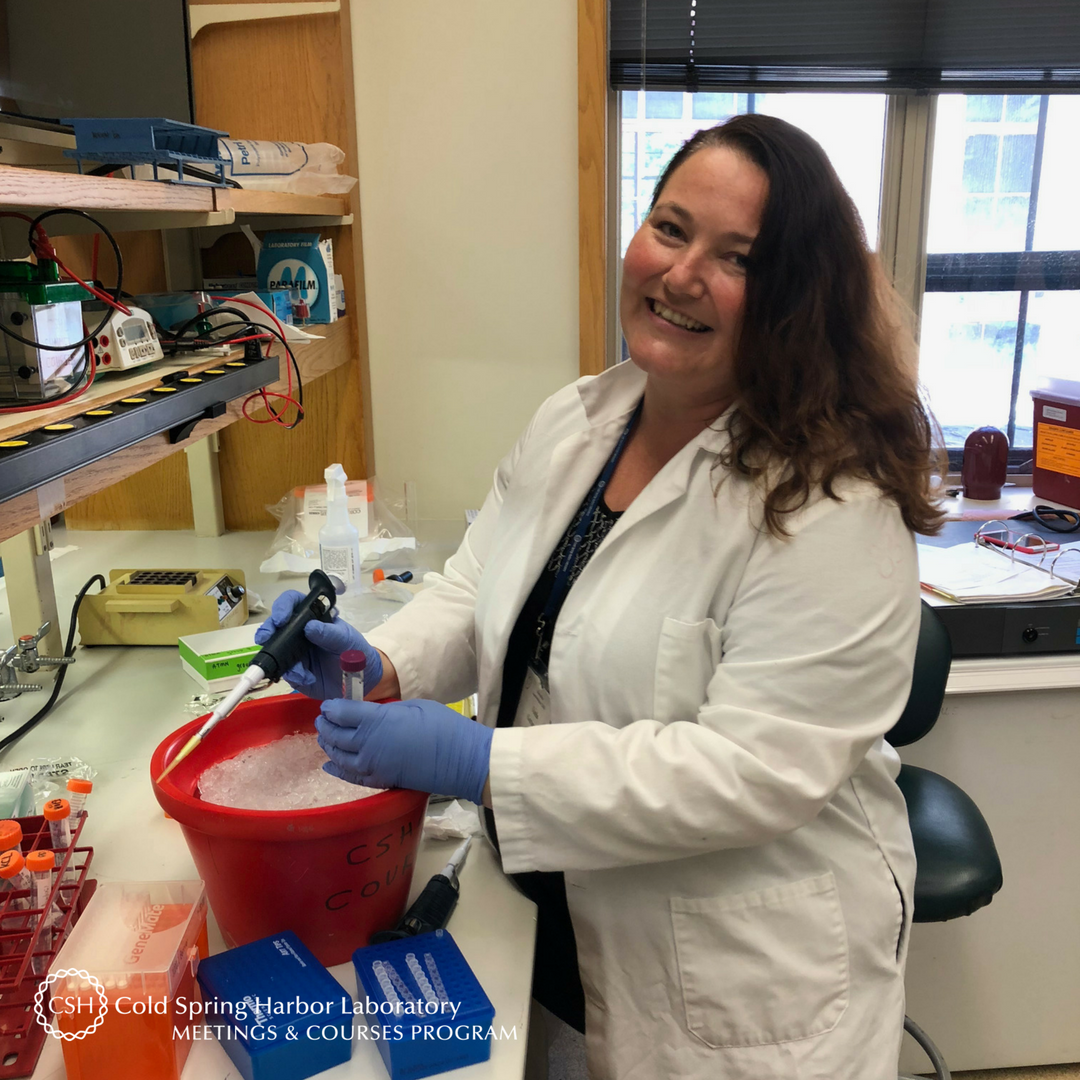
Visitor of the Week: Heiko Schutt

2018-cshl-visitor-heiko-schutt

Meet Heiko Schütt of the University of Tübingen (Germany). Heiko is currently finishing his PhD in Felix Wichmann’s lab within the Neural Information Processing Group. He is on campus attending his first CSHL course: Computational Neuroscience: Vision

What are your research interests? What are you working on?
I model human visual behavior: what images humans can differentiate and where in the image they look. For my models, I use neural data for inspiration which I implement using image-processing methods.

How did you decide to make this the focus of your research? 
I knew I wanted to study visual perception once I realized how well it can be understood and the number of fascinating problems still unresolved. For example, I am deuteranope which means I am missing the photoreceptor type needed to register medium wave length lights. Therefore, there are some colors which I cannot differentiate. As this process is well understood, we can calculate which colors I can identify and which ones I cannot. Displaying colors on a screen, which everyone -- but me -- could easily distinguish from each other made a very impressive illustration. Such exact predictions are a rarity in neuroscience and psychology, and gave me hope that exact solutions are possible in other parts of vision science. 

How did your scientific journey begin? 
My scientific journey began as a psychology student in Gießen, which has a large group of psychologists working on visual perception. I started as a research assistant and was immediately fascinated by the illusions in visual perception, its complexities, and how much we can understand in this field.

Was there something specific about the Computational Neuroscience: Vision course that drew you to apply?
I was mainly drawn to apply for this course by the great collection of speakers and alumni. This course really brings together a broad selection of world-leading scientists in this field.

What and/or how will you apply what you've learned from the course to your work? 
I learned a lot about the neural basis of my models. The retinal physiology discussed at the course will be a great source of inspiration for the front end of the early vision model I currently develop.

What is your key takeaway from the course?
The most important takeaway are the people I have met here. Of course, I increased my knowledge and beliefs about visual neuroscience, but getting to know the researchers behind the original studies and meeting a great set of peer scientists will be invaluable for my future in science.

If someone curious in attending this course asked you for feedback or advice on it, what would you tell him/her?
If you can attend, do it! This is one of the best visual neuroscience courses in the world. Once you are here, don’t take yourself too seriously and allow yourself to get to know the science and other scientists.

What do you like most about your time at CSHL?
From our evening discussions to our Nerf gun battles, ultimate Frisbee matches, and evenings on the beach - I enjoyed the relaxed attitude of this course.

Heiko received a scholarship from the Helmsley Charitable Trust to cover a portion of his course tuition. On behalf of Heiko, thank you to the Helmsley Charitable Trust for supporting and enabling our young scientists to attend a CSHL course where they expand their skills, knowledge, and network. 

Thank you to Heiko for being this week's featured visitor. To meet other featured scientists - and discover the wide range of science that takes part in a CSHL meeting or course - go here.

Visitor of the Week: Doris Ling

VOTW %282%29.png

Meet Doris Ling of Washington University in St. Louis. The graduate student is a member of the Barani Raman Lab which studies the insect olfactory system; as well as the Yehuda Ben-Shahar Lab which studies the genetic basis of behavior. Doris returned to CSHL to take part in the annual course on Drosophila Neurobiology: Genes, Circuits & Behavior

What are your research interests? What are you working on?
I am interested in how the brain encodes complex sensory information – currently I am researching this in the fruit fly brain and how it represents chemical information such as smells.

How did you decide to make this the focus of your research? 
My background is in engineering and in a previous life I was interested in developing artificial chemical sensors. I quickly came to realize that man-made chemical sensors tend to fail in complex odorant environments but natural chemical sensors, such as our noses or a fly’s antennae, easily deal with these complexities. So why not study how nature builds such robust chemical sensors? 

How did your scientific journey begin? 
Growing up, I had great teachers whose enthusiasm for teaching and the sciences made it easy for me to get excited about science too.

Was there something specific about the Drosophila Neurobiology: Genes, Circuits & Behavior course that drew you to apply?
I applied to this course because I wanted to learn more laboratory skills specific for studying the fruit fly nervous system. Learning such hands-on technical skills from leaders in the field has been truly invaluable in ways that I am not sure I would have been able to obtain anywhere else.    

What and/or how will you apply what you've learned from the course to your work? 
This course has provided me with such a breadth and wealth of knowledge regarding everything from the developmental neuroscience to the genetic tools available in fruit flies. It was also great to learn from people with such diverse academic backgrounds. I hope to channel everything I’ve learned to ask more informed and interesting questions about Drosophila neurobiology!

What is your key takeaway from the course?
Flies are awesome. Even though their brains only have 100,000 neurons (compared to humans which have 100 billion neurons), they are still capable of so many interesting and elaborate behaviors. And considering how many biological processes are fairly conserved throughout the animal kingdom, the fly is a necessarily simple but sufficiently complex model that can teach us a lot about ourselves.  

How many CSHL courses have you attended? 
Just this one, and I attended the Neurobiology of Drosophila meeting last fall. 

If someone curious in attending this course asked you for feedback or advice on it, what would you tell him/her?
Do it! This course has been invaluable to me in terms of the experimental skills I have learned, the conversations I’ve had, and the people I’ve met. The instructors are so knowledgeable, but more importantly, ever so patient and kind teachers. It has been a great opportunity to get to know them and to have them on our team.

What do you like most about your time at CSHL?
The people I met at CSHL during the course are nothing short of amazing. Their company has brought me countless laughs and gave me an unwavering faith about the future of the field. I already miss our late-night conversations and gossiping about science at every coffee break. I hope that I may one day be as motivated, diligent, and ambitious as they are. 

Doris received a fellowship from the Helmsley Charitable Trust to cover a portion of her course tuition. On behalf of Doris, thank you to the Helmsley Charitable Trust for supporting and enabling our young scientists to attend a CSHL course where they expand their skills, knowledge, and network.

Thank you to Doris for being this week's featured visitor. To meet other featured scientists - and discover the wide range of science that takes part in a CSHL meeting or course - go here.

Visitor of the Week: Linda Rubenstein

2018-visitor-linda-guttman-rubenstein

Meet Linda Rubenstein of the NASA Ames Research Center! The NASA Postdoctoral Fellow is a part of the Bone and Signaling Lab headed by Ruth Globus. She is on campus participating in her first CSHL course: Advanced Techniques in Molecular Neuroscience

What are your research interests? What are you working on?
We aim to understand the responses of mammalian tissue to the spaceflight environment with the goal of developing effective countermeasures to maintain crew health during and after space missions. 

My research focuses on the impact of microgravity and radiation on the brain in mice. 
How did you decide to make this the focus of your research? 

During my PhD, my focus was on aging. More specifically, prolonged exposure to the spaceflight environment leads to excess production of ROS and oxidative damage, culminating in an acceleration of tissue degeneration – similar to aging – and I am working to to further explore and understand this link. 

How did your scientific journey begin? 
My father is a chemist, and from young age, he inspired me to pursue scientific questions. I am also very lucky to have had wonderful and supportive mentors while I earned my Masters (Prof. David Lichtstein and Prof. Dvora Rubinger in the Jerusalem Hadassah Medical Center) and PhD degrees (Prof. Martin Kupiec in Tel-Aviv University). They inspired me to continue onto my postdoc. 

Was there something specific about the Advanced Techniques in Molecular Neuroscience course that drew you to apply?
Since I am relatively new to the neurobiology field, I was keen to acquire the newest methods with hands-on laboratory experience and meet with the experts of the field. This course came highly recommended.

What and/or how will you apply what you've learned from the course to your work? 
I will be able to apply the majority of the methods I have learned in the course - such as FISH, TRAP, CLIP techniques – to my work and I also plan to start working on neuronal cell cultures.

What is your key takeaway from the course?
Most importantly, the wonderful people I have met here. There is a vast range of new exciting techniques (both genome wide and single cell) that are relatively accessible and fascinating topics waiting to be explored – we just have to choose the suitable method for our scientific question and per aspera ad astra. And besides the novel techniques, I was also inspired by the lectures given by the guest lectures and our instructors. I return to California with many new ideas and offers for technical support and possible future collaborations.   

Taking a break from the course with a sail trip around the Bay.

Taking a break from the course with a sail trip around the Bay.

If someone curious in attending this course asked you for feedback or advice on it, what would you tell him/her?
I would warmly recommend this amazing course. In addition to acquiring a palette of amazing techniques, you get the chance to meet and discuss with the top researchers in the field the newest discoveries in a friendly and informal environment.

What do you like most about your time at CSHL?
I have loved the dedication and enthusiasm of our instructors (Cary Lai, Joseph LoTurco and Anne Schaefer) and the teaching assistants in helping us understand the different methods and how they can be applied to our research. I also love the diversity and vibrancy of my fellow course participants, from whom I have also learned a lot and whose company I have enjoyed. I am sure we’ll keep in touch in the future. 

Linda's attendance and travel were funded by the Howard Hughes Medical Institute (HHMI) and NASA Postdoctoral Program (NPP), respectively. On behalf of Linda, thank you to HHMI and NPP for supporting and enabling scientists to attend a CSHL course where they expand their skills, knowledge, and network.

Also, thank you to Linda for being this week's featured visitor. To meet other featured scientists - and discover the wide range of science that takes part in a CSHL meeting or course - go here.

Visitor of the Week: Sonia Chin

VOTW (4).png

Meet Sonia Chin of Friends’ Central School. After earning her PhD from Johns Hopkins University in 2016, Sonia joined the independent and co-educational Quaker day school as an Upper School Science Teacher and just completed her first year teaching Biology I Advanced and Biology II Advanced Genetics Super Lab. She is on campus for the Frontiers & Techniques in Plant Science course where she is gathering material for a plant biology course she would like to begin offering her high school students.

Before becoming a teacher, what were your research interests? What were you working on?
Before becoming a teacher, I was interested in sensory neuroscience - particularly how animals sense the environment and what their brains do to generate an appropriate behavioral response. My graduate work in Chris Potter’s lab involved studying how the female fly brain processes olfactory stimuli to decide where to lay eggs, an important choice that impacts the survival of her offspring. I completed my PhD in October 2016 from Johns Hopkins University Department of Neuroscience; and I’m excited to say that on July 4th (during this course) my thesis work identifying a brain region specifically geared towards recognizing and avoiding smells associated with bacterial infection and larval parasites was accepted for publication!

As a teacher, what are your science interests and goals for your students?
I aim to introduce my students to how wonderfully weird biology can be and challenge them to use what they know to form novel and interesting ways to ask questions and problem solve. By incorporating practices rooted in the training of a scientist – such as the scientific method, frequently posing open-ended questions, and troubleshooting inquiry-based labs – I hope to help my students achieve these goals and make biology relevant and interesting. Most importantly, I hope that the skills they work so hard to hone in my class transfer to the other domains of their lives to logically evaluate information they encounter out in the world.

How did you know you wanted to become a teacher (as opposed to continuing to work in the lab)? What factor(s) helped/led you to make the career decision?
Typical of any young scientist’s developmental progress, I had an existential crisis at the beginning of my third year of graduate school. This, along with the added stress of a health scare, motivated me to take off a couple of months from graduate school to work on my mental and physical health. During that time, I found summer employment at a nonprofit called the Biotechnical Institute of Maryland teaching Baltimore City high schoolers interested in biomedical sciences to work in the lab. It was there that I discovered a love for teaching high schoolers.

While I love the life of the mind that professional scientists live, upon graduation, I thought hard about what to do next and determined that there are plenty of newly-minted PhDs who will become great scientists and, perhaps, relatively fewer PhDs who joyfully see teaching high school biology as a viable, first choice career path. Having just completed my first year of teaching, I love it. Teaching high school is equally dynamic to doing science day-to-day, puts me in contact with endlessly interesting people, and has been incredibly rewarding.

How did your scientific journey begin? 
I think I have a classic story here: During senior year of high school, I remember looking at a neuron slide and thinking how cool it was that I could see cells and measure things to understand how they work. More importantly, my high school biology teacher, Karen Shepherd, encouraged us to read popular science books, and a book called Dr. Tatiana’s Sex Guide to All Creation by Olivia Judson really captured my imagination about evolutionary biology and the weird behaviors in the animal world. 

Was there something specific about the Frontiers & Techniques in Plant Science course that drew you to apply?
I constantly think about what I can offer to my students not only through the curriculum but also from my experiences as a scientist. Presently, I teach a fall semester course, Genetics SuperLab which covers epigenetics and optogenetics, followed by an independent project by the students. I would like to expand my curriculum by offering a more molecular biology and experiments-based plant biology course in the spring (which will complement the botany course my colleague teaches in the fall).

Also, since earning with my PhD in October 2016, I miss working with my hands and doing science so I thought a CSHL course would be an amazing opportunity to hang out with scientists and bring new skills back to my school.

What and/or how will you apply what you've learned from the course to your work? 
I already plan to replace one of my labs with a technique I learned in the Plants course. When a pollen grain contacts the stigma of a flower with female anatomy, the single-celled grain of pollen extends a tube (up to one meter long in corn!) to deliver two sperm cells inside the ovary. One of the two sperm ultimately fuses with an egg cell to form an embryonic plant while the other fuses with a large cell, called the central cell, which eventually grows into endosperm, the part of a seed that provides nutrition for the new plant. In foods like beans and corn, endosperm is where we gain the most nutrition from eating. I like this system because it is dynamic and I think my students would really enjoy learning about some of the cell biology and signaling involved in double fertilization in plants. And to watch the process in real time would (literally and figuratively) help the lesson come alive for them. 

I will also probably use some of the bioinformatics tools covered in the course to talk about gene expression and how understanding evolution and phylogenetic trees can inform hypotheses about biological phenomena.

What is your key takeaway from the course?
Plants have evolved to address evolutionary pressures that are very different than animals, and their biology is both similar and different to animal biology in some pretty profound ways. Because of some major differences from animal biology, it has been interesting - to me - to see how differently plant biologists use inferences derived from the similarities in genetic sequences across species to support their hypotheses and conclusions. 

How many CSHL courses have you attended? Have you participated in a CSHL meeting? 
This is my first course at CSHL, and I would never have predicted that I would be taking this course as a high school teacher. Also, I attended the Neurobiology of Drosophila meeting in 2011 and 2015

If someone curious in attending this course asked you for feedback or advice on it, what would you tell him/her?
Frontiers & Techniques in Plant Biology is an excellent course for someone who wants to quickly get up to speed on plant science. I have really enjoyed hearing talks and learning from scientists  in their areas of expertise; it feels a bit like being at a really long conference because it includes such a diversity of topics and types of techniques. Learning to use computational tools and programming would have been tremendously useful at the beginning of my PhD which leaned more towards animal behavior and genetics. I am happy to see my fellow students, who are mostly early-year graduate students, getting such a well-rounded training covering multiple levels of research.  
 
What do you like most about your time at CSHL?
How welcoming the students, instructors, and scientists have been to answering my (probably) naive questions!

Sonia received funding support from the National Science Foundation (NSF) and from an endowment created by an alumnus dedicated and passionate about science education at Friends' Central School. On behalf of Sonia, thank you to NSF and to the alumnus for supporting and enabling our young scientists to attend a CSHL course where they expand their skills, knowledge, and network.

Also, thank you to Sonia for being this week's featured visitor. To meet other featured scientists - and discover the wide range of science that takes part in a CSHL meeting or course - go here.

A Word From: Sofia Robb

c-info-17-awf-sofia-robb

Since 1999, Cold Spring Harbor Laboratory has offered an annual course in Programming for Biology, which runs for two weeks every October. The course underwent a major modification in 2017: Co-instructors Simon Prochnik and Sofia Robb changed the language being taught from Perl to Python. The switch came after 18 years because “more and more people are using Python for bioinformatics analysis,” as Sofia explains below. 

Both Simon and Sofia have been with the course since 2002. Simon first participated as a Teaching Assistant (TA) before taking on the role of lead instructor in 2004. Sofia, a 2002 course alumna, experienced the course from every role prior to joining Simon as a co-instructor in 2011. We met with Sofia last year to chat about the long-running course.

Can you talk us through what a typical day looks like for a course trainee?

We have three phases in the course, and Phase 1 is general programming. For the first week, we have a morning lecture each day that teaches programming followed by exercises on the computer. Then in the afternoon, we have another lecture and more time on the computer. We usually have a review session after dinner and then time again on the computer. These Phase 1 sessions cover the basics like how to do a for-loop and an if-statement, and we give them real-world problems for practice so they can understand why they’re doing what they’re doing. And that’s the way it goes for the first week. 

The second phase is similar but we bring in outside lecturers who talk about “bigger” topics. Like the first phase, these lectures are followed by programming exercises, but the exercises have the flair and flavor of the lecturer so the trainees can see how concepts can be applied to a different slice of bioinformatics. For example, we’ll look at sequence similarity, file formats and how to convert between them, or how to work with certain files from NGS (next-generation sequencing). The trainees are using a lot of the same concepts they learned from the first week, but practicing more to help cement what they’re learning. This course is like learning a foreign language: it’s awkward at first and just so new, but practice makes it a little more familiar. We’re not looking for perfection but general understanding. 

Phase 3 takes place during the last three or four days of the course and involves group projects. Simon and I have the trainees present ideas for individual projects and, oftentimes, the ideas are very similar so we rewrite them into five or six group projects. Each TA signs up for the project they feel they can help the most with, and the trainees break into groups with a TA and work on the project task from start to finish. The projects are too big for one person to complete in three days  so they have to work as a team, decide who’s doing what, and how they’re doing their individual parts. They also have to report to each other because, even though they work in parallel, the output from each part has to feed into the next steps. On the final day of the course, the groups present their projects and results to the class. It’s a good skill building exercise. A lot of times, the trainees can bring the projects home and use them on their data; they can send their data through pipelines built in the course. It’s amazing actually, what they can do after just two weeks.

You’ve experienced the course via all roles: student, TA, and instructor. What is your highlight from each role, and what brings you back year after year? 

Taking the course was amazing and life-changing for my career, in terms of learning how to program and using it in my work. I loved the course so much that, while I was a student, I asked Lincoln Stein, lead instructor in 2002 if I could return as a TA. He said, “Yes, email me in August and I'll give you the details.” So I did and I came back as a TA in 2003. It's been amazing to help the trainees learn since then. 

Most of the students come to the course with little programming background, without knowing that a terminal window exists on their computer, so we teach them from scratch. The course is challenging for trainees but it’s just as challenging for the instructors and TAs, who have to figure out what the trainees understand or don’t understand each year, and where they need help. But when they get it, they get it; you can see the light bulb and a sigh of relief. 

The course is challenging even from day 1. By the third day, the trainees feel like their heads will explode and they can’t take in any more new information. When that happens, we always make a point of reminding the students to take a step back and compare what they knew on the first day to what they know now. That usually helps.  

What was the reasoning behind changing the programming language taught in the course? 

It’s a big change. The course started in 1999 and taught Perl exclusively until 2017. But more and more people are using Python for bioinformatics analyses now, so we thought we’d try out teaching it in the course. So far, it’s going well.

Besides switching from Perl to Python, have you noticed any other changes in the course over the past fifteen years?

The biggest change I’ve seen is a shift away from people building tools. When the course started, there weren’t many tools available and so a lot of people were interested in building tools for the community. Now, there are so many tools out there that this isn’t as necessary, and I’ve seen this shift reflected in the course.

And of course our topics change. We evaluate what topics are in most need and, when reviewing applications, we get a feel for what methodologies the trainees are using. Oftentimes there’s a consensus on what the students are interested in, so we try to invite a speaker to cover that topic. 

What do you and Simon look for when reviewing applications? 

We like it when an applicant understands their problem and presents a solution, but knows they can’t obtain the solution unless they learn something more. It’s not enough for an applicant to only say, “Bioinformatics is important and I want to learn it.” 

We also look for enthusiasm. It’s nice to have students who are enthusiastic about what they’re working on and learning something new. Beyond that, we try to do some group building. We like when our students hail from diverse projects because it broadens the awareness of everyone else in the class. The students come in with limited bioinformatics experience, and they don’t know what tools are available or what problems there are except for their own. It’s beneficial for them to see all the different issues people have using different systems and methodologies. 

And there have been all kinds of people who take this course while working on projects that require very different perspectives and approaches. We had a trainee once who was studying biology and bioinformatics with a focus on human language. She was working with octopus---specifically octopus tentacles---because the muscles in tentacles are similar to muscles in the human tongue.

Despite these differences however, the trainees become a little family. One of the reasons the course is successful is because the trainees feel comfortable with each other, the instructors, and the TAs. We always try to incorporate activities to ensure the trainees aren’t just sitting next to each other and typing on computers. In addition to the group projects, we dine together, have group runs or walks on campus, attend the CSHL Halloween party together, and go out one evening in Huntington (the local town).  

These are chances for the trainees to meet, interact, and become a little community. And as a community, they are more comfortable asking questions in class. This course is a little stressful. Strangers are more stressful than friends, so they become friends pretty fast.

It’s really sad when the course ends and everybody leaves. Actually, it’s more emotional when you get home and don’t have twenty people to eat or take a coffee break with. A lot of the trainees find that a difficult transition because we do become like family here. 

The Programming for Biology course returns to the Laboratory this October and is accepting applications here until this Sunday, July 15th. To learn about the course from the perspective of a former student, read this Q&A with 2016 and 2017 course alumna Shasta Webb.

For more conversations with other course instructors, check out the rest of our A Word From series. 

Photo: Constance Brukin