Visitor of the Week: Tianhao Xu

2018-cshl-visitor-tianhao-xu

Meet Tianhao Xu of Rosalind Franklin University. The Chinese national is a Ph.D. candidate working in Dr. Gustavo Martinez’s lab within the Center for Cancer Cell Biology, Immunology, and Infection. He made his CSHL debut by training at this year’s Advanced Sequencing Technologies & Applications course.

What are your research interests? What are you working on?
My research interest is to understand the molecular mechanism of CD8+ T cell differentiation. I’m currently working on understanding the role of two transcription factors, NFAT1 and NFAT2, in CD8+ T cell differentiation and function.

How did you decide to make this the focus of your research?
The truth is I didn’t know of my current research field until my rotation in Dr. Martinez’s lab. In the first year of our graduate program, we are able to rotate with different PIs before deciding which lab to join. During my rotation in the immunology lab, I knew I had found my research focus because, I felt excited and rewarded every time I did the hands-on manipulation of CD8+ T cells!

How did your scientific journey begin?
My interest in science developed at a very young age during the hours and hours I spent playing with my childhood friends in gardens and wild fields. I also like to read science and nature books. This may sound boring or cliché, but the high school biology class brought me onto the biological science path and I still clearly remember the very first day I prepared slides and saw the onion cellular structures.

Was there something specific about the Advanced Sequencing Technologies & Applications course that drew you to apply?
The next-gen sequencing technology, especially RNA-seq and ATAC-seq are powerful tools unveiling the transcriptome and chromatin accessibility changes that bridge transcription factor changes and phenotypic changes in any given cell. Therefore, this course is perfect for me to further study the mechanisms behind NFAT dependent phenotypic changes in CD8+ T cell differentiation.

What and/or how will you apply what you've learned from the course to your work?
I’m still navigating my way in bioinformatics. However, I think I’m getting a more in-depth understanding of the potential application as well as the limitation of next-gen sequencing technology. I can’t wait to bring my knowledge about next-gen sequencing to my lab mates and home institution; and I hope to set up an Amazon Machine Images (AMI), using bioinformatics tools presently available to us, dedicated to all Rosalind Franklin graduate students.

What is your key takeaway from the course?
Leaving your research comfort zone and learning new things can be terrifying. However, you shouldn’t be. The course lecturers and your classmates will be there to help you achieve your goal. A part of becoming a scientist is having the drive to learn and discover new things continuously.

If someone curious in attending this course asked you for feedback or advice on it, what would you tell him/her?

  1. The course will be intense. Make sure to read all the guidelines (especially those related to the course pre-requests), and become familiar with the layout of CSHL to easily navigate the buildings and available facilities.

  2. Do not be afraid to ask questions.

  3. Make sure to bring a heavy jacket.

What do you like most about your time at CSHL?
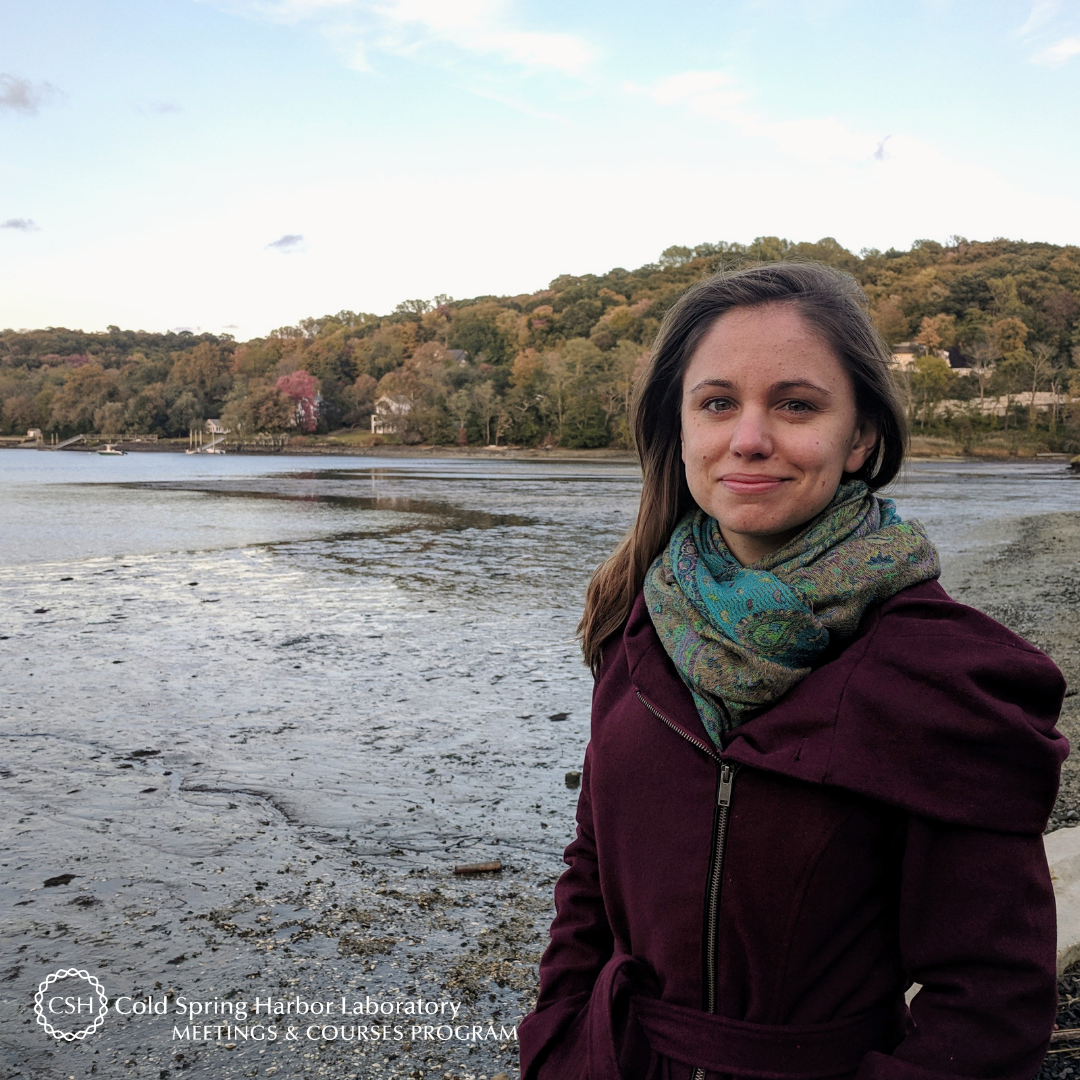
It is “almost” freezing during this time of the year, but I did enjoy the autumnal feeling and seeing the tree leaves change colors. Most importantly, I have to say the food was fantastic. I never felt this happy eating in the cafeteria before.

Tianhao received a scholarship from the Helmsley Charitable Trust to cover a portion of his course tuition. On behalf of Tianhao, thank you to the Helmsley Charitable Trust for supporting and enabling our young scientists to attend a CSHL course where they expand their skills, knowledge, and network.

Thank you to Tianhao for being this week's featured visitor. To meet other featured scientists - and discover the wide range of science that takes part in a CSHL meeting or course - go here.

Visitor of the Week: Zhou "Jason" Shi

2018-cshl-visitor-zhou-jason-shi

Meet Zhou “Jason” Shi of the Gladstone Institutes at UCSF. Working as a postdoc in the lab of Katherine Pollard, who is among the 47 Chan Zuckerberg Investigator selected in 2017, Jason is also a junior research scholar at the Chan Zuckerberg Biohub. He is on campus for the third iteration of Biological Data Science. He marked his first CSHL meeting with a talk titled “Comprehensive and ultra-rapid identification of genetic variants in human gut microbiome”.

What are your research interests? What are you working on?
My general research interest is to better address biological problems by developing computational methods and bioinformatics tools. My current project involves developing a computational method to quickly identify specific microbes from any huge, messy pool of microbes in the human gut.

How did you decide to make this the focus of your research?
Due to having an interest in broad research topic, I only recently centralized the focused my research: microbiome. Microbiome is something I am passionate about and the more time I spend in studying microbiomes, the more I am amazed by how they impact human health, especially in "surprising" or unexpected ways.

How did your scientific journey begin?
I come from a software engineering background. During a software process class in my senior year, my instructor shared a translated version of a quote from a great computer scientist, Donald Knuth: “I can’t be as confident about computer science as I can about biology. Biology easily has 500 years of exciting problems to work on.” At that time, I was in working on an unchallenging project so was easily convinced by the quote and then applied to a microbiology graduate program.

Was there something specific about Biological Data Science meeting that drew you to attend?
I chose to attend this meeting mainly because it is one of the most exciting meetings with a clear focus on data science for biology. The meeting this year included multiple topics I am personally and highly interested in; e.g., algorithms and deep learning.

What is your key takeaway from the meeting?
One key takeaway I found very inspiring is that transfer learning allows the use patterns learnt from developing retina cells to recognize cell types in adult mouse.

What did you pick up or learn from the meeting that you plan to apply to your work?
I learned a technique that further breaks down k-mers to l-mers then only indexes minimizers of l-mers for efficient algorithms. I found this technique very intriguing because I may be able to apply it to my project to improve the data structure behind the bioinformatics tool I am building.

If someone curious in attending a future iteration of this meeting asked you for feedback or advice on it, what would you tell him/her?
I would be happy to tell him/her of my personal great experience at this meeting. Also, for anyone who enjoy method intensive talks and want to take back to their lab a great variety of cool ideas handling biological data, then this is a meeting they should consider and definitely enjoy.

What do you like most about your time at CSHL?
The ease of communicating with anyone during the meeting was truly amazing.

Thank you to Jason for being this week's featured visitor. To meet other featured scientists - and discover the wide range of science that takes part in a CSHL meeting or course - go here.

Visitor of the Week: Anastasia Teterina

2018-cshl-visitor-anastasia-teterina

Meet Anastasia Teterina of the University of Oregon. The Russian national is a postdoc in Patrick Phillips’ lab which is part of the Institute of Ecology and Evolution. Anastasia attended the Probabilistic Modeling in Genomics meeting (ProbGen) – her first meeting in CSHL – where she gave a talk on the impact of reproduction mode on polymorphism in roundworms entitled “Mode of reproduction drives the distribution of polymorphism across the genome: theory and empirical tests in Caenorhabditis nematodes”.

What are your research interests? What are you working on?
I’m interested in the population genomics of worms (nematodes), namely, how their mating system and recombination landscapes influence the genomic polymorphism patterns. Genotype-phenotype relationships and the ways to explore them is another personal research interest.

How did you decide to make this the focus of your research?
The study of natural variation can help to understand the biology and ecology of organisms and demonstrate how different factors – such as genomic organization, population demographics, and other aspects of population structure – change genetic diversity; an important theoretical problem that has various practical implementations.

How did your scientific journey begin?
When I was 5 years old, my grandfather, a nuclear physicist, told me that every tiny cell has information that encodes everything necessary to build an organism and maintain all its functions. Since then, I've been trying to understand how it works.

Was there something specific about Probabilistic Modeling in Genomics meeting that drew you to attend?
The announced meeting topics caught my attention as I am curious about the trends in this area and wanted to know more. The meeting was devoted to modeling methods in genetics and omics and approaches to explore specific parameters and their distributions. In my current project, I intensively apply evolutionary population simulation and a variety of bioinformatics methods, a majority of them implies the use of some models. And, last but not least, I wanted to meet and talk with those who developed the methods I use to discuss their application in specific projects.

What is your key takeaway from the meeting?
To find out the answer to your scientific problem, ask more questions, be curious and ask tricky ones; try different approaches and combine methods; and don’t forget to test with simulation how well you can explain the results.

What did you pick up or learn from the meeting that you plan to apply to your work?
At ProbGen, there were many talks on model development, genetic parameter estimation techniques, a lot of benchmarking of old/new approaches, very promising announcements of new algorithms, (of course) a ton of interesting research with detailed descriptions of the methods, and inspiring talks on the current state and future direction of the field. I’m going to recommend some of the algorithms to my labmates and apply several new-to-me methods on my datasets.

Additionally, the day before the ProbGen meeting, there was an amazing satellite meeting on population simulations, PopSim, during which we discussed the current issues in population genetics and ways to approach them.

If someone curious in attending a future iteration of this meeting asked you for feedback or advice on it, what would you tell him/her?
ProbGen is an excellent opportunity to meet with colleagues, discuss your project, and learn new methods.

What do you like most about your time at CSHL?
It was my first visit to the CSHL, and I really enjoyed the autumn colors and amazing nature. One morning, a few colleagues and I went to the Inner Harbor to watch the birds. Also, I liked the amusing sculptures scattered around the campus.

Thank you to Anastasia for being this week's featured visitor. To meet other featured scientists - and discover the wide range of science that takes part in a CSHL meeting or course - go here.
Visitor of the Week: Justin Waldern

VOTW.png

Meet Justin Waldern of the University at Albany, SUNY. The fourth-year graduate student works with Marlene Belfort whose lab is part of the RNA Institute. Justin is on campus for his first CSHL meeting – Transposable Elements – during which he gave a talk titled “Group II intron distribution aligns with host gene function”.

What are your research interests? What are you working on?
My research focus is on mobile genetic elements (genes that can move from one location to another). Mobile genetic elements are everywhere; but what I’m interested in is where they are, why they are in these spots, and what they could potentially be doing there.

How did you decide to make this the focus of your research?
The idea that certain genes can move around fascinated me. Even more so, the fact that they are in so many places makes me wonder why.

How did your scientific journey begin?
An undergraduate degree requirement involving research is what really got me into science. I always enjoyed learning new things, but the hands-on immersion in research made me realize how much I enjoyed discovering something that nobody knows.

Was there something specific about the Transposable Elements meeting that drew you to attend?
First of all, I’ve heard fantastic things about CSHL meetings, and the Transposable Elements meeting in particular. This meeting has incredible researchers at the top of the field presenting their work, and to be presenting my own research alongside them is both humbling and an opportunity I couldn’t pass up.

What is your key takeaway from the meeting?
Mobile elements are everywhere! They have biological relevance and definitely aren’t “junk” DNA.

What did you pick up or learn from the meeting that you plan to apply to your work?
New ways of thinking about mobile elements in a broader context.

If someone curious in attending a future iteration of this meeting asked you for feedback or advice on it, what would you tell him/her?
The meeting has been fantastic and perfectly balances high quality presentations with an environment that encourages networking.

What do you like most about your time at CSHL?
I’ve met so many people! This meeting is well organized and very centrally located, which greatly encourages networking and collaborations.

Thank you to Justin for being this week's featured visitor. To meet other featured scientists - and discover the wide range of science that takes part in a CSHL meeting or course - go here.

Visitor of the Week: Brenda Raud

2018-cshl-visitor-brenda-raud

Meet Brenda Raud of the Institute for Infection Immunology at Twincore Centre for Experimental and Clinical Infection Research, a joint venture between the Hannover Medical School and the Helmholtz Centre for Infection Research in Germany. The Argentinian national is a fourth year PhD student in the Research Group Host-Pathogen Interactions & Immunometabolism led by Dr. Luciana Berod.

What are your research interests? What are you working on?
I am interested in understanding how specific metabolic programs and the availability of nutrients can influence the outcome of an immune response. My current research focuses on the role of lipid metabolism in T lymphocytes, which play a key role in adaptive immunity and inflammation.

How did you decide to make this the focus of your research?
My project was inspired by previous research published by my lab showing the important role fatty acid synthesis has for the activation and function of pro-inflammatory T cell subsets, and suggested that blocking pathway could be a potential therapy aiming at treating autoimmune and inflammatory diseases. The data presently available also implied that the complementary metabolic pathway, fatty acid oxidation, was crucial for the function of the opposite, regulatory, immune response. Thus we set to find more about this apparent symmetry of immune function and metabolic programs.

Brenda during her poster presentation at the meeting

Brenda during her poster presentation at the meeting

How did your scientific journey begin?
I was inclined to science since childhood. I grew up in a small town in the Patagonian Andes where exposure to “formal” science environments was limited and universities were far. But I attest my interest in biology and motivation to pursue a career in science to growing up where I did and being surrounded by nature. As a teenager, my experience as part of the Argentinian team at the International Biology Olympiad cemented my interest in science and the international community that it comes with. I studied biotechnology in Argentina, and during my undergraduate studies I studied and did research in both Germany and the United States. I became very interested in immunology, and returned to Germany for my PhD.

Was there something specific about Nutrient Signaling meeting that drew you to attend?
This meeting was brought to my attention by a fellow at CSHL, and meeting speaker, who suggested that attending would be a good opportunity to improve my knowledge of metabolism and find new perspectives. From my research, I was familiar with the work of some of the speakers, such as Navdeep Chandel or David Sabatini, but I learnt a lot about the role of metabolism in many settings, such as aging and cancer. In addition, CSHL is very prestigious and famous for the meetings and courses, and I loved the opportunity to experience it myself!

What is your key takeaway from the meeting?
This meeting was a great way to expand my knowledge of metabolism and, more importantly, about the approaches and technologies available to better study this field. I think there are several ideas that could be applied to the study of immune cell function. Moreover, the quality of presenters was excellent and, as a student, I learnt a lot about how to present and discuss data.

What did you pick up or learn from the meeting that you plan to apply to your work?
Coming from an immunology lab, many of the techniques and workflows presented at the meeting were novel for me and I was inspired by many of the approaches presented to study the metabolites of specific organelles. These new approaches really change the way we can look at the reality of cellular metabolism, which is very organized and compartmentalized, and could certainly be used to better understand the metabolism of immune cells. Alternative splicing is also an interesting topic when studying certain immunological genes, and thus I found the alternative splicing fluorescent reporters very innovative.

If someone curious in attending a future iteration of this meeting asked you for feedback or advice on it, what would you tell him/her?
I would suggest to join any meeting that aligns with his or her interests! It is a great environment, and all participants are exceptional. It was an amazing scientific event that I can only recommend.

What do you like most about your time at CSHL?
The campus was beautiful, and I very much enjoyed the guided tour we had at the beginning. I loved the science-themed sculptures, architecture, and decorations. Not to mention, since it is autumn, the landscape is lovely and the trees have leaves of amazing colors.

Thank you to Brenda for being this week's featured visitor. To meet other featured scientists - and discover the wide range of science that takes part in a CSHL meeting or course - go here.